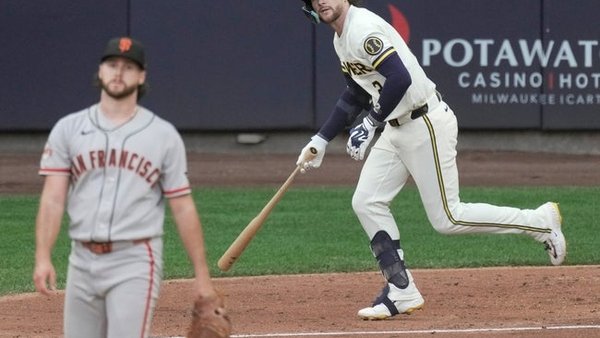
Jacob Misiorowski carries a 1.65 ERA and 13.7 K/9 into Coors Field against a Colorado lineup missing its best bat and a TBD starter backed by a rotation posting a .433 xwOBA-against. The total sits at 10.5 — a number the public is hammering from one side while the pitching asymmetry tells a different story entirely.
Jacob Misiorowski vs TBD: Milwaukee Brewers at Colorado Rockies Betting Preview
Friday night’s 9-7 final handed the over crowd a receipt and reminded everyone that Coors Field does what Coors Field does. But Saturday’s pitching setup is fundamentally different. Jacob Misiorowski — 1.65 ERA, 0.79 WHIP, 13.7 K/9 — takes the ball in one of baseball’s most dangerous run environments, and Colorado counters with a TBD starter. That asymmetry is the core of this bet.
The market has set the total at 10.5, which feels conservative given the park factor of 1.38. But 10.5 at Coors with a legitimate ace on the mound is a number the public will hammer from the over side. That’s the noise. The signal is Misiorowski’s ability to suppress Colorado’s depleted, limited offense for five-plus innings — and that’s the case the under is built on.
Milwaukee’s moneyline at -255 is priced well past any reasonable juice ceiling, which eliminates the outright as a playable angle. That forces the conversation toward the total, and when you map Misiorowski’s numbers against Colorado’s roster situation, the under at 10.5 is where the value lives.
Game Info & Betting Lines
- Date/Time: Saturday, June 6, 2026 | 9:10 PM ET
- Venue: Coors Field | Park Factor: 1.38 (hitter-friendly)
- Probable Starters: Jacob Misiorowski (MIL, 6-2, 1.65 ERA) vs TBD (COL)
- Moneyline: Milwaukee Brewers -255 / Colorado Rockies +210
- Run Line: Milwaukee Brewers -1.5 (-162) / Colorado Rockies +1.5 (+134)
- Total: 10.5 (Over -110 / Under -110)
Why This Number Is Off
The market is doing something reasonable here: it’s balancing Coors Field’s historically bloated run environment against a matchup where one side has a genuine ace. A 10.5 total at Coors is already conservative — the park’s long-run average pushes totals well above that — but the market has crowded the number down precisely because of Misiorowski. That logic is sound.
The legitimate case for the over? The numbers have the combined total at 11.9 — a full 1.4 runs above the posted line. That’s a meaningful signal and worth sitting with. Colorado’s TBD starter situation adds unpredictability: a bulk arm or an opener who can’t hold Milwaukee’s lineup could see Milwaukee put up 6 or 7 before the game is half over. Jackson Chourio carries a .440 xwOBA on the season. Brice Turang sits at .432. Jake Bauers is at .429 with a 9.5 percent barrel rate. These are season-wide figures, but they paint an accurate picture: this lineup has real teeth.
But here’s the problem with chasing the over: the over requires Colorado’s half of the scoreboard to contribute meaningfully. With Misiorowski on the mound, that’s the low-probability assumption. His 13.7 K/9 doesn’t just suppress runs — it drains innings and keeps crooked numbers off the board entirely. The market’s 10.5 already bakes in Coors; what it underweights is a single elite arm’s ability to dominate one specific game regardless of the zip code.
What Separates the Pitching
The gap between these two starters is not a gap — it’s a canyon. On one side, Jacob Misiorowski is pitching as well as any starter in baseball: 1.65 ERA, 0.79 WHIP, 108 strikeouts in 71 innings. His four-seam fastball sits 95.0 mph with a 23.9 percent whiff rate and an xwOBA-against of just .237. His slider generates a 30.7 percent whiff rate at .227 xwOBA. His curveball whiffs at 32.4 percent. The changeup — used sparingly at 6.9 percent — whiffs at a staggering 42.9 percent. He doesn’t have one plus pitch; he has four.
On the other side, Colorado is rolling out a TBD starter — which signals either a bulk reliever or an opener scenario. The Rockies’ pitching staff carries a 5.48 ERA and a 1.504 WHIP as a unit, and the aggregate Statcast profile for their rotation is alarming: their four-seam fastball generates only an 8.8 percent whiff rate and an .433 xwOBA-against. Their cutter — used 18.4 percent of the time — sits at a .392 xwOBA. Their sinker is the worst pitch in the arsenal at a .554 xwOBA-against. There is no put-away pitch; there is no sequence that consistently gets Milwaukee’s lineup out.
Against Colorado’s projected pitching, Chourio (.440 xwOBA), Turang (.432), and Bauers (.429) represent the kind of damage that can push Milwaukee’s run total toward 5 or 6 on their own. But Misiorowski flips the other side of the ledger. Colorado’s lineup without Mickey Moniak — their best bat at a .942 OPS, now on the 10-Day IL with an ankle injury — is significantly diminished. Hunter Goodman (.450 xwOBA, 15 HR) is the legitimate danger in this order, but with a 31.2 percent whiff rate, he’s exactly the type of hitter Misiorowski’s arsenal is built to neutralize. Chad Stevens at .230 xwOBA slots third in this lineup — that profile belongs in the bottom third.
The Pushback
Let me be direct about what makes this uncomfortable. Coors Field is the single most dangerous park in baseball for under bettors. A 1.38 park factor doesn’t care about ERA. Dominant starters have been torched at altitude; the thin air affects pitch movement in ways that don’t show up in a Statcast profile built at sea-level ballparks. Misiorowski’s slider and curveball break less sharply at 5,200 feet, and a four-seamer that misses barrels in Milwaukee may not miss them the same way in Denver.
The projection engine also spits out 11.9 combined runs — a strong over signal — and I’m not going to pretend that’s irrelevant. That number is driven primarily by Milwaukee’s offense running up against a leaky Colorado staff, which is a legitimate concern. If Colorado’s TBD starter gives up four or five before the fifth inning, the under is dead on arrival even if Misiorowski is lights-out.
The run line at -1.5 (-162) was the next option I considered, but the Milwaukee bullpen is thinned out — DL Hall, Rob Zastryzny, Grant Anderson, and Jared Koenig are all unavailable — and Friday night’s nine-inning usage bled the ‘pen further. If Misiorowski doesn’t get through six or seven, the late-inning distribution risk is real. The run line at -162 doesn’t compensate for that exposure.
Run Environment & Game Shape
Here’s how I actually see Saturday playing out. Misiorowski works five to seven innings and gives up two or three runs — he’s too good to get routed at Coors, but he’s not immune to the altitude and a lineup that does have legitimate damage in Goodman and Moniak’s replacements. Milwaukee’s offense, even against a patchwork TBD starter, scores somewhere in the four-to-six range. That gets us to a combined total of six to nine runs in most reasonable scenarios.
The question is tail risk: can Colorado’s half of the scoreboard blow up in one inning if Misiorowski runs into trouble early? Yes. That’s always on the table at Coors. But the structural argument holds — Misiorowski’s strikeout rate keeps baserunners off the paths, limits the clustering that produces big innings, and forces a depleted Colorado lineup to string together hard contact without the benefit of walks. Without Moniak at the top of the order, this lineup isn’t built for sustained multi-run threats against elite velocity and spin. The crooked-number scenario requires Misiorowski to unravel in a way his season profile simply hasn’t suggested he’s capable of.
The Pick
The moneyline is dead at -255 juice. The run line carries too much bullpen exposure after a taxing Friday night. The cleanest expression of Misiorowski’s edge in this spot is the total. His four-pitch arsenal — featuring a 42.9 percent changeup whiff rate and a slider at .227 xwOBA-against — is precisely the kind of suppression kit that keeps a depleted Colorado lineup from generating the volume of runs this number needs. Under 10.5, 2 units, moderate confidence.