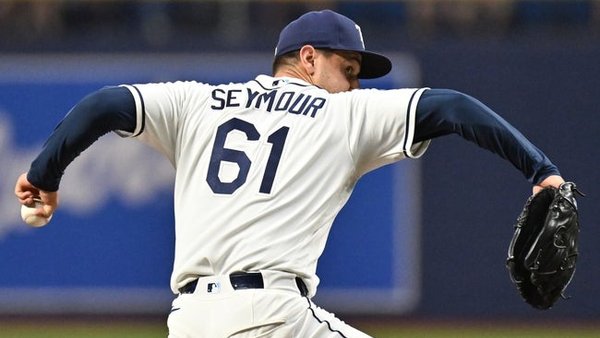
Connelly Early brings a 3.26 ERA and 1.05 WAR into Tropicana Field against Ian Seymour, who sits at a 5.23 ERA and negative WAR despite a 3-0 record built on run support, not execution. The moneyline is treating these two starters as near equals — the underlying numbers say otherwise.
Connelly Early vs Ian Seymour: Boston Red Sox at Tampa Bay Rays Betting Preview
The Red Sox arrive at Tropicana Field as -118 moneyline favorites — a price that feels almost too reasonable given the pitching gap this matchup actually contains. Connelly Early carries a 3.26 ERA, 1.18 WHIP, and 1.05 WAR across 66.1 innings, the profile of a legitimate mid-rotation piece pitching well in 2026. Across the diamond, Ian Seymour is 3-0 but owns a 5.23 ERA, 1.35 WHIP, and -0.29 WAR in just 31 innings — below replacement level by WAR, propped up by a lineup that has provided generous run support behind him.
The market sees a near-coin-flip. The numbers project a 4.2–4.2 deadlock with Tampa Bay holding a razor-thin 50.9% win probability at home. Tampa Bay holds first place in the AL East at 37-25, and there’s a credible case for the home side at even money. But -118 for the team with a genuine starting pitching advantage in a run-suppressing dome is a number worth acting on, even when the edge is modest.
Both teams arrive here off losses — Boston dropped a 6-1 decision to the Yankees on Sunday, and Tampa fell 4-1 to Miami behind Sandy Alcantara. The Rays have won just three of their last ten despite sitting atop the division. That 3-7 L10 stretch is a quiet signal worth filing away.
Game Info & Betting Lines
- Date/Time: Monday, June 8, 2026 — 6:40 PM ET
- Venue: Tropicana Field (Park Factor: 0.95 — slight run suppressor, dome)
- TV: MLB.TV, Rays.TV, NESN
- Probable Starters: Connelly Early (BOS, 5-3, 3.26 ERA) vs. Ian Seymour (TB, 3-0, 5.23 ERA)
- Moneyline: Boston Red Sox -118 / Tampa Bay Rays +100
- Run Line: Boston Red Sox -1.5 (+146) / Tampa Bay Rays +1.5 (-176)
- Total: 7.5 (Over -120 / Under -102)
Why This Number Is Close
The market is doing something reasonable here — it’s pricing Tampa Bay’s offensive quality, home field, and Seymour’s unblemished record against a Boston offense that ranks below average with a team OPS of .694. The Rays bat .255 with a .716 OPS as a unit, hit more home runs (52 to 48), and score nearly a full run more per game (4.56 to 3.95). That’s not a trivial offensive gap, and Tampa’s lineup is genuinely dangerous at the top: Yandy Diaz (.325 AVG, .926 OPS), Junior Caminero (.874 OPS, 14 HR), and Jonathan Aranda (.840 OPS, 11 HR) form as potent a 1-3 combination as you’ll find in the AL East.
Where the market slightly underweights the edge: Seymour’s 3-0 record is a product of run support, not execution. A pitcher posting a 5.23 ERA with negative WAR in a 31-inning sample isn’t a quality starter — he’s a liability the Rays’ lineup has covered up. Early, meanwhile, has demonstrated genuine effectiveness across a meaningful sample of 66 innings. The market gives both pitchers roughly equal footing. They aren’t equal.
The concern is whether -118 is enough juice to move on a coin-flip projection. It is — just barely — because getting a better starter at near-even money is a math problem that leans one direction.
What Separates the Pitching
The gap between these two arms is real, and it shows up in both traditional stats and arsenal quality. Early works off a four-pitch mix anchored by a 94.0 mph four-seamer (34.2% usage, .334 xwOBA-against) complemented by a sinker and an unusually effective sweeper — Early’s sweeper generates a 33.3% whiff rate and holds hitters to a remarkable .146 xwOBA, sitting as a genuine chase weapon at 6.0% usage. His 1.18 WHIP reflects a pitcher who locates the ball and avoids free passes (23 walks over 66 innings), which matters in a game environment that suppresses runs.
Seymour does have swing-and-miss stuff — his changeup (33.9% usage) generates a 38.8% whiff rate and his sweeper (18.1%) produces 40.3% whiff with a .233 xwOBA-against. Those are legitimate weapons. But here’s the problem: his sinker (15.7% usage) is bleeding contact at a .465 xwOBA, and his cutter carries a .662 xwOBA-against in limited use — both are elevated-contact pitches that create the type of innings where early-count contact finds gaps. The 1.35 WHIP confirms what the ERA already tells us: Seymour doesn’t consistently strand what he puts on base.
For Boston, Willson Contreras (.494 xwOBA, .563 vs. LHP) is the most dangerous matchup Seymour will face. Contreras is hitting .298 with 13 home runs this season, and his elevated xwOBA against left-handed pitching slots perfectly into this game’s biggest leverage moment. Wilyer Abreu (.399 xwOBA, .397 vs. LHP) and Jarren Duran (.385 xwOBA) round out Boston’s best threats against a southpaw with contact-allowing tendencies.
On the Tampa side, Aranda’s BvP line shows 4 PA against Early with a .333 average — a small sample that warrants monitoring but not overweighting. Caminero’s 34.4% hard-hit rate makes him the most dangerous power threat Early will navigate. Early’s curveball and slider both carry elevated xwOBA marks (.441 and .418 respectively), which means he’ll lean on that sweeper against Tampa’s right-handed power.
The Pushback
Let me be direct about what could sink this: Tampa Bay’s lineup is not a lineup you want to dismiss. Diaz (.393 xwOBA, 31.0% hard-hit rate) hits right-handed pitching especially hard — his .408 xwOBA vs. RHP is a real threat to Early’s sinker command. Caminero is one of the most dangerous young bats in the AL. The Rays score more runs, have a better team OPS, and are playing at home. The coin-flip projection reflects a genuine coin flip.
Bullpen attrition is also a live concern on both sides. Tampa’s relievers have been stretched — Craig Kimbrel (wrist), Jonathan Heasley (elbow), and Jesse Scholtens (wrist) are all on the IL, and last Saturday’s seven-pitcher game in Miami adds context. Boston isn’t clean either, with Jovani Moran and Garrett Whitlock both unavailable. If either starter exits before the sixth, the back-end matchup becomes murky fast.
The BvP sample on Diaz (0-for-6 vs. Early with 2 strikeouts) is notable, but six plate appearances is noise — file it as a directional signal, not evidence. Aranda’s .333 in 4 PA is equally thin in the other direction. I’m not building a case on either.
I also looked hard at the run line and walked away from it in both directions. Boston’s .694 team OPS is the lowest I’d want to hang a -1.5 cover bet on, especially with a dead-even 4.2–4.2 scoring projection. Asking a below-average offense to win by multiple runs in a dome that suppresses scoring at a 0.95 park factor is a thin ask. Going the other way — Tampa +1.5 at -176 — eliminates any value the number might offer. You’re paying heavy juice to back the side with the worse starting pitcher. Neither run line alternative makes sense here, which is exactly why the moneyline at -118 is the right vehicle: you’re getting the pitching edge at a price the market hasn’t fully accounted for, without needing to commit to a margin.
Run Environment & Game Shape
Tropicana Field’s 0.95 park factor is a quiet but real edge for pitchers in a game already projected to land in the low-to-mid run range. The over/under sitting at 7.5 acknowledges a moderate-scoring environment, and with both teams entering off losses and bullpens carrying some mileage, this feels like a game where the early starter dictates the margin. Early’s ability to work deep into games — 66.1 innings in a rotation that has lost Garrett Crochet and Johan Oviedo to injury — matters here. Boston needs length from him, and his 1.18 WHIP suggests he can deliver it.
Games in this range are often decided by one key inning — a two-run burst that the opposing starter can’t answer. Seymour’s sinker and cutter are the pitches most likely to produce that inning for Boston, particularly when Contreras and Abreu see them in elevated counts. Early’s sweeper and four-seamer give him the tools to keep Tampa’s middle-of-the-order from replicating the same damage. In a low-margin game shaped by the dome and the pitching splits, the starter quality gap — modest as it appears in the price — is the edge I’m trusting.
The Pick
Boston Red Sox Moneyline -118 — 2 Units — Moderate Confidence
The edge here isn’t overwhelming, and I’m not pretending it is. A 4.2–4.2 projection and a 49.1% away win probability means I’m not chasing a layup. What I am doing is backing a meaningfully better starting pitcher at near-even money in a run-suppressing environment, while the market overweights Seymour’s 3-0 record and underweights his 5.23 ERA and negative WAR. At -118, that starting pitching edge represents genuine value. The run line alternatives were both non-starters — Boston’s offense isn’t reliable enough to cover -1.5, and Tampa +1.5 at -176 is too expensive to make economic sense. The moneyline is the cleanest way to capture what’s actually on the board here.
Bet: Boston Red Sox ML -118 | 2u | Moderate Confidence