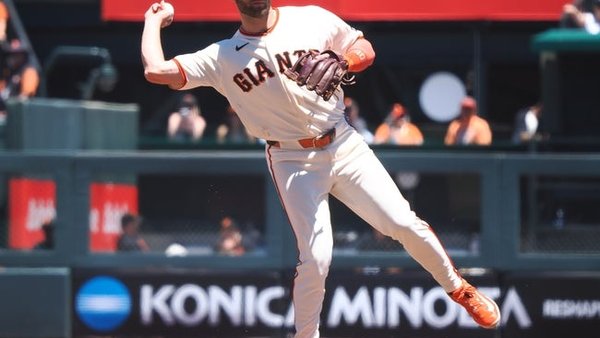
Robbie Ray’s ERA, strikeout rate, and WHIP all sit meaningfully ahead of Aaron Civale’s — yet the Giants are priced at just -120, barely above a coin flip. Oracle Park’s run-suppressing environment amplifies every edge a miss-bat arm carries, and the Athletics are coming in without Brent Rooker, their most dangerous power bat.
Aaron Civale vs. Robbie Ray: Athletics at San Francisco Giants Betting Preview
The Giants are 31-46, which is a number that will make you want to close the tab. But record-based skepticism is exactly the kind of market noise that creates value in games like this one. San Francisco is hosting a road team with an inferior starter, a weaker ERA, and a lineup that just spent the weekend getting outpitched in Sacramento. Oakland did take three of four from the Angels in that series, but they were still blanked 7-0 on Saturday — and the version of this A’s offense that shows up Tuesday will be missing its best power bat in Brent Rooker. The price at -120 is not asking you to trust the Giants franchise — it’s asking you to trust Robbie Ray for one night against Aaron Civale at Oracle Park.
That’s a bet worth making. Ray holds a meaningful edge over Civale in every core pitching metric — ERA, WHIP, K/9 — and Oracle Park’s 0.92 park factor tilts the run environment toward the pitcher who can actually miss bats. Ray misses more. That’s the thesis. It’s not complicated, and it’s not asking you to believe in the Giants as a playoff contender.
The Athletics enter this game at 38-40, technically the team with the better record, which is part of why the line sits where it does. But Oakland’s pitching ERA sits at 5.00 as a staff, their run differential is -54 (identical to San Francisco’s), and their best lineup pieces — Brent Rooker and Denzel Clarke — are on the injured list. The surface numbers make this look like a coin flip. The pitching gap says it isn’t quite.
Game Info & Betting Lines
- Date/Time: Tuesday, June 23, 2026 | 9:45 PM ET
- Venue: Oracle Park | Park Factor: 0.92 (run-suppressing)
- TV: MLB.TV, NBC Sports BA, NBC Sports CA
- Probable Starters: Aaron Civale (Athletics, 5-3, 4.91 ERA) vs. Robbie Ray (Giants, 5-6, 4.07 ERA)
- Moneyline: Athletics +102 / San Francisco Giants -120
- Run Line: San Francisco Giants +1.5 (-205) / Athletics -1.5 (+168)
- Total: 8.5 (Over -124 / Under +102)
Why This Number Is Close
I understand why the market keeps this tight. San Francisco’s 31-46 record is genuinely bad, and it’s not all bad luck — the Giants rank among the lower offensive outputs in the league with only 317 runs scored and an OBP of just .309. They’re not a team built to run away from anyone. Oakland, meanwhile, is five games above .500 on paper, and Civale has been functional — his 5-3 record across 58.2 innings reflects a pitcher who hasn’t been getting blown up, even if the underlying numbers aren’t pretty.
The case for the Athletics at +102 is real: you’re getting plus money on a team with a better record, a starter with a respectable win total, and a lineup that includes Nick Kurtz (.995 OPS, 19 HR) — one of the most dangerous hitters in the AL right now. That’s a legitimate argument, and I can see why sharp money doesn’t just pile onto San Francisco here.
Where I think it’s slightly off is in how it values the pitching gap. Ray’s ERA of 4.07 vs. Civale’s 4.91, combined with Ray’s superior strikeout rate and WHIP, represents a real and consistent edge — not a one-start blip. Over nearly 80 innings, Ray has demonstrated he’s a different caliber of arm than Civale. At Oracle Park, that gap gets amplified. The -120 price clears what I’d call a juice ceiling for a lean-confidence play, and that’s enough to act.
What Separates the Pitching
The gap between these two arms shows up most clearly in strikeout rate and baserunner control. Robbie Ray is striking out 8.36 batters per nine innings versus Aaron Civale’s 6.29 — a two-batter-per-nine difference that compresses Oakland’s ability to string together rallies. Ray’s WHIP of 1.33 compared to Civale’s 1.59 tells the same story: Ray is keeping runners off the bases at a meaningfully higher rate.
Statcast adds texture to the gap. Civale leans heavily on his four-seam fastball at 51.0% usage, sitting 96.3 mph, but that pitch generates only a 19.8% whiff rate and an xwOBA of .276 — serviceable but not swing-and-miss stuff. His changeup is his best weapon at a 35.3% whiff rate and .165 xwOBA, but he only deploys it 8.5% of the time. Against a Giants lineup featuring Bryce Eldridge (.441 xwOBA, 27.4% hard-hit rate) and Casey Schmitt (.435 xwOBA) in left field, Civale doesn’t have a clear way to neutralize the middle of the order.
Ray’s profile creates different problems. His four-seamer sits 92.2 mph — notably softer than Civale’s — and carries an xwOBA-against of .323, which is the most exposed pitch in his arsenal. That’s where the concern lives: Nick Kurtz’s .514 xwOBA against Ray in a small sample (6 PA, 1 HR, 4 K) flags a real threat. Kurtz hits left-handed pitching hard — his vsLHP xwOBA of .410 is a legitimate warning sign, and with a barrel rate of 8.9% and a 33.4% hard-hit rate, he’s the one Oakland bat capable of doing single-swing damage against Ray at Oracle Park.
But look at what Ray does everywhere else in that lineup. Jacob Wilson owns a vsLHP xwOBA of just .257. Zack Gelof checks in at .398 vsLHP — dangerous, but with a 23.4% strikeout rate that Ray’s arsenal can exploit. Ray’s split-finger generates a 25.0% whiff rate and an xwOBA-against of .266, and his slider — used 11.1% of the time — produces a 28.8% whiff rate. Those are legitimate put-away options against a lineup that, outside of Kurtz, doesn’t carry the same quality of contact profile.
Bullpen and Lineup Friction
The biggest friction point on the Giants side is the bullpen. San Francisco is carrying real injury attrition in relief: Keaton Winn (elbow), Joel Peguero (hamstring), and Jose Butto (arm) are all on the IL. That’s three relievers unavailable, and it means the back of the Giants’ bullpen is thinner than the line fully accounts for. If Ray exits before the seventh, the margin for error shrinks fast.
Ray’s own HR rate adds to the friction. He’s allowed 14 home runs in 79.2 innings — a rate of 1.58 HR/9 — which is the kind of number that can blow up a lead in one swing. Oracle Park’s 0.92 park factor helps suppress that risk somewhat, but it doesn’t eliminate it. In a low-scoring game decided by one run, a solo shot off an undermanned bullpen is a real scenario.
On the offensive side, the Giants get a slight boost from Civale’s control problems — his 1.59 WHIP and 19 walks in 58.2 innings mean San Francisco’s lineup doesn’t have to beat him cleanly. Luis Arraez (.320 AVG, 3.9% K rate) is built to grind out at-bats and get on base against pitchers who struggle to throw strikes. Oakland’s lineup, meanwhile, is missing Rooker entirely and relying on Denzel Clarke being unavailable in center — the lineup is functional but notably shorter than its best version.
Angles I’m Rejecting
Giants -1.5 run line (-205): No. Paying -205 on a team that scores 317 runs in a season and is rolling out a starter with a 1.58 HR/9 rate is asking too much. The Giants can win this game 3-2 and the run line still loses. I need positive expected value to justify juice, and -205 doesn’t come close to clearing that bar.
Athletics -1.5 (+168): Also no. The +168 is tempting on paper, but it requires Civale to genuinely outpitch Ray — not just survive, but win the start. His 4.91 ERA and 1.59 WHIP on the road against a home team with a pitching advantage isn’t the spot to chase plus-money run lines. The underlying numbers don’t support it.
Over 8.5 (-124): The park factor works against this play. Oracle Park suppresses runs, Ray is the better strikeout arm, and a 0.92 park factor means you’re paying juice on a total that the environment actively resists. Pass.
Under 8.5 (+102): Getting plus money on the under in a run-suppressing park with Ray on the mound has surface appeal, but Ray’s 1.58 HR/9 and Civale’s baserunner issues both push back. The number isn’t clean enough to play.
The Pick
I still come back to the pitching gap. Every friction point here is real — the thin bullpen, Ray’s HR rate, Kurtz lurking in that two-hole — and I’m not dismissing any of it. But when I weigh those risks against the actual spread between Ray and Civale across nearly 80 innings of sample, the edge holds. Ray is a strikeout-rate advantage, a WHIP advantage, and a park-fit advantage all packaged into a -120 price. The bullpen risk is a reason to stay at lean confidence rather than loading up, not a reason to walk away from a line that genuinely underprices the starting pitching gap. Oakland’s offense without Rooker, on the road, against a pitcher who can miss bats in a run-suppressing environment — that’s not a coin flip. It’s a lean. I’m taking it.
Bet: Giants Moneyline -120 | 1 Unit | Lean Confidence