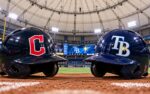
Great American Ball Park’s hitter-friendly environment is already baked into a 9.5 total — but the pitching gap between these staffs is not fully reflected in a Cubs moneyline sitting at -110. A 108-run swing in run differential and a starter returning from injury with a 21.60 ERA on the mound for Cincinnati puts real pressure on that near-coin-flip price.
Shota Imanaga vs. Hunter Greene: Chicago Cubs at Cincinnati Reds Betting Preview
The market is pricing this game like a competitive NL Central matchup between two clubs separated by ten games in the standings. That framing is technically accurate and almost entirely useless. What the -110 moneyline on Chicago doesn’t fully account for is that the pitcher the Reds are running out on Friday carries a 21.60 ERA and 3.30 WHIP over 3.1 innings this season — a return-from-injury situation that has produced one of the ugliest small-sample lines in baseball. Against a Cubs team sitting at 52-41 with a +50 run differential, that’s not a matchup. That’s a mismatch with a near-pick’em price tag.
The Cubs arrive from Baltimore having dropped yesterday’s game 3-2 on a late eighth-inning double — a tough beat after a 9-7 slugfest the night before. Cincinnati comes in fresh off a 1-0 loss to Philadelphia, where Jesús Luzardo dominated for seven innings. Two teams that have each been cold offensively in recent days, but the structural gap between them — 10 games in the standings, opposite run differentials, contrasting form over the last ten — points in one direction. The Cubs are 7-3 in their last ten. The Reds are 3-7.
The Cubs moneyline at -110 is the edge here. When the price is this close to even on a game with this level of pitching imbalance, you take it.
Game Info & Betting Lines
- Date/Time: Friday, July 10, 2026 — 7:10 PM ET
- Venue: Great American Ball Park (Park Factor: 1.10 — hitter-friendly)
- TV: MLB.TV, Marquee Sports Net, Reds.TV
- Probable Starters: Shota Imanaga (CHC) vs. Hunter Greene (CIN)
- Moneyline: Chicago Cubs -110 / Cincinnati Reds -106
- Run Line: Chicago Cubs -1.5 (+140) / Cincinnati Reds +1.5 (-170)
- Total: 9.5 (Over -104 / Under -118)
Why This Number Is Off
There’s a legitimate reason the market hasn’t moved Chicago to -160 or beyond. Hunter Greene’s 21.60 ERA comes in just 3.1 innings — one rough outing can crater a fractional sample. The market may be applying a significant discount, reasoning that Greene is a legitimate power arm coming off injury who could pitch his way into shape, and that Cincinnati’s lineup has real weapons capable of generating offense regardless of who starts. De La Cruz (.837 OPS), Stewart (.822, 19 HR), and Bleday (.831 OPS) are legitimate threats, not placeholder names.
There’s also the reality that near-pick’em lines at hitter-friendly parks tend to imply volatile games where either side can win. The market expects runs here — the total sits at 9.5 — and high-scoring games at Great American Ball Park can swing on one big inning, regardless of which team’s starter is struggling.
But here’s the problem with that framing: the gap isn’t just about Greene’s ERA. It’s about the organizational distance between these clubs. The Cubs are outscoring opponents by 50 runs; the Reds are being outscored by 58. That’s a 108-run swing in run differential. Chicago posts a team OPS of .749 against Cincinnati’s .702. These aren’t similar clubs that happen to be getting different prices — they’re separated at every level, and the coin-flip price doesn’t reflect that.
What Separates the Pitching
Start with what Shota Imanaga actually throws. His primary weapon is a split-finger fastball deployed 32.5% of the time at 83.3 mph — it generates a 41.0% whiff rate and holds opposing hitters to a .250 xwOBA. His sweeper (14.2% usage, 81.6 mph) adds another 36.1% whiff rate with a .266 xwOBA against. The four-seamer sits at 91.9 mph and accounts for 42.4% of his pitches, producing a .346 xwOBA against — serviceable, not dominant, but the split-finger is what makes this arsenal tick. Across 103 innings, Imanaga is 5-7 with a 4.28 ERA and 1.097 WHIP. He’s not untouchable, but he’s a functioning major league starter executing a real pitch mix.
The contrast with Hunter Greene is stark at the arsenal level. Greene’s four-seamer comes in at 98.9 mph and represents 52.8% of his pitches — but in this season’s tiny sample, it’s generating a .578 xwOBA against and only 5.6% whiff rate. His sinker sits at 99.1 mph but has produced a .811 xwOBA with 0.0% whiff. The slider (40.4% usage, 89.7 mph) shows a 58.3% whiff rate and .298 xwOBA — there’s a legitimate out-pitch there — but the raw fastball data from this season suggests a pitcher whose velocity hasn’t translated into swing-and-miss or weak contact yet.
The BvP data adds another layer. Pete Crow-Armstrong has seen Greene in 15 plate appearances and is hitting .077 with three strikeouts in that sample — but his overall xwOBA against right-handed pitching sits at .472, which is elite, and his season OPS of .928 with 21 home runs makes him the most dangerous bat in this order regardless of matchup history. Spencer Steer is hitting .500 with a home run in 10 prior plate appearances against Imanaga. The Reds lineup will create some contact. The question is whether Greene can limit the damage before the Cubs bullpen — thin as it is — has to take over.
The Pushback
The Cubs bullpen situation is genuinely concerning, and it’s the strongest case against this bet. Porter Hodge (60-Day IL, elbow), Daniel Palencia (15-Day IL), Hoby Milner (15-Day IL), Phil Maton (15-Day IL), Ben Brown (15-Day IL), and Riley Martin (15-Day IL) are all unavailable. That’s six relievers off the roster, and it creates real exposure if Imanaga exits early or runs into trouble in the middle innings. A depleted bullpen in a hitter-friendly park against a lineup with De La Cruz’s 9.4% barrel rate and .480 xwOBA is not a comfort position.
The Reds’ own lineup damage is real, too. De La Cruz is 0-for-11 with three strikeouts in 11 plate appearances against Imanaga — a meaningful suppression signal against Cincinnati’s most dangerous hitter. JJ Bleday is 0-for-8 with three strikeouts in BvP against Imanaga. The top of the Cincinnati order has consistently struggled to put the ball in play against this arsenal.
The Greene small-sample caveat deserves honest acknowledgment. His slider — 58.3% whiff rate, .298 xwOBA — is a legitimate strikeout pitch that exists in this arsenal. If Greene’s stuff plays to its projection rather than his 3.1-inning surface line, the Cubs don’t score six runs. The sample is too small to treat the ERA as a fixed ceiling.
Rejected Angles
I considered the Cubs -1.5 run line at +140 but passed. Great American Ball Park’s 1.10 park factor creates genuine run-environment variance, and with the Cubs’ bullpen this depleted, a one-run Cincinnati rally in the late innings is plausible enough that laying the 1.5 runs feels like unnecessary risk for the payout. The moneyline captures the edge without the exposure.
The total over at -104 is tempting given Greene’s ERA and the hitter-friendly environment, but Imanaga’s split-finger limits one side of the scoring equation aggressively — a .250 xwOBA and 41.0% whiff rate against suppresses contact in a way that keeps the Cubs’ half of the total manageable. Chasing an over that depends on Greene being historically bad while Imanaga simultaneously gets lit up is asking too much of the same ticket.
The total under at -118 gets dismissed quickly. You’re laying juice on a Greene start with a .578 xwOBA against on his primary pitch. That’s not an under situation.
Run Environment & Game Shape
Great American Ball Park plays at a 1.10 run factor — above neutral — which is why the total sits at 9.5 despite one starter with a legitimate suppression arsenal. The numbers project Chicago to score more than Cincinnati, and the gap in starting pitching quality is the dominant variable in that projection. Imanaga’s split-finger, with its 41.0% whiff rate and .250 xwOBA against, actively suppresses contact from the Reds’ side of the ledger in a way Greene’s arsenal simply cannot replicate in the other direction.
Game shape here is lopsided in one direction: the pitching advantage belongs entirely to the Cubs, and the total is secondary to the moneyline as a result. This isn’t a game where both starters are competitive and you’re hunting edges on run totals. The structural imbalance — Greene’s fastball-heavy approach generating a .578 xwOBA against in his limited sample, against a Cubs offense posting .749 team OPS with 117 home runs — means the path to a Cubs win runs through the starter matchup, not bullpen sequencing or park factor arithmetic. You can find the Cubs moneyline at Everygame among other books still holding this near-even price.
The one-sided pitching advantage is real, the organizational gap is real, and -110 is a price that doesn’t reflect either. That said, the Cubs’ depleted bullpen and Greene’s small-sample caveat are genuine friction points — enough to keep this at moderate conviction rather than max units.
Bet: Chicago Cubs Moneyline -110 — 2 units — Moderate Confidence.