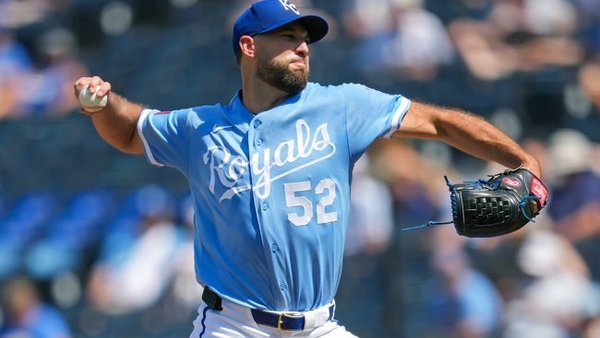
Coors Field’s 1.38 park factor is already a stress test for any pitching staff — then add Tomoyuki Sugano’s 20 home runs allowed in 96 innings and two bullpens gutted by injuries on both sides. The total sits at 11.5 with the over priced at +102, nearly a coin flip, while the under demands a -124 premium to fight one of baseball’s most extreme run environments.
Michael Wacha vs. Tomoyuki Sugano: Kansas City Royals at Colorado Rockies Betting Preview
The structure of this game points in one direction: runs. A lot of them. Coors Field’s park factor of 1.38 is among the most extreme in baseball, and the pitching matchup does nothing to push back against that environment. Two starters with real HR problems, two depleted bullpens, and a total set at 11.5 that the numbers project clearing by 1.4 runs — landing at a combined 12.9. The over is sitting at +102, which means the market is almost pricing this as a coin flip on the total. That’s where the value lives.
The recent cold stretches from both offenses add a layer of skepticism here, and I’ll address that honestly. But recent sample noise doesn’t override structural reality at Coors. The case for the over isn’t built on hot lineups — it’s built on a park that bends probability curves, two pitchers who have already been hit hard, and relief corps that have been gutted by injuries on both sides.
Kansas City arrives having just dropped a heartbreaker in Minneapolis — a walk-off grand slam in the ninth after nearly being no-hit. Colorado comes in having lost 12 of their last 16. Neither team is playing well, but this game isn’t about who’s playing well. It’s about the environment they’re playing in.
Game Info & Betting Lines
- Date/Time: Friday, July 31, 2026 | 8:40 PM ET
- Venue: Coors Field, Denver (Park Factor: 1.38 — extreme hitter-friendly)
- Probable Starters: Michael Wacha (KC, 5-7, 3.60 ERA) vs. Tomoyuki Sugano (COL, 10-4, 4.69 ERA)
- Moneyline: Kansas City Royals -108 / Colorado Rockies -108
- Run Line: Colorado Rockies +1.5 (-160) / Kansas City Royals -1.5 (+132)
- Total: 11.5 (Over +102 / Under -124)
Why This Number Is Off
The market setting 11.5 at this venue isn’t careless — Coors totals are routinely elevated, and books know the park. The legitimate case for the under is Wacha’s ERA. A 3.60 ERA and 1.17 WHIP are real numbers. He’s been one of the more consistent starters in the American League this season, and the market may be anchoring on his ability to suppress Colorado’s lineup for five or six innings before handing it over.
But here’s the problem: the under is priced at -124, which means you’re paying a significant premium to fight Coors Field. That’s a structural disadvantage baked into the price before a single pitch is thrown. The over at +102, meanwhile, is plus money on what the numbers project as a near-certain threshold breach.
The market is balancing Wacha’s surface-level ERA against the park and Sugano’s HR rate. What I think it’s slightly underweighting is the bullpen carnage behind both starters. When Wacha and Sugano exit — likely in the fifth or sixth inning given pitch count norms — both teams are turning to significantly compromised relief corps. Kansas City is missing Ragans, Bubic, Estevez, Mears, Seabold, and Kolek. Colorado is without Herrera, Hill, Criswell, and Castano. The back halves of these games figure to be run-scoring opportunities, not shutdown innings.
What Separates the Pitching
The gap between these two starters matters less than what they share: both are prone to allowing hard contact at rates that Coors Field will punish.
Sugano is the more alarming arm. His 20 HR in 96 innings works out to a 1.875 HR/9 rate — and that’s at sea level. At Coors altitude, fly balls carry further, and the margin for error on middle-of-the-plate mistakes shrinks to near zero. His four-seam fastball sits at 94.9 mph and holds an xwOBA of .447 against it — that’s a hittable pitch being read well by opposing lineups. His slider draws a .435 xwOBA. The one legitimate weapon in his arsenal is his changeup, which generates a 45.0% whiff rate and an xwOBA of just .184 — but it’s only 15.2% of his pitch mix. He can’t hide behind it all night. His WHIP of 1.2916 tells you he allows traffic; traffic at Coors becomes scoring at an accelerated rate.
Wacha is the superior arm here. His sinker (27.4% usage, 96.4 mph) and four-seamer (25.9%, 96.2 mph) both show better contact suppression than Sugano’s fastball. His changeup draws a 35.3% whiff rate and his slider comes in at 31.2% whiff — he has genuine put-away options. But he’s allowed 16 HR in 132.1 innings, and his 7.07 K/9 isn’t dominant enough to overpower a Colorado lineup featuring Hunter Goodman’s xwOBA of .469 and a barrel rate of 7.7%. Goodman has 31 HR this season and carries a .872 OPS. On the Kansas City side, Jac Caglianone brings a season xwOBA of .461 — a hard-contact profile built on a 7.3% barrel rate and 33.6% hard-hit rate that becomes genuinely dangerous when he gets into the air at Coors elevation.
The bottom line: Wacha is meaningfully better than Sugano, but neither starter projects as an innings-eater who keeps the run environment low. Once both exit, the game opens up.
The Pushback
The honest counterargument starts with Bobby Witt Jr., who is on the 10-day IL with a back issue. Witt’s .800 OPS and 13 HR make him Kansas City’s most dangerous bat, and his absence softens the Royals’ lineup in a meaningful way — Tyler Tolbert slides into the nine-hole at short, and while Tolbert has been surprisingly productive in limited at-bats (.333/.866), he’s not a like-for-like replacement. The lineup loses a genuine threat.
The second piece of pushback is Wacha himself. A 3.60 ERA is legitimate, not a mirage. He’s been one of the better mid-rotation starters in the AL this season, and if he replicates that performance at Coors, the Royals could hold Colorado in check for five or six innings and essentially make the total dependent on one side carrying the offense. That’s a real scenario.
And Colorado is cold. Losing 12 of 16 with a -113 run differential on the season doesn’t scream “explosive offense.” The Rockies come in off a 3-1 loss to San Diego where they managed one run against a committee effort. Offensive cold streaks are real, even at Coors.
None of this breaks the structural case, but it’s why this is a moderate-confidence play rather than a screaming lock. The over at +102 is the value — not a guaranteed outcome.
Run Environment & Game Shape
The numbers project this at 12.9 combined runs. To get there from 11.5, you need roughly 1.4 runs above the total — which at Coors, with these pitching staffs, is not a heavy lift. Consider the shape of the game: if both starters go five innings, each allowing three or four runs, the teams enter the sixth inning tied or close to it with two thin bullpens absorbing the remaining work. That’s exactly the scenario where late-inning crooked numbers happen — tired relievers, elevated ball flight, a lineup that doesn’t need to be hot to make contact count.
Colorado’s bullpen has been gutted enough that even a competent middle-relief performance shouldn’t be assumed. Kansas City’s pen situation is similarly compromised. When you’re scraping the bottom of a roster that’s already missing Estevez, Mears, Seabold, and Kolek on the relief side, the late innings at Coors are a coin flip at best for run prevention. A 6-6 or 7-6 finish sits comfortably inside the projected range, and the park factor alone means you’re not asking for anything unusual — you’re asking for normal Coors behavior against two starters who have already given up 36 combined HR on the season.
The market is pricing this like Wacha’s ERA neutralizes the park. It doesn’t. A 3.60 ERA compiled across American League ballparks does not travel to Coors unchanged. The structural case — extreme park factor, leaky starters, depleted bullpens on both sides, and plus-money juice on the over — points clearly to 11.5 being an underpriced threshold. At +102, you’re getting paid to take the side the numbers already favor by 1.4 runs.
The Pick
Over 11.5 | +102 | 2 Units | Moderate Confidence
Two HR-prone starters, two gutted bullpens, and a 1.38 park factor that makes Coors the most run-inflated venue in baseball — the structural case is strong enough to back the over at plus money, with a projected 12.9 combined runs making 11.5 a number the environment should clear on its own merits.