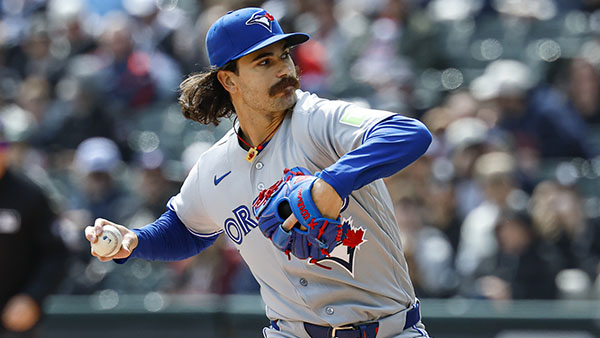
Dylan Cease’s 2.28 ERA and three elite put-away pitches face a Boston lineup that has scored 1 run across its last three games — and Patrick Sandoval’s 1.67 WHIP keeps both offenses in the conversation. The total sits at 7.0 with the over juiced to -120, yet the under at even money hasn’t moved despite a run environment that leans sharply toward pitching.
Patrick Sandoval vs. Dylan Cease: Boston Red Sox at Toronto Blue Jays Betting Preview
After last night’s 2-1 Blue Jays win — a grinding, pitching-heavy game that Boston turned into a slog — today’s matchup shifts to arguably the sharpest arm in this series. Dylan Cease is not a name you fade lightly, and the market knows it. The total sits at 7.0, already reflecting a pitcher-driven environment, but the under at +100 signals the books aren’t fully convinced either. That’s the tension worth exploring.
The core argument here isn’t complicated: Cease has been one of baseball’s most dominant starters in 2026, and he’s facing a Boston lineup posting a .721 OPS — below-average by any standard — while currently mired in a three-game losing skid with the offense sputtering badly. On the other side, Patrick Sandoval is capable, but 24 innings is a thin résumé, and his 1.67 WHIP raises real questions about traffic management. Two modest offenses, one elite arm, and a neutral dome park. That’s the shape of an under.
The under at +100 is not a gift — the market has already priced in a low-scoring environment. But Cease’s ceiling as a run-suppressor extends beyond what 7.0 fully captures when paired against a lineup this flat.
Game Info & Betting Lines
- Date/Time: Tuesday, August 11, 2026 | 7:07 PM ET
- Venue: Rogers Centre (Dome) | Park Factor: 1.00 — neutral run environment
- TV: MLB.TV, Sportsnet, NESN
- Probable Starters: Patrick Sandoval (BOS) vs. Dylan Cease (TOR)
- Moneyline: Boston Red Sox +123 / Toronto Blue Jays -149
- Run Line: Toronto Blue Jays -1.5 (+143) / Boston Red Sox +1.5 (-174)
- Total: 7.0 (Over -120 / Under +100)
Why This Number Is Close
The books set the total at 7.0 with good reason. Two teams that don’t light up the scoreboard, a dome park that doesn’t inflate run scoring, and a legitimate ace at the top for Toronto. The over is juiced to -120 — meaning the market leans ever so slightly toward runs — likely because Sandoval’s high WHIP makes the books nervous about big innings. That’s a fair read.
The case for the over hinges on Sandoval. His 1.67 WHIP over 24 innings means he’s averaging nearly two baserunners per inning. Against a lineup as modest as Toronto’s (.679 OPS, .241 team average), that might not be catastrophic — but baserunners have a way of compounding in a dome where weather isn’t a factor. Add in Toronto’s bullpen posting a 3.99 team ERA and a 1.320 WHIP on the season, and if Cease exits early for any reason, the back end could give runs back quickly.
Where the market is slightly off: it underweights just how completely Cease can shut down a lineup like Boston’s. His 13.11 K/9 means he doesn’t just suppress scoring — he removes baserunners before they become problems. Boston’s offense has scored just 1 run in its last three games. The market sees that as a cold streak likely to regress; I see it as a lineup that simply doesn’t have the profile to punish an elite arm. The under at +100 — meaning we’re not paying juice to access it — preserves enough value to make the play.
What Separates the Pitching
The gap between these two starters is substantial, and it runs in one clean direction. Dylan Cease operates with a four-pitch arsenal built around a 97.4 mph four-seamer (35.9% usage, 23.4% whiff, .283 xwOBA against) and one of the nastier sliders in the game — 89.1 mph, 41.0% whiff rate, .204 xwOBA against. His changeup is the finishing punch: 50.5% whiff rate, .194 xwOBA, and a 26.3% put-away rate. When Cease has all three working, batters aren’t just making outs — they’re missing entirely.
Against the Boston lineup, the matchup data reinforces the lean. Willson Contreras (.921 OPS, .475 xwOBA) is the most dangerous bat in the Red Sox order, but his BvP line against Cease reads 0-for-18 with 10 strikeouts across 18 plate appearances — a sample that confirms the slider-changeup combination is a genuine problem for him. Rafaela’s xwOBA sits at .336 overall and Sogard checks in at .299 — neither profile suggests a multi-run threat against this level of pitching.
Patrick Sandoval is a different story. His changeup generates a 39.1% whiff rate and his slider posts .290 xwOBA against — legitimate weapons that give Toronto’s lineup fits. Vladimir Guerrero Jr. carries a .378 xwOBA against left-handed pitching and has gone 3-for-6 in the small BvP sample, which bears watching. But Toronto’s lineup as a whole — George Springer (.712 OPS), Ernie Clement (.717 OPS, .281 xwOBA) — doesn’t generate the kind of power or hard contact to blow past a lefty with Sandoval’s swing-and-miss profile. His 9.38 K/9 suggests the ability to escape baserunner jams. The concern is his 10 walks in 24 innings — that’s a traffic issue that could produce an ugly inning — but the strikeout rate provides at least a partial pressure valve.
The net result: Cease creates zero-traffic innings through swing-and-miss dominance. Sandoval creates high-traffic innings he hopes to escape. Neither profile screams offense from the opposition.
The Pushback
The honest concern here starts with Sandoval’s WHIP. A 1.67 in 24 innings isn’t a fluke — it’s a pattern. If Toronto strings together a couple of walks with a Guerrero base hit in the third or fourth inning, runs can score in bunches before the bullpen even warms up. Boston’s pen has posted a solid 3.49 team ERA, so the Red Sox have some insurance, but a crooked number against Sandoval is a real possibility.
The other pushback: the over is priced at -120, meaning the market sees a slight tilt toward scoring. That’s not an accident. Lines move for reasons, and the books likely respect Sandoval’s WHIP history enough to leave room for a moderate-scoring game. The under at +100 is essentially a pick’em once you account for the vig, which tells you both outcomes are live.
I’m comfortable with the under anyway. The under at even money against a Cease start — where his 13.11 K/9 and three elite put-away pitches structurally limit run-scoring chances — is a position I’ll take at 2 units with moderate conviction.
Context and Situational Factors
Boston is 64-54 and has dropped three straight after a remarkable run that included 27 wins in 30 games. The offense scoring just 1 run in the last three games isn’t entirely a Cease-related outcome — the Red Sox have been cooling across the board. Toronto is 57-63, playing at home, and got a 2-1 win last night behind Jameson Taillon (who left with forearm discomfort) and Simeon Woods-Richardson.
Kazuma Okamoto — Toronto’s third baseman with 24 home runs — is listed day-to-day with a knee issue and was scratched last night, replaced by Charles McAdoo. That’s a meaningful power bat out of the lineup, which actually nudges the under further. On the Boston side, the injury list is extensive (Roman Anthony, Adley Rutschman, Garrett Crochet, Trevor Story, among others), so the lineup they’re running tonight is not the one that went on a franchise-record 15-game winning streak earlier this season.
Rogers Centre plays at a 1.00 park factor — perfectly neutral on run-scoring. No wind, no weather, no park quirks inflating this number. Everything comes down to the pitching and the offensive profiles, and both point the same direction.
The Play
Dylan Cease is the best starting pitcher in this series and one of the best in the American League in 2026. He’s throwing the ball at batters who can’t touch him — Contreras is 0-for-18 with 10 strikeouts against him. Sandoval has real swing-and-miss stuff but a concerning traffic record. Toronto’s lineup (.679 OPS) doesn’t punish walks the way a deeper order would. Boston’s lineup is cold, short-handed, and facing exactly the kind of arm that extends cold stretches.
The under at +100 gives us access to the most compelling pitching matchup on this slate without paying juice. That’s the play.
Bet: Under 7.0 | +100 | 2 Units | Moderate Confidence