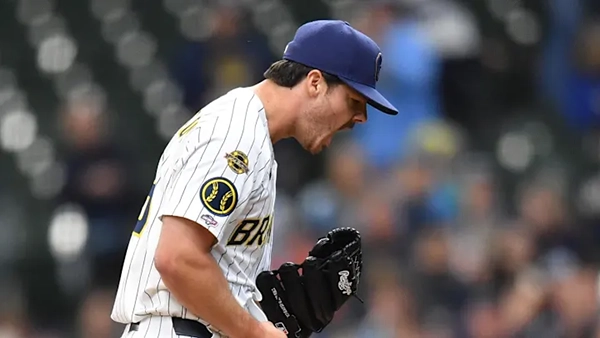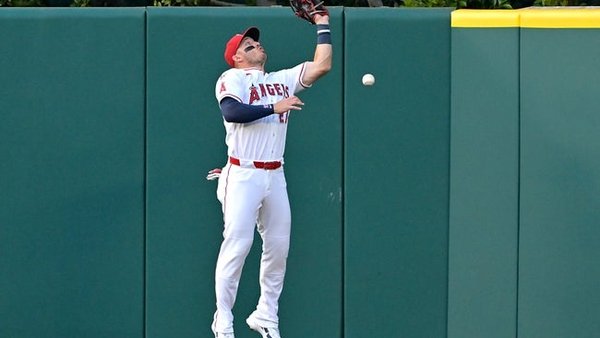
Two bottom-third AL offenses — Houston slugging .407, Kansas City a weaker .379 — are walking into a slight run-suppressing park with starters who pile up baserunners but rarely face lineups capable of cashing them. The model lands at 8.8 combined runs against a posted total of 9.5, and the 0.7-run gap holds across multiple confirming signals without a single clear catalyst to bridge it.
Tatsuya Imai vs. Luinder Avila: Houston Astros at Kansas City Royals Betting Preview
When two below-average starters face two below-average offenses in a slight run-suppressing environment, the market’s instinct is to shade the total upward — walks, traffic, early hooks, bullpen exposure. That logic has merit. But it breaks down when the offenses themselves can’t convert that traffic into runs consistently, and neither of these lineups has shown the power or on-base depth to reliably push games past nine runs. The 9.5 total feels like a number set for what could happen, not what these specific teams are likely to produce.
Kansas City arrives here having dropped its series opener against Texas, 4-2, while Houston is coming off a frustrating road trip to Anaheim where the Astros averaged just 2.7 runs over their last three games (8 runs total). The numbers project Kansas City 4.5, Houston 4.3 — a combined 8.8 runs against a posted total of 9.5. That 0.7-run gap is meaningful, and it holds up across multiple confirming signals.
This isn’t a game where the starters inspire confidence — both Imai and Avila carry elevated WHIPs and have shown control issues. But the offensive context matters just as much: both clubs rank in the bottom third of the American League in slugging, and neither has the lineup depth to consistently capitalize on baserunners when they do get them.
Game Info & Betting Lines
- Date/Time: Friday, June 12, 2026 | 8:10 PM ET
- Venue: Kauffman Stadium | Park Factor: 0.95 (slight run-suppressor)
- TV: MLB.TV, Space City Home Network, Royals.TV, KCTV5
- Probable Starters: Tatsuya Imai (HOU) vs. Luinder Avila (KC)
- Moneyline: Houston Astros -116 / Kansas City Royals -102
- Run Line: Kansas City Royals +1.5 (-170) / Houston Astros -1.5 (+138)
- Total: 9.5 (Over +104 / Under -128)
Why This Number Is Off
The market is clearly accounting for the walk rates. Imai has issued 23 walks in 34.1 innings, and Avila isn’t far behind at 19 in 31.1 frames. Two starters who consistently put runners on base in front of middle-relief pitchers who carry ERAs north of 4.00 — that’s a reasonable case for the over. The market is pricing for leakage, not dominance.
But here’s the problem: walks without power are runs left on base. Houston’s team slugging sits at .407, and Kansas City’s is even weaker at .379. Both clubs rank near the bottom of the AL in home runs — Houston has 88 on the season, Kansas City just 63. Neither lineup has shown the ability to turn walks into crooked numbers with any consistency. Kansas City is 6-4 in their last ten, but a -50 run differential on the season tells you those wins aren’t coming in blowouts — they’re grinding out low-scoring games, not running up totals.
Kauffman Stadium’s park factor of 0.95 isn’t dramatic, but it nudges the expected run environment slightly downward. Combined with two offenses that simply don’t generate runs at a rate that clears 9.5 in the median game, the total looks about half a run too high.
What Separates the Pitching
Neither arm here is a stopper, but the Statcast profiles tell a more nuanced story than the raw ERA lines suggest.
Tatsuya Imai owns a 5.24 ERA with a 1.398 WHIP, but his swing-and-miss capability is genuine — a 9.44 K/9 backed by a changeup and slider each generating 32.1% whiff rates. The changeup (86.7 mph, xwOBA .281 against) and slider (89.7 mph, xwOBA .301 against) are legitimate out pitches when Imai commands them. The concern is his four-seam fastball, which sits 94.8 mph but carries an xwOBA of .435 against — hitters are doing real damage when they get to it. Against a Kansas City lineup where Jac Caglianone posts a .496 xwOBA against right-handed pitching with a 34.3% hard-hit rate, and Bobby Witt Jr. sits at .441 xwOBA — Imai’s fastball is a liability if he can’t locate his secondary stuff early.
Luinder Avila carries a 4.02 ERA despite a bloated 1.596 WHIP, and that gap is explained by his hard-contact suppression: just 2 HR allowed in 31.1 innings. His best weapon is a curveball that generates a .159 xwOBA against with a 28.4% whiff rate — genuinely elite contact suppression on that pitch. The changeup adds another soft-contact layer at .275 xwOBA. The problem is his four-seam, which sits 92.2 mph and gets hit to a .369 xwOBA. Yordan Alvarez, batting second for Houston, posts a .576 xwOBA overall with a .606 mark against left-handed pitching — Avila throws from the left side, and that matchup is the most dangerous single plate appearance in this game.
The gap between these two isn’t dramatic enough to swing the game shape significantly. Both create messy innings with traffic but limited power damage — which is exactly the run environment the under needs.
The Pushback
The honest case against the under starts with the WHIPs. When starters consistently put runners on base and then exit early, bullpens absorb more innings — and both Houston’s bullpen (4.85 ERA) and Kansas City’s (4.38 ERA) are capable of giving up runs in clusters. A short start from Imai combined with a couple of KC crooked numbers is a real scenario.
The Alvarez threat is the single biggest variable here. A .576 xwOBA with 22 home runs and a .606 mark against lefties — batting second, meaning he sees Avila early and often — is a genuine bust risk for the under. One Alvarez multi-run shot rewrites the equation entirely. I’m not dismissing that. But the rest of the Houston lineup doesn’t back him up the way a true over lineup does. Paredes (.328 xwOBA), Altuve (.338), and the back third of the order are hitters who make contact without generating the hard-hit rates that push totals north of nine.
Kansas City’s recent form is also worth noting — a 6-4 mark in their last ten sounds productive, but the underlying run differential (-50 on the season) signals those wins were mostly low-scoring affairs. The Royals’ offense ranked 28th in the AL in slugging this season. Even with Caglianone’s pop — and he’s been legitimately dangerous, with back-to-back multi-homer games earlier this week against Texas — the supporting cast (Massey at .723 OPS, Loftin at .695) doesn’t project a lineup capable of sustained crooked-number innings.
Run Environment & Game Shape
Both teams have recent evidence pointing toward under-friendly outputs. Houston averaged 2.7 runs per game across their last three contests in Anaheim — 2 runs on June 10, 1 run on June 9, and 5 runs on June 8. Kansas City scored 2 runs against Texas in Thursday’s series finale and 4 in Wednesday’s extra-inning loss. Neither offense is in a run-scoring groove heading into this matchup.
The game shape also matters. Both starters walk hitters at elevated rates, which generates traffic — but traffic with a .379 and .407 team slugging backdrop doesn’t automatically convert to runs. You need hits-with-runners or power to clear the bases, and on a given night, neither of these offenses generates enough of either to build a multi-run cushion consistently. Kauffman’s 0.95 park factor is modest, but it leans the right direction. With no hot offensive streak on either side, and two pitching staffs whose aggregate ERA sits in the mid-4s, this game is far more likely to land in the 7-to-9 run range than push past 9.5. The traffic will be there — the production to cash it in likely won’t be, and there’s no momentum indicator pushing toward an offensive outburst from either club.
Rejected Angle: KC +1.5 Run Line
The numbers give Kansas City a projected edge of roughly 0.2 runs (4.5 to 4.3), which is real but thin. There’s no credible path to multi-run separation here — the starting pitching quality is comparable, the offenses are similarly limited, and neither bullpen creates a decisive gap. At -170 juice on KC +1.5, you’re laying significant price for a cover that requires Houston to stay within one run or KC to win outright by multiple. That’s not a bet I can endorse when the margin is this narrow. The under is the cleaner expression of the same read: both offenses underperform, both starters generate traffic without catastrophic damage, and the game lands short of 9.5 without needing a specific win-margin outcome to cash.
The Pick
Under 9.5 (-128) | 1 Unit | Lean
The numbers land at 8.8 combined runs. The market is at 9.5. That 0.7-run gap is backed by two offenses that rank near the bottom of the AL in slugging, a slight run-suppressing park, and recent scoring context showing both teams have been well under that threshold. Imai and Avila will generate traffic — neither is a shutdown arm — but traffic without the power to clear the bases doesn’t become runs at a rate that beats 9.5 in the median game. The Yordan Alvarez single-game bust risk is real and worth noting, but one dangerous hitter doesn’t overcome a combined team context that points consistently toward the lower end of the run environment. Lean Under 9.5 at -128, 1 unit.