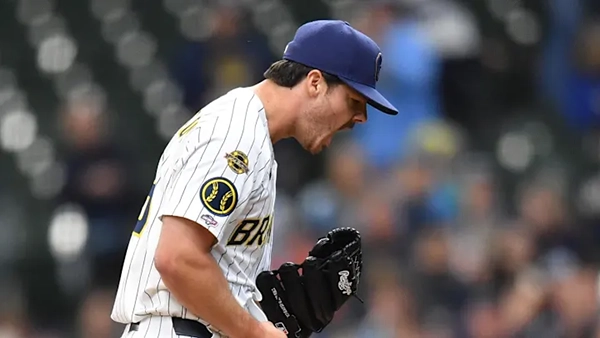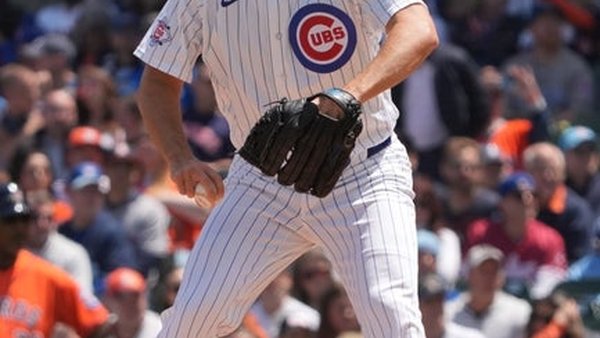
Both the Athletics and Cubs are running sub-.720 OPS offenses over a stretch where each club is 3-7 in their last 10 games — and Tuesday’s 2-1 final at Wrigley wasn’t an aberration, it was a data point. The total is posted at 9, but the combined .384/.393 SLG figures and Jeffrey Springs’ controlled efficiency against Colin Rea’s high-traffic profile tell a different story than a mid-range number implies.
Jeffrey Springs vs Colin Rea: Athletics at Chicago Cubs Betting Preview
Tuesday night’s game ended 2-1. Not 7-5, not 6-4 — 2-1. That’s the environment we’re walking back into at Wrigley Field on Wednesday night, and the market has set the total at 9, which on the surface looks reasonable given both starters’ ERAs. But when you account for two offenses each running a .718-.720 OPS and both clubs sitting 3-7 in their last 10 games, the path to “over” requires a level of offensive output neither team has shown recently.
This isn’t about one elite starter shutting down a lineup. It’s about two below-average-to-serviceable arms facing offenses that have gone quiet. The Cubs are 5-17 in their last 22 games. The A’s carry a -33 run differential. Neither offense has the firepower to bail out a middling pitching performance, and in a neutral park with a 1.02 factor, there’s no environmental amplifier to push this over the number.
The under at -122 isn’t a lock — the juice acknowledges the market leans that way too. But the convergence of cold offenses, Tuesday’s low-scoring template, and a combined team SLG of .384 and .393 makes this the clearest angle on the board.
Game Info & Betting Lines
- Date/Time: Wednesday, June 3, 2026 | 8:05 PM ET
- Venue: Wrigley Field | Park Factor: 1.02 (effectively neutral)
- Probable Starters: Jeffrey Springs (Athletics, 3-6, 4.07 ERA) vs Colin Rea (Cubs, 5-3, 4.70 ERA)
- Moneyline: Athletics +104 / Chicago Cubs -122
- Run Line: Chicago Cubs -1.5 (+160) / Athletics +1.5 (-194)
- Total: 9 (Over +100 / Under -122)
Why This Number Is Close
The market is doing exactly what it should: pricing a game between two mid-rotation starters at a neutral venue with below-average offenses at a moderate total of 9. There’s a legitimate case for the over — Springs has surrendered 12 home runs in 66.1 innings, and the A’s bullpen has real injury concerns with Brooks Kriske on the 60-day IL. On the Cubs’ side, Rea’s 1.37 WHIP and negative -0.25 WAR signal a starter who frequently runs into trouble before his defense bails him out.
The flip side: the numbers project a combined output that barely clears the posted total by a fraction of a run. That’s a razor-thin margin. When the scoring outlook sits this close to the number, the under has natural value — any slight underperformance by either offense (entirely plausible given their recent forms) and the under cashes without drama. The Cubs’ .384 SLG and the A’s .393 SLG tell you these aren’t lineups manufacturing extra-base damage at will.
Where the market might be slightly wrong: it’s pricing this game on starter ERA profiles that suggest mid-range scoring, but those ERAs don’t capture how cold both offenses have been. The Cubs and A’s have both been suppressing run output well below their season baselines recently, and Tuesday night’s 2-1 result isn’t a fluke — it reflects where these teams are right now.
What Separates the Pitching
Jeffrey Springs is the better arm here by a meaningful margin. His 4.07 ERA, 1.19 WHIP, and 1.17 WAR all outperform Rea across every traditional category. Springs’ arsenal leans heavily on his split-finger — the Cubs’ own starter uses a similar weapon — but the more relevant factor for the total is pitch efficiency. Springs has walked only 20 batters in 66.1 innings, a controlled approach that limits base traffic and keeps innings from expanding. Against the Cubs’ lineup, the top-order hitters have manageable profiles: Nico Hoerner sits at a .315 xwOBA, Bregman at .347. Even Ian Happ, the most dangerous bat at .453 xwOBA, carries a .365 xwOBA versus left-handed pitching — Springs’ primary handedness advantage dampens Happ’s ceiling somewhat.
Colin Rea is the vulnerability point in this total. His 4.70 ERA, 1.37 WHIP, and -0.25 WAR identify a starter who consistently puts runners on base. His four-seam fastball sits at 91.9 mph with just a 16.9% whiff rate and a .387 xwOBA against — hitters are making solid contact when they see it. His best weapon is the split-finger: 33.7% usage, 40.5% whiff rate, .224 xwOBA against — that pitch can neutralize hitters, but it requires command to work effectively. Against the A’s lineup, the danger spots are real: Nick Kurtz carries a .504 xwOBA overall and a .570 xwOBA versus right-handed pitching — Rea is right-handed, and Kurtz just hit his 11th homer last night off this same Cubs club. Brent Rooker has a .600 BvP average in 5 PA against Rea with a homer. These are legitimate exposure points.
The gap between these arms isn’t about a dominant ace shutting down a lineup — it’s about Springs being a controlled, efficient mid-rotation arm versus Rea being a high-traffic, contact-heavy starter who relies on his defense. That distinction matters for run prevention, not just ERA.
Key Hitters & Matchup Angles
The A’s lineup has two genuinely dangerous bats against Rea. Kurtz (.952 OPS, 11 HR) is locked in — his .570 xwOBA versus righties is an elite figure, and the homer off the Cubs’ pitching staff Tuesday night underscores the threat. Shea Langeliers (.893 OPS, 14 HR) has a .451 xwOBA overall and a 9.3% barrel rate, though his BvP history against Rea is notably cold at .143 in 7 PA with two strikeouts. Carlos Cortes (.915 OPS) adds another productive bat in the middle of the order.
On the Cubs’ side, the offense is built around patience rather than power. Hoerner’s .315 xwOBA and 8.1% strikeout rate make him a contact grinder who won’t expand at-bats — he’s not beating you with power. Ian Happ (.453 xwOBA, 13 HR) is the lineup’s best hitter but faces the handedness disadvantage against Springs noted above. Pete Crow-Armstrong (.421 xwOBA) showed power Saturday in St. Louis, but his .389 xwOBA versus left-handers is a step below his right-handed splits.
The cumulative picture: both lineups have real holes, neither has shown the sustained offensive output in recent weeks to reliably push a total over 9, and the most dangerous hitters face meaningful matchup friction against the opposing starters.
Pushback: Why the Over Isn’t Dead
I’m not going to pretend this is easy money. There are genuine over arguments worth taking seriously.
Rea’s exposure is real. A .387 xwOBA against his fastball is a bad number, and the A’s hit righties hard — Kurtz’s .570 xwOBA versus RHP, Rooker’s BvP history against Rea specifically, and Langeliers slugging .893 OPS on the season all represent legitimate threats to a multi-run inning early. If Rea doesn’t command his split-finger, the A’s can exploit that fastball aggressively.
The bullpen situation is a concern. Both clubs have meaningful injury attrition in their relief corps. The Cubs have Porter Hodge (60-day IL, elbow), Hunter Harvey (60-day IL, triceps), and Julian Merryweather and Adbert Alzolay both day-to-day. The A’s are without Brooks Kriske on the 60-day. If either starter exits early — plausible given Rea’s workload and Springs’ recent HR rate — the bullpen bridge could leak runs quickly.
Wrigley isn’t a run suppressor. The 1.02 park factor is effectively neutral, but any wind blowing out can change the calculus in a hurry. This isn’t a dome game.
The reason I’m not on the Cubs moneyline at -122 despite the home advantage: the price is identical to the under juice, and a moneyline bet requires picking a winner between two teams currently a combined 6-14 over their last 10. The A’s ML at +104 is an interesting price but the run differential (-33) and recent form give me no confidence in backing them outright either. Neither side of the moneyline offers the structural edge the total does.
Run Environment & Game Shape
The total is set at 9 with the over at +100 and the under at -122. That line reflects a market that’s already leaning toward a low-scoring game — you’re laying a dime-twenty to take the under, which means the book has done its job pricing out casual money. The question is whether that -122 price still holds value given the game environment.
I think it does. Here’s the shape I expect: Springs goes 5-6 innings, limiting the Cubs to 1-2 runs given their cold offense and his handedness advantage. Rea navigates 4-5 innings with some traffic, maybe surrenders a solo shot to Kurtz or Rooker, but his split-finger keeps the A’s from breaking out for a crooked number. Both bullpens are depleted enough that a clean 3-4 inning bridge from either side is uncertain, but the injury attrition also means neither club has the high-leverage arms to strand inherited runners consistently. The most likely game shape: a 3-2 or 4-3 final that doesn’t require either offense to actually perform at season-average levels.
Tuesday’s 2-1 result isn’t a data point I’m overweighting in isolation, but it’s directionally consistent with the broader context — two offenses slugging under .395, two starters who generate soft contact without being dominant, and a Wrigley crowd that’s watched their team go 5-17 in 22 games. There’s no momentum here, and momentum matters when you need extra-base hits to push a total.
The Pick: Under 9 (-122), 2 units, moderate confidence. The structural case is clear — cold offenses, contact-heavy starters, depleted bullpens on both sides, and a market price that’s fair but still beatable given the recent scoring context. This isn’t a lock, and the Rea exposure is real enough that I’m not going heavy. But the under is the play.
Bet: Under 9 | -122 | 2u | Moderate Confidence