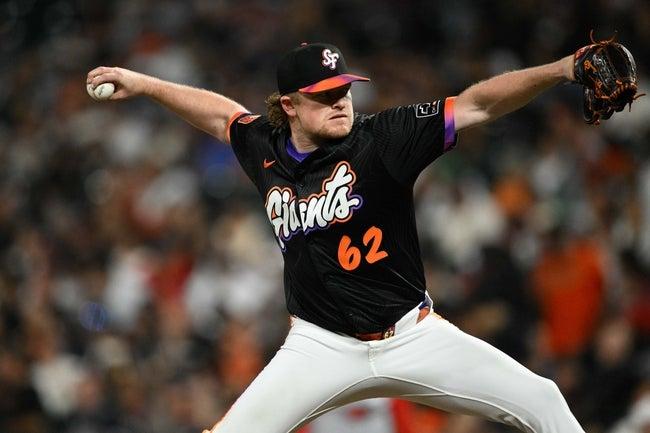
Shane Drohan’s 9.0 K/9 and a .206 xwOBA against his four-seamer walk into a Giants lineup missing Casey Schmitt, Victor Bericoto, and Matt Chapman — three contributors stripped from a rotation already averaging just 4.14 runs per game. Milwaukee sits 22 games ahead of San Francisco in the standings and carries a +205 run-differential swing in this matchup, yet the moneyline is sitting at -122.
Shane Drohan vs Logan Webb: Milwaukee Brewers at San Francisco Giants Betting Preview
The Brewers walk into Oracle Park tonight as a 67-40 club with a +145 run differential facing a Giants team sitting at 45-62 with a -60 run differential. That is a 205-run swing between two organizations — one that is a genuine NL pennant contender and one that is playing out the string in July. Yet the market has Milwaukee priced at -122. That’s modest juice for a team this far ahead in the quality spectrum.
The away-team discount is doing real work here. San Francisco’s ballpark, Logan Webb’s familiarity with Oracle, and the Giants’ Monday shutout win are all baked into a number that looks tighter than the underlying data justifies. But after yesterday’s 8-2 Milwaukee win — where all nine Brewers starters recorded a hit — the lineup is locked in and the pitching matchup shifts to Shane Drohan, who carries a genuine edge over Webb in the strikeout column.
This isn’t about finding a hidden angle. It’s about recognizing that -122 is a clean price on the NL’s best team against a club with a losing record, a depleted roster, and a momentum problem that has grown worse as the summer has progressed.
Game Info & Betting Lines
- Date/Time: Wednesday, July 29, 2026 | 3:45 PM ET
- Venue: Oracle Park | Park Factor: 0.92 (pitcher-friendly, suppresses run scoring)
- Probable Starters: Shane Drohan (MIL, 5-4, 3.51 ERA) vs Logan Webb (SF, 5-7, 3.98 ERA)
- Moneyline: Milwaukee Brewers -122 / San Francisco Giants +104
- Run Line: Milwaukee Brewers -1.5 (+140) / San Francisco Giants +1.5 (-170)
- Total: 7.5 (Over -114 / Under -106)
Why This Number Is Off
The market is doing its job. Oracle Park suppresses scoring, Webb is comfortable at home, and the Giants did win Monday’s opener 3-0 — so there’s a legitimate counter-narrative that keeps the line from ballooning further against San Francisco. The market is pricing in genuine home-field resistance, and that’s reasonable.
But here’s where I think it’s slightly wrong: the Giants’ injury situation has quietly gutted their lineup depth. Casey Schmitt (21 HR, .784 OPS) and Victor Bericoto are both on the 10-Day IL, and Matt Chapman is also unavailable with an abdominal issue. That’s three meaningful contributors removed from a lineup that was already below-average in run creation. San Francisco scores just 4.14 runs per game on the season — and that number gets smaller when you strip out three everyday contributors.
Meanwhile, Milwaukee’s .336 team OBP versus San Francisco’s .308 is a persistent structural advantage. The Brewers get on base at a fundamentally higher rate, and that gap compounds over nine innings. The -122 price doesn’t fully account for the depth of that lineup versus a short-handed Giants roster.
The concern is that Webb at home has historically outperformed his road numbers, and the Giants showed two days ago they can keep Milwaukee off the board entirely. The line already accounts for some of that. I just don’t think it accounts for enough of the talent gap.
What Separates the Pitching
The head-to-head comparison between Drohan and Webb is closer on the surface than it is in the data. Drohan’s 3.51 ERA and 9.0 K/9 compare favorably to Webb’s 3.98 ERA and 7.1 K/9 across 82 and 113 innings respectively. The strikeout gap matters most — a pitcher who misses bats at Drohan’s rate creates different innings than one who relies on contact management.
Drohan’s arsenal centers on a 94.8 mph four-seamer at 30.8% usage that generates a remarkable .206 xwOBA against — that’s elite contact suppression on his primary pitch. His slider at 34.4% whiff rate and changeup at 36.4% whiff rate give him two genuine swing-and-miss weapons beyond the fastball. The Giants’ lineup, already thinned by injuries, will face a pitcher whose two-strike arsenal is genuinely punishing.
Webb’s profile is almost the inverse. His primary pitch is a sinker at 30.8% usage and 92.1 mph that generates only a 9.8% whiff rate — he lives on weak contact and ground balls rather than strikeouts. His changeup (27.0% whiff, .290 xwOBA) and sweeper (23.3% whiff, .287 xwOBA) are his best miss-bat options, but they’re secondary weapons, not a foundation. Against Milwaukee’s lineup — which features Brice Turang’s .416 xwOBA and Jackson Chourio’s .409 xwOBA against right-handed pitching — Webb’s contact-dependent approach creates genuine vulnerability. In 14 plate appearances against Webb, Turang is hitting .429 with an xwOBA that suggests he squares him up regularly; the sample is small but the contact quality is real.
The gap isn’t enormous, but it’s real and it points consistently in Milwaukee’s direction. Drohan creates strikeout innings that limit rally opportunities. Webb creates contact innings that occasionally snowball when the defense or sequencing breaks down.
Rejected Angles: Run Line and Total
I’m not going to the Brewers -1.5 (+140) even though the price is tempting. Milwaukee’s 67-40 record and +145 run differential make them the better team on paper, but Webb at Oracle is capable of eating innings efficiently and keeping games within a run. The Giants also own solid bullpen depth on the back end of their roster, and one-run games are a real possibility when two sub-4.00 ERA starters take the mound in a pitcher-friendly park. The +140 is an attractive number, but I’m not comfortable giving away the extra insurance of the full moneyline for what amounts to a coin flip on game margin.
On the total, the numbers project roughly 8.2 combined runs — barely clearing 7.5 — but that slim margin doesn’t give either direction enough of an edge to act on. Oracle’s 0.92 park factor is actively pushing that projection down, and with two starters carrying sub-4.00 ERAs, the run environment is genuinely uncertain in both directions. That’s not the setup you need to take a side on a total. Yesterday’s result (the Giants got blown out 8-2) is a reminder that projected run totals are context-dependent, and a single outlier game doesn’t change the structural case for staying neutral here. Pass on the total entirely.
The Bauers Question
Jake Bauers is listed day-to-day with a toe injury, and there’s a real lineup impact worth acknowledging before dismissing the concern. Bauers is having a legitimate season — 18 home runs, a .856 OPS, and 60 RBI in 325 at-bats — and he’s been one of Milwaukee’s most consistent run producers in the middle of the order. Losing him for even one game removes a genuine power threat and shifts the lineup construction in ways that could matter against a ground-ball pitcher like Webb. That’s a real variable, not a throwaway injury report. That said, Milwaukee’s depth is the reason this team is 67-40. Andrew Vaughn is hitting .310 with an .882 OPS, and the Brewers have been able to absorb lineup disruptions all season without a significant drop in production. A Bauers absence matters at the margins; it doesn’t change the fundamental case.
Run Environment & Game Shape
The numbers project approximately 8.2 combined runs for this game — barely clearing the 7.5 total. That’s useful context for understanding why this figures to be a competitive, lower-scoring game rather than a blowout, but it’s not a betting signal in either direction. Oracle’s 0.92 park factor is actively compressing the run environment, and with Drohan and Webb both sitting under 4.00 ERA, the conditions favor pitching. Neither the over nor the under has sufficient edge to bet here — the park, the starters, and the modest projected margin all point toward passing on the total and focusing on the side.
What the run environment does tell us is that this game is likely to be decided by one or two runs, which is exactly why the moneyline is the right vehicle. Milwaukee doesn’t need a blowout to cover the bet — they just need to win. And a team with a 205-run differential edge over their opponent, facing an injury-depleted lineup with a contact-dependent starter, should be able to do exactly that at a -122 price.
The Pick
Everything in this game points the same direction. Milwaukee enters with a 22-game cushion in the standings and a +205 run differential edge over San Francisco. Drohan’s 3.51 ERA and 9.0 K/9 give him a legitimate edge over Webb’s 3.98 ERA and contact-reliant profile, and the Statcast arsenal backs it up — a .206 xwOBA on his primary fastball and two secondary pitches above 34% whiff rate is a tough combination for a short-handed Giants lineup. San Francisco is missing Schmitt, Bericoto, and Chapman, stripping three meaningful contributors from a roster that was already below-average in run creation at 4.14 runs per game. The -122 price is playable — it’s modest enough to offer real value against the talent gap while not requiring a blowout to cash.
Bet: Milwaukee Brewers moneyline -122 — 2 units, moderate confidence.