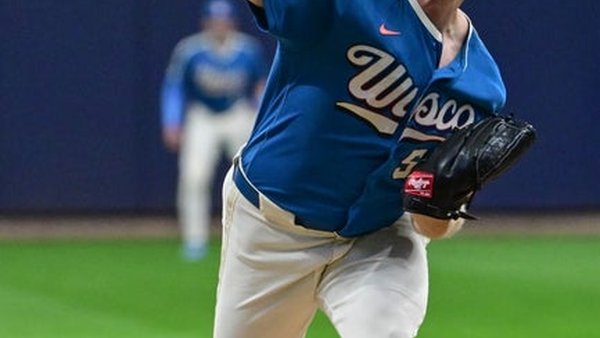
Brandon Woodruff’s 1.033 WHIP and elite command face Brady Singer’s 5.32 ERA and a .370 xwOBA against his primary sinker — in a 1.10 park factor environment where Singer has already surrendered 17 home runs in 66 innings. The Brewers are a -162 moneyline favorite available at -102 on the run line, and that gap between implied probability and posted price is the friction point this analysis targets.
Brandon Woodruff vs. Brady Singer: Milwaukee Brewers at Cincinnati Reds Betting Preview
The headline number here is the run line price: Milwaukee Brewers -1.5 at -102. That’s near-even money on a team the market prices at -162 on the moneyline. That gap doesn’t survive scrutiny once you examine what’s actually driving this game — a legitimate ace against one of the most hittable starting pitchers in the National League, in a hitter-friendly park that punishes exactly the kind of mistakes Singer has been making all season.
The market noise is real. Milwaukee arrives from Atlanta having dropped two of three before salvaging Sunday’s game, and there’s a significant injury caveat attached to their starter that I’ll address directly. But stripping that context away for a moment, the structural case is overwhelming: Milwaukee sits at +119 run differential, Cincinnati at -46 — a 165-run gap that reflects franchise-level separation, not a recent hot streak. Add a 72-run scoring advantage on the season and a pitching staff showing a 1.13-run ERA advantage (3.45 vs. 4.58) over Cincinnati’s rotation. These aren’t small edges.
The Reds arrive playing well, winners of four of their last six coming out of New York. But Brady Singer facing a Milwaukee lineup averaging 5.29 runs per game in a 1.10 park factor environment is the kind of matchup that produces multi-run separation, not a coin-flip finish.
Game Info & Betting Lines
- Date/Time: Monday, June 22, 2026 — 7:10 PM ET
- Venue: Great American Ball Park (Park Factor: 1.10 — hitter-friendly)
- TV: MLB.TV, Reds.TV, Brewers.TV
- Probable Starters: Brandon Woodruff (MIL, 2-1, 3.60 ERA) vs. Brady Singer (CIN, 3-6, 5.32 ERA)
- Moneyline: Milwaukee Brewers -162 / Cincinnati Reds +136
- Run Line: Milwaukee Brewers -1.5 (-102) / Cincinnati Reds +1.5 (-118)
- Total: 9.5 (Over -108 / Under -112)
Why This Number Is Off
The market is doing legitimate work here. It knows the Brewers just lost two straight in Atlanta before Sunday’s blowout, it knows Cincinnati’s bullpen has shown late-game resilience, and it knows the Reds have 96 home runs — the most dangerous power number in this matchup. A hitter-friendly park with Cincinnati’s pop creates real one-big-inning risk that keeps the run line honest at first glance.
But here’s the problem: the market is pricing Milwaukee’s run line almost identically to a coin flip, which means it’s either ignoring the Singer-Woodruff gap entirely or over-weighting Cincinnati’s power upside as a hedge. Neither of those positions holds. Singer’s 5.32 ERA and 1.606 WHIP in 66 innings aren’t just bad — they reflect a starter getting hit hard and consistently, not one suffering from bad luck or sequencing. His sinker, which he throws 48.1% of the time at 91.3 mph, generates a .370 xwOBA against. That’s a primary pitch getting punished.
At -102 on the run line, you’re essentially getting Brewers -1.5 at near-even money on a team the board respects as a -162 favorite. The implied probability math doesn’t support that spread — a team winning 62% of the time outright should be laying 1.5 runs far more frequently than even-money pricing implies.
What Separates the Pitching
The gap between these two starters isn’t subtle — it’s structural. Brandon Woodruff is operating at 3.60 ERA with a 1.033 WHIP across 30 innings this season, posting a legitimate ace-level profile with 25 strikeouts against just 7 walks. His command is the story: 7 walks in 30 innings is elite control for a power arm. The innings he creates are quick, low-damage, and rarely spiral.
Brady Singer creates the opposite kind of innings. His sinker — the pitch he relies on almost half the time — is posting a .370 xwOBA against, which means hitters are making consistent quality contact against his primary offering. His slider generates more swing-and-miss at 28.0% whiff rate, but it’s the weapon he reaches for only 32.5% of the time, and his cutter is actively dangerous at .468 xwOBA against. The result: 17 home runs allowed in 66 innings, a 2.32 HR/9 that is catastrophic in a park playing at 1.10 runs.
Now layer in the Milwaukee lineup against Singer. Christian Yelich leads off and carries a .392 xwOBA vs. right-handers, setting the table immediately. Jackson Chourio carries a .438 xwOBA overall and sits at .434 against right-handers specifically — he profiles as Singer’s toughest at-bat all night. Brice Turang is at .465 xwOBA against righties and went 4-for-13 with a homer in his limited BvP history against Singer. Jake Bauers posts a .451 xwOBA vs. right-handed pitching with a 9.0% barrel rate and 35.2% hard-hit rate — exactly the contact profile that turns Singer’s flat sinker into extra-base damage. Andrew Vaughn (.352 AVG, .963 OPS on the season) adds further depth to a lineup that punishes mistakes throughout the order.
Against Woodruff, Cincinnati’s top-of-order shows more modest xwOBA numbers. JJ Bleday profiles as the most dangerous matchup at .452 xwOBA vs. right-handers, and Nathaniel Lowe carries a .468 xwOBA against right-handed pitching — directly relevant since Woodruff throws from the right side. But Woodruff’s command profile limits the damage — his 7 BB in 30 IP means he’s not putting runners on base cheaply, and the Reds will need strung-together contact to manufacture runs rather than waiting on walks to fuel rallies.
The Woodruff Caveat (And Why I’m Still Here)
This is the part that almost stops this bet entirely. Brandon Woodruff is listed on Milwaukee’s 15-Day IL with a shoulder injury. The game data shows him as the probable starter at 2-1, 3.60 ERA — but IL designations require confirmation before money goes down. If Woodruff doesn’t take the ball Monday night, the structural case for -1.5 collapses. The run line price is built around ace-level pitching suppressing Cincinnati’s offense, and a replacement arm in a 1.10 park against a lineup with 96 home runs is an entirely different proposition.
I’m not ignoring this. The bet is conditional on Woodruff’s confirmed start. Verify the lineup before first pitch. If he’s scratched, pass entirely — this is not a play without him.
That said, if Woodruff is confirmed: the structural edge is real, the price is generous, and the Singer-Woodruff gap is wide enough to justify Milwaukee covering 1.5 runs.
Cincinnati’s Concerns
Elly De La Cruz is on the 10-Day IL with a hamstring injury. His absence matters — he’s been Cincinnati’s most dynamic offensive weapon at .855 OPS, and the Reds are 6-17 in games without him this season. The lineup is functional without him, but it loses the elite ceiling threat that makes Cincinnati genuinely dangerous in one-swing situations.
Beyond De La Cruz, the Reds are traveling back from New York, which adds minor fatigue friction. Their current 5-5 over the last 10 mirrors Milwaukee’s identical recent record, so neither team owns a momentum edge. What separates them is the starting pitching gap and the run differential gap — both of which tilt decisively toward Milwaukee.
Run Environment & Game Shape
Great American Ball Park playing at a 1.10 park factor means run totals inflate here, and the 9.5 total reflects that reality. The over/under is set where it is because Singer’s profile projects to bleed runs — his 1.606 WHIP and 2.32 HR/9 in a hitter-friendly environment create a predictable damage pattern: base runners, contact damage, and the occasional multi-run inning that makes his starts hard to project cleanly.
The game shape that makes the run line work looks something like this: Woodruff keeps Cincinnati honest for five-plus innings, holding the Reds to two or three runs by attacking the zone, limiting free passes, and preventing the kind of big crooked number that would require Milwaukee to play catch-up. Meanwhile, Singer runs into trouble in the middle innings — the third through fifth are historically his most vulnerable — where Milwaukee’s right-handed heavy lineup sits on his sinker and does damage. Chourio’s .434 xwOBA against righties, Turang’s .465, and Bauers’ 9.0% barrel rate all point toward a multi-run outburst that puts the game out of reach before Cincinnati’s bullpen can close it down.
That game script — Woodruff suppressing, Singer allowing a multi-run Milwaukee outburst in innings three through five — is exactly the kind of separation that covers 1.5 runs. It doesn’t require Milwaukee to blow the doors off. It just requires Singer to be what his numbers say he is: a starter who gives up runs in bunches against quality lineups in hitter-friendly parks.
The Play: Milwaukee Brewers -1.5 (-102) — 2 units, moderate confidence. This bet is contingent on Brandon Woodruff’s confirmed start. Verify before first pitch Monday. If he’s confirmed on the mound, the structural case is sound and the price is right.