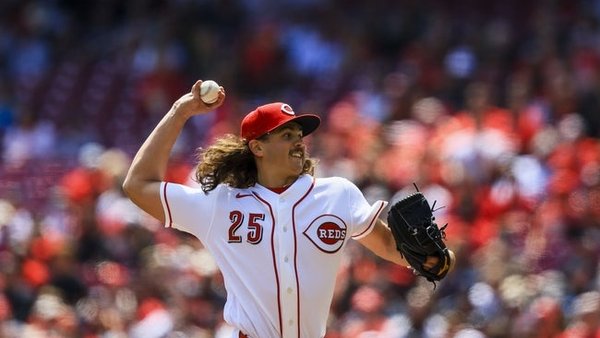
Rhett Lowder’s 5.14 ERA and 16 home runs allowed in 112 innings make Great American Ball Park look like an Over setup — but the total at 9.5 is only half the equation. Shane Drohan’s 35.2% slider whiff rate against a Cincinnati lineup that strikes out over 1,300 times tells a different story on the other side of the ledger.
Shane Drohan vs. Rhett Lowder: Milwaukee Brewers at Cincinnati Reds Betting Preview
The noise around this game is straightforward: Milwaukee is the heavy favorite at -168, the Brewers own an 87-54 record and a commanding lead in the NL Central, and Rhett Lowder is the kind of home starter you circle on the calendar when you’re hunting run-scoring opportunities. But the moneyline is off the table for me — -168 blows past the juice ceiling I’m willing to accept regardless of how clean the edge looks on the surface. So the real bet here isn’t which team wins. It’s how many runs cross the plate — and specifically, whether the total stays under 9.5.
The numbers project 10.2 combined runs — Milwaukee contributing 5.4, Cincinnati 4.8 — against a posted total of 9.5. That gap points toward the Over on the surface. But totals bets aren’t just about which direction a projection points — they’re about where the suppression actually comes from, and in this game, the suppression argument is stronger than the inflation argument once you dig into the pitching.
Milwaukee arrives having dropped its series finale to Chicago 2-1 — Logan Henderson was sharp but the offense went quiet. The Reds come off a 7-3 win against San Diego to close out a series win, showing they can generate offense in bunches at home. Both offenses have cooled in small recent samples, but season-long baselines are what drive the analysis here, not three-game blips.
Game Info & Betting Lines
- Date/Time: Friday, September 4, 2026 | 6:10 PM ET
- Venue: Great American Ball Park (Park Factor: 1.10 — hitter-friendly)
- Probable Starters: Shane Drohan (MIL) vs. Rhett Lowder (CIN)
- Moneyline: Milwaukee Brewers -168 / Cincinnati Reds +139
- Run Line: Milwaukee Brewers -1.5 (-102) / Cincinnati Reds +1.5 (-118)
- Total: 9.5 (Over -112 / Under -108)
Why the Under Is the Right Side
The market has set 9.5 as a reasonable number — and there’s a legitimate case for the Over. Lowder’s 5.14 ERA and 1.46 WHIP are real vulnerabilities, and Milwaukee’s offense is not a lineup that lets pitchers strand runners quietly. Jake Bauers carries an xwOBA of .449 with an 8.1% barrel rate, and in 10 prior plate appearances against Lowder, he’s hitting .500 with 2 home runs. That’s a small sample, but it fits the profile of what Lowder surrenders to right-handed power bats. The park factor of 1.10 is a real headwind for the Under — this isn’t a neutral environment.
But here’s where I think the market has it slightly wrong: the Over case depends almost entirely on Lowder imploding, and it discounts what Drohan does to Cincinnati’s side of the total. The Reds carry a 1,329 strikeout total and a .228 team batting average — they swing and miss at a rate that creates genuine scoring suppression, and Drohan’s arsenal is specifically designed to exploit that profile. A Drohan dominant outing — six-plus innings, two runs, lots of punchouts — caps the game total regardless of what Lowder does. And when you look at Drohan’s numbers versus this Cincinnati lineup, a dominant outing is exactly what the pitch data suggests is coming.
The Under thesis isn’t that Lowder stops Milwaukee. He probably won’t. It’s that Drohan stops Cincinnati, and the Brewers’ half of the run total is enough — combined with what Drohan suppresses — to keep the game under 9.5. Milwaukee scores 4-5 runs against a leaky Lowder. Cincinnati gets 3-4 against a sharp Drohan. That’s a 7-9 run game, and it cashes the Under.
What Separates the Pitching
The gap between these two arms is real, and it matters to the betting outcome — but in a way that cuts for the Under, not against it.
Drohan has been legitimately solid this season: 3.75 ERA, 1.30 WHIP, 8.97 K/9 across 110.1 innings. His arsenal is built for swing-and-miss. His slider generates a 35.2% whiff rate with an xwOBA-against of just .211, and his four-seam fastball at 94.9 mph holds hitters to a .227 xwOBA with a 23.8% whiff rate. That’s a legitimate one-two combination that the Cincinnati lineup is poorly positioned to handle. Against a Reds team that strikes out over 1,300 times on the season, Drohan’s strikeout profile creates real suppression on their side of the total.
Yes, Drohan’s 1.30 WHIP means he allows some traffic, and in a park with a 1.10 factor, traffic can become costly. Elly De La Cruz carries an xwOBA of .462 — but he also strikes out 27.3% of the time, which makes him susceptible to Drohan’s breaking stuff. Sal Stewart (.414 xwOBA, 31 HR) and Tyler Stephenson (.450 xwOBA against right-handed pitchers) give the Reds a middle-of-the-order that can score in clusters. But Drohan’s put-away rates are elite enough — slider at 25.8% put-away, four-seamer at 20.3% — that he limits the damage even when runners reach. The bullpen concern for Milwaukee is real — Fitzpatrick, Zastryzny, and Zerpa are all on the 60-day IL — but the Brewers’ staff ERA of 3.47 suggests there’s enough depth behind Drohan to hold the line late.
Lowder, meanwhile, is a different story — and he’s the friction point in this bet. His sinker — used 29.4% of the time — generates only a 5.1% whiff rate and carries an xwOBA-against of .398. That’s a contact pitch getting hit hard. His four-seam sits at 93.6 mph with a 12.8% whiff rate and a .357 xwOBA-against — below-average results on his primary put-away option. Sixteen home runs allowed in 112 innings tells you the type of damage Milwaukee can inflict when they get to his fastball. Bauers’ .500 clip with 2 HR against Lowder in limited PA is a small sample, but it’s consistent with what his barrel rate and hard-hit data suggest he does to pitchers who live on flat fastballs and hittable sinkers.
So yes — Lowder is vulnerable, and Milwaukee will score. But the question for the Under isn’t whether Milwaukee scores. It’s whether they score enough to push the combined total past 9.5. And that answer depends more on Drohan neutralizing Cincinnati than it does on Lowder surviving Milwaukee. Drohan’s ability to cap Cincinnati’s contribution at 3-4 runs is where the Under lives or dies — and his arsenal says he can.
Pushback: The Case Against the Under
The honest friction here is Lowder and the park. A 5.14 ERA pitcher throwing at Great American Ball Park against a lineup with a .738 OPS and 131 home runs on the season isn’t a recipe for a low-scoring game. If Lowder gets shelled early — surrenders 3 or 4 runs in the first two innings — the Reds may have to extend their bullpen deeper into the game, and Cincinnati’s pen depth is limited enough that runs could pile up. Milwaukee scoring 6 or 7 isn’t off the table.
The other piece of pushback is the Reds’ recent offense — 7 runs against San Diego in their last home game, with Bleday, Rodríguez, and Brito all going deep. Home run hitters in a hitter-friendly park, against a pitcher with a 1.30 WHIP, can find walls quickly. De La Cruz’s .462 xwOBA isn’t a number you dismiss, even if his strikeout rate makes Drohan’s slider a weapon against him.
These are real concerns. The park factor is a genuine headwind. But Drohan’s 3.75 ERA, 8.97 K/9, and elite whiff rates on two separate pitches make him the most reliable scoring suppressor in this game. The Cincinnati lineup’s 1,329 strikeouts and .228 average tell you they’re beatable even at home. I’m betting on Drohan doing his job, Lowder leaking enough runs to put Milwaukee up comfortably but not explosively, and the total settling in the 7-9 range.
Run Environment & Game Shape
The 10.2 projection out of the numbers reflects the park factor boost and Lowder’s vulnerability pulling the Brewers’ expected contribution upward to 5.4 runs. Cincinnati’s projected 4.8 is where Drohan’s edge shows up — the model wants to give the Reds nearly 5 runs, but Drohan’s K/9, whiff rates, and the Reds’ own strikeout vulnerability work against that number materializing in-game.
Game shape matters here. Milwaukee’s offense tends to score in clusters rather than grinding out runs across multiple innings — they’re a three-true-outcomes lineup with 131 HR, 579 walks, and 1,176 strikeouts. Against Lowder, the likely outcome is a 3-5 run inning somewhere in the first half of the game, then quieter at-bats as the middle relief takes over. The Reds are likely to get 2-4 runs in scattered fashion against Drohan, with the realistic ceiling on their side of the total somewhere around 4-5 without a Drohan implosion.
That game shape — Milwaukee scores in a burst, Drohan limits Cincinnati to 3-4, bullpens hold — profiles as a 7-8 combined run game more often than not. The 9.5 number requires things to break right for the Over: Lowder getting shelled for 5-plus while the Reds also squeeze 4-plus against Drohan. Both things happening in the same game is the under’s edge. It’s not impossible. It’s just less likely than the market seems to believe.
The Pick
I’m not chasing the moneyline at -168. The juice is too steep relative to the certainty on offer, even with Drohan’s clear edge over Lowder. The run line at -102 for Milwaukee -1.5 is interesting, but the total is where the cleaner bet lives.
Drohan’s arsenal — specifically that slider-fastball combination with whiff rates above 23% on both — is built to suppress a high-strikeout Reds lineup. Lowder’s sinker is getting hit for an .398 xwOBA and his four-seamer isn’t missing bats at a 12.8% whiff rate. Milwaukee will score. But this game’s shape points to a 7-9 combined run outcome more reliably than it points to 10-plus. The park factor is the one legitimate argument for the Over, and it’s not enough to override what Drohan does to Cincinnati’s side of the ledger.
Bet: Under 9.5 | 2 Units | Moderate Confidence