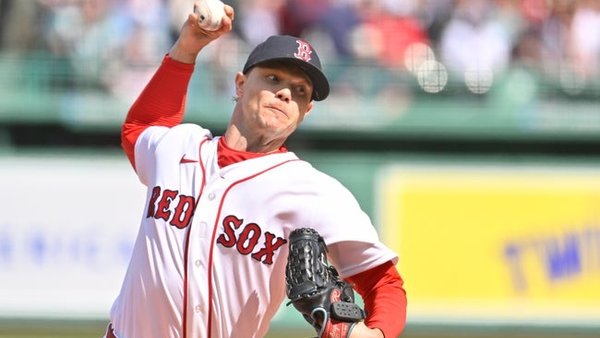
Cease’s 52.4% whiff changeup and Gray’s 12-1 record headline a matchup where the combined starter quality points hard in one direction — yet the total sits at 7.5 with under juice of just -115, near-even money for a two-ace game. Fenway’s 1.08 park factor is already baked in; the Toronto offense running a .680 OPS since the All-Star break is not fully reflected in the number.
Dylan Cease vs. Sonny Gray: Toronto Blue Jays at Boston Red Sox Betting Preview
The numbers liked the Red Sox moneyline yesterday, and it cashed — Boston beat Toronto 6-4 to push their last-30-game record to 24-6. Today the series continues, but the thesis shifts completely. This isn’t about who wins. This is about how many runs actually cross the plate when Dylan Cease and Sonny Gray are both dealing.
The market has set the total at 7.5, with the over priced at -105 and the under at -115. That’s near-even money on an under in a game featuring two starters with sub-2.70 ERAs. The market is pricing in some Fenway Park inflation — a 1.08 run factor — and probably accounting for the fact that Boston’s offense has been legitimately dangerous this season. Those are fair inputs. But the market is slightly underweighting the ceiling suppression that two elite arms provide, and significantly underweighting how cold and limited the Toronto offense actually is right now.
After Toronto erased a four-run deficit with Kazuma Okamoto’s three-run blast last night, you might expect the Blue Jays to carry some momentum into today. Don’t buy it. The Blue Jays are 2-8 in their last 10 games and scored just 13 runs in their first seven post-All-Star-break games. One big inning doesn’t change a structural problem, and today they face a pitcher whose 12-1 record isn’t a fluke.
Game Info & Betting Lines
- Date/Time: Saturday, July 25, 2026 | 4:10 PM ET
- Venue: Fenway Park | Park Factor: 1.08 (mildly hitter-friendly)
- TV: MLB.TV, Sportsnet, TVA, NESN
- Probable Starters: Dylan Cease (TOR, 6-5, 2.67 ERA) vs. Sonny Gray (BOS, 12-1, 2.48 ERA)
- Moneyline: Toronto Blue Jays +100 / Boston Red Sox -118
- Run Line: Boston Red Sox +1.5 (-220) / Toronto Blue Jays -1.5 (+180)
- Total: 7.5 (Over -105 / Under -115)
Why This Number Is Close — But Slightly Off
The market isn’t wrong to land near 7.5. Fenway’s 1.08 park factor genuinely inflates run scoring compared to a neutral venue, and Boston’s lineup — anchored by Willson Contreras at a .948 OPS — gives Cease something real to worry about. The legitimate case for the over is simple: two elite starters don’t always dominate, Fenway amplifies mistakes, and one bad inning from either pitcher puts the over in play without much help from the other team.
But here’s the problem with that logic: you need both starters to underperform for the over to cash. The combined projected total sits at exactly 9.0 — barely over the line — and that figure already bakes in the park factor. Any starter outperforming that projection by even a modest margin flips the outcome. And with Toronto posting a team OPS of just .680, Gray’s upside in this matchup is real.
The under at -115 is not a steal, but it’s reasonable pricing for a two-ace game. You’re essentially getting near-even money on two pitchers who have combined for a 2.57 ERA average through meaningful innings. The market is balancing the Fenway premium against the starter quality, and landing just slightly on the wrong side of the number.
What Separates the Pitching
The gap between these two starters is real, but it favors the under regardless of which direction you’re looking at it from.
Cease is the more electric arm — his 97.6 mph four-seam fastball, used 35.4% of the time, generates a 24.1% whiff rate and holds hitters to a .290 xwOBA. The pitch he weaponizes most effectively against aggressive lineups is his changeup: 52.4% whiff rate, .202 xwOBA against. That’s a genuine out pitch that will give Boston’s right-handed hitters problems. His slider sits at 89.3 mph with a 40.6% whiff rate and .224 xwOBA — the full arsenal is designed for swing-and-miss. His 13.4 K/9 isn’t a coincidence; it’s the product of three legitimate plus-or-better offerings. Crucially, Cease has allowed just 7 home runs in 104.1 innings, which limits the damage the Green Monster can do on elevated fly balls.
Gray operates differently. His sweeper (18.8% usage, 35.4% whiff, .209 xwOBA) is his sharpest put-away weapon, and his sinker (21.1% usage, .243 xwOBA) generates weak contact at the top of the order. Where Gray is more exposed is in his four-seamer — .381 xwOBA against and only 11.4% whiff rate. He’s not blowing hitters away with velocity; he’s a sequencer. That’s a meaningful distinction when facing a Toronto lineup that can make hard contact — but Okamoto’s 31.2% whiff rate makes him a viable strikeout target for Gray’s sweeper, even if his 6.9% barrel rate means mistakes get punished. Gray’s 11 home runs allowed on the season is the one number that keeps this from being a total lock, but the Blue Jays (.680 OPS, 2-8 in last 10) are not the lineup most likely to expose it.
Both starters project to 5-6 innings of work — this is a pitcher-controlled game, not a bullpen game.
The Pushback
The concern I keep coming back to is Fenway itself. A 1.08 park factor isn’t dramatic, but it’s real, and the Green Monster turns line drives into doubles and fly balls into home runs in ways that other parks don’t. Rafaela’s two-run shot last night barely cleared the top of the wall — that’s exactly the kind of play that inflates run totals at Fenway without anyone doing anything particularly wrong.
The other legitimate pushback: Contreras. He’s hitting .293 with a .948 OPS and carries a .471 xwOBA against right-handed pitching — directly applicable against Cease — making him a genuine power threat who can turn a single bad sequence into 2-3 runs quickly. And his BvP line against Cease (15 PA, .231 average, 8 strikeouts) actually suggests Cease has had his number, which softens the concern somewhat. But Contreras is the one Boston bat capable of single-handedly keeping the over alive.
I’m not dismissing these factors. Fenway is real. Contreras is real. But the counter is that Cease’s changeup (.202 xwOBA, 52.4% whiff) is purpose-built to neutralize dangerous right-handed hitters, and Toronto’s side of the ledger is so thin that Gray doesn’t need to be perfect — he just needs to be competent.
Run Environment & Game Shape
The most likely game shape here is a pitcher’s duel that stays in the 3-2 to 5-4 range. Toronto’s offense ranks near the bottom of the AL in OPS and has been anemic since the All-Star break. Boston’s lineup is better, but Cease’s swing-and-miss arsenal — headlined by that 52.4% whiff changeup — is capable of neutralizing stretches of even a quality lineup. The park factor nudges the ceiling up, but two starters operating at this level compress the floor simultaneously.
The under cashes most cleanly in the scenarios where Gray dominates a weak Toronto lineup for six innings or Cease escapes a few early jams with his swing-and-miss arsenal. Either outcome is likely given the personnel on the mound today. At near-even money, the under at 7.5 is the play.
Bet: Under 7.5 (-115), 2 units. Two elite arms, a Toronto offense running on fumes since the All-Star break, and a total that’s priced fairly but tilted just enough in the wrong direction — that’s enough for me to lay the small juice and take the under.