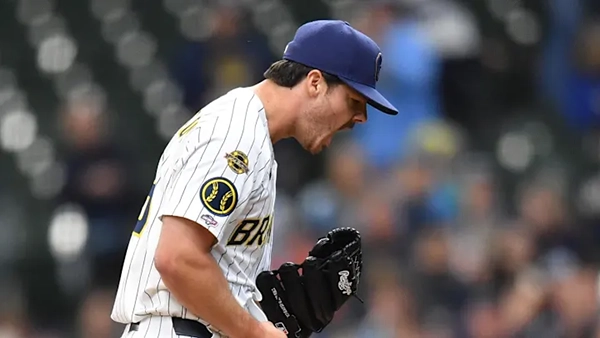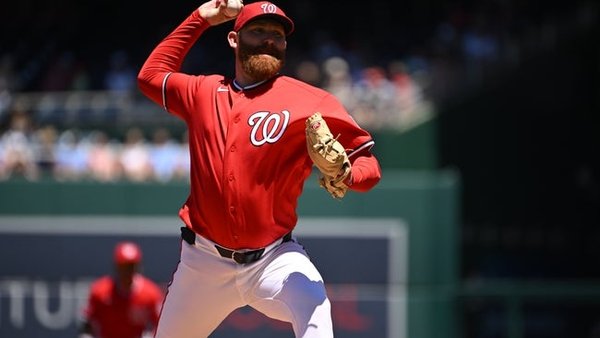
Bryce Miller’s 1.33 ERA and 0.78 WHIP represent a starter-profile gap that Zack Littell’s 15 home runs allowed in 64.1 innings cannot paper over — yet the Mariners are priced at -144, a number that prices in Washington’s dangerous top of the order without fully penalizing Littell’s barrel exposure. The projected run differential is razor-thin, and the price demands precision.
Bryce Miller vs. Zack Littell: Seattle Mariners at Washington Nationals Betting Preview
The pitching gap in this game is not subtle. Bryce Miller is operating at a level that very few starters in baseball can match right now — a 1.33 ERA and 0.78 WHIP through 27 innings that looks almost too clean to be real. On the other side, Zack Littell has allowed 15 home runs in 64.1 innings, a rate that screams contact problem in any ballpark. The market has priced this gap at -144 for Seattle, and that’s where the tension lives.
The Mariners arrive from Baltimore having dropped the series finale 7-5 — Woo was roughed up in the third inning, surrendering a six-run frame that included a Pete Alonso homer and effectively ended any comeback chances. They come in with cold recent offensive numbers against their season average of 4.23 runs per game. Washington is similarly flat offensively in recent games despite a stronger 5.39 runs-per-game season baseline. Two quiet offenses, one historically dominant arm, one extremely homer-prone arm.
The core question is not who wins. The numbers give Seattle a 70.2% win probability. The question is whether -144 is the right price to pay for a lean, and the honest answer is that it isn’t — not as a standalone unit play. But the side itself is right, and that shapes how this gets framed.
Game Info & Betting Lines
- Date/Time: Friday, June 12, 2026 | 6:45 PM ET
- Venue: Nationals Park | Park Factor: 0.98 (slight run suppressor, near neutral)
- Probable Starters: Bryce Miller (SEA) vs. Zack Littell (WSH)
- Moneyline: Seattle Mariners -144 / Washington Nationals +122
- Run Line: Seattle Mariners -1.5 (+112) / Washington Nationals +1.5 (-134)
- Total: 9.5 (Over -104 / Under -118)
Why This Number Is Close
The market has done most of its homework here. Seattle is appropriately favored — Miller’s numbers justify a significant price advantage — but the books are not going to let you buy a 70% win probability at a cheap number on a Friday night game. The -144 reflects that reality.
What the market is also accounting for: Washington’s offense is genuinely dangerous in spots. James Wood leads the Nationals lineup with a monstrous .941 OPS and 18 home runs, and his Statcast profile backs the production — .594 xwOBA, 12.3% barrel rate, 35.7% hard-hit rate. That is the kind of hitter who can make a dominant starter’s night go sideways in one swing. CJ Abrams (.905 OPS, 14 HR) provides a second dangerous bat near the top.
But here’s where I think the market is slightly off: the juice on -144 is priced as though this is a tighter contest than the pitching gap warrants. Miller’s suppression of contact is not ERA-driven luck — it’s backed by the underlying arsenal data. The market is absorbing Washington’s lineup upside while not fully penalizing Littell’s horrific homer rate against a Seattle lineup that has hit 87 home runs this season. The line feels fair enough to play, but not fat enough to bet heavily.
What Separates the Pitching
This is not a close matchup between the two starters. Miller and Littell are operating in completely different stratospheres right now, and the Statcast data makes that gap concrete.
Miller’s 96.6 mph four-seamer is his anchor pitch at 46.7% usage, holding hitters to a .244 xwOBA with a 16.8% whiff rate. But his real weapon is the arsenal depth that comes behind it. His slider generates a 34.2% whiff rate and an absurd .102 xwOBA against — that is elite put-away territory. The split-finger sits at .182 xwOBA with 25.5% whiff. When Miller is operating with three pitches that suppress contact at this level, he is creating quick innings and keeping run totals low regardless of who is in the opposing lineup.
Littell’s profile is the inverse. His four-seamer sits at 91.4 mph with an .397 xwOBA against and only 11.6% whiff — hitters are making consistent, quality contact against his primary pitch. His sinker is even more exposed, carrying a .501 xwOBA. The slider shows some promise at .372 xwOBA and 18.2% whiff, but it’s not a put-away pitch. The 15 home runs allowed in 64.1 innings is not a sequencing anomaly — the barrel rate against his fastball family explains it directly.
Against Littell, Luke Raley’s .529 xwOBA and 9.3% barrel rate against right-handed pitching is a significant mismatch. Randy Arozarena posts a .408 xwOBA vs RHP. These are not paper stats — they are contact quality signals pointing directly at Littell’s vulnerabilities.
The Pushback
The concern here is real, and I don’t want to paper over it. The most honest case against leaning Seattle at -144 starts with the juice filter: this price requires Seattle to win roughly 59% of the time just to break even, and at -144 you need a 59% hit rate to show profit over a large sample. A 70.2% win probability leaves margin, but not the kind of cushion that justifies loading up.
The second concern is James Wood facing a right-handed pitcher. Wood’s overall xwOBA is .594, but his vsRHP xwOBA checks in at .612 — that is the split that matters here against Miller, and it is genuinely scary. Wood has the barrel rate (12.3%) and hard-hit rate (35.7%) to take a premium pitch and put it in the seats regardless of how good the arm is. One swing changes a low-scoring game entirely, and Miller’s ERA, as clean as it looks, is built on a 27-inning sample that could regress on a single bad sequence.
The third concern is Seattle’s injury situation. J.P. Crawford is out (hand), Cal Raleigh is out (oblique), and Brendan Donovan has since been placed on the IL with a groin issue after appearing in the data. That is three meaningful contributors gone, and it compresses the lineup’s margin for error against even a mediocre starter. Luke Raley hit his 14th homer Thursday, but the lineup around him is thinner than the season numbers suggest.
Finally, Seattle’s offense has been cold. The Mariners are 4-17 this season when they don’t hit a home run — if Miller is pitching a low-scoring game and the offense goes quiet against Littell, the win probability advantage can evaporate quickly in a one-run game decided late.
Why the Run Line Doesn’t Work
The projected score — Washington 4.2, Seattle 4.7 — is essentially a one-run game. The run line asks Seattle to win by two or more at +112, and the numbers don’t support that at any confidence level. A projected half-run margin is exactly the kind of game where the run line becomes a coin flip with juice attached. The moneyline is the only clean way to play this if you’re playing it at all — the run line adds a second layer of uncertainty to a game that is already razor-thin on projected run differential.
Run Environment & Game Shape
Nationals Park plays nearly neutral at a 0.98 park factor, which doesn’t move the needle either direction. The projected total of 8.8 runs sits well under the posted 9.5, and that gap is driven almost entirely by Miller’s expected run suppression. When a starter is posting a .102 xwOBA on his slider and a .182 on his splitter, the over becomes very hard to support unless the opposing starter gets shelled early.
Littell’s profile suggests runs are available for Seattle — the .501 sinker xwOBA and 15 homers allowed in 64 innings point to a starter who gives up damage in clusters — but the Mariners’ cold offense and depleted lineup complicate the over case from their side. This game shapes as: Miller goes deep, keeps it close, and Seattle wins 4-2 or 3-1. That’s the most likely path, and it’s why the moneyline is the right bet type and the run line is a trap.
The moneyline is the only bet that captures this game shape correctly. I like Seattle in this spot — the pitching gap is real, the matchup favors the Mariners, and the Nationals’ lineup has enough holes outside of Wood and Abrams to keep the run total manageable. But -144 is where I draw the line on unit commitment. That price doesn’t give me enough value to make this a standalone play. If you’re building a parlay or looking for a low-stakes side to sprinkle, Seattle ML fits. As a solo bet with real money behind it, the juice makes it a pass.
Pick: Seattle Mariners ML — Lean (parlay leg or beer money only, 0 units standalone)