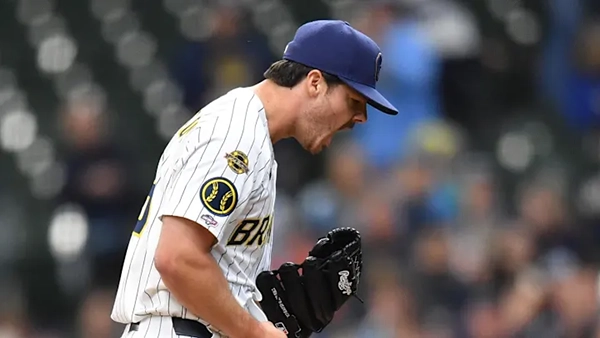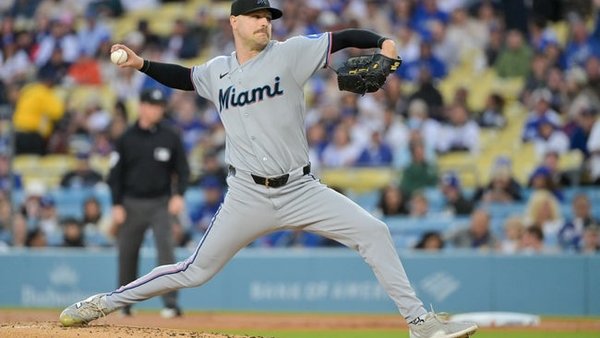
The pitching profiles point toward Miami — the -156 price has not fully caught up to the gap between Littell’s struggles and Junk’s quality stuff.
Zack Littell vs Janson Junk: Washington Nationals at Miami Marlins Betting Preview
The market often overcomplicates what should be simple pitcher-driven decisions. Miami sits as a -156 moneyline favorite behind Janson Junk (2.82 ERA) facing Washington’s struggling Zack Littell (7.24 ERA) — a 4.42 run differential that represents one of the season’s starkest pitching mismatches. While yesterday’s 3-2 Nationals victory adds noise to this number, the underlying talent gap remains unchanged.
This line feels reasonable for what projects as a pitcher-dependent game in Miami’s dome environment. Washington just proved they can scratch across runs against Miami’s staff, but they did it behind Foster Griffin’s seven strong innings. Today they’re asking Littell to match that performance despite allowing 13 home runs in just 32.1 innings pitched.
Game Info & Betting Lines
- Date/Time: Saturday, May 9, 2026 | 4:10 PM ET
- Venue: loanDepot park (Dome, 0.95 park factor)
- Probable Starters: Zack Littell vs Janson Junk
- Moneyline: Washington Nationals +132 / Miami Marlins -156
- Run Line: Miami Marlins -1.5 (+130) / Washington Nationals +1.5 (-156)
- Total: 8.5 (Over -115 / Under -105)
Why This Number Reflects Market Reality
The -156 price on Miami acknowledges several legitimate concerns about backing the Marlins. Washington enters with better recent momentum at 6-4 over their last 10 games compared to Miami’s 4-6 slide. Yesterday’s victory also demonstrated the Nationals can manufacture offense against this Miami staff, scratching three runs off rookie Robby Snelling in his major league debut.
The market is also pricing in early-season volatility — Littell’s 7.24 ERA comes with a small 32.1 inning sample, and there’s always regression potential for struggling starters. Miami’s own offensive limitations (.697 OPS, 29 home runs in 39 games) prevent them from being priced as a significant favorite despite the pitching advantage.
But the line doesn’t fully account for the magnitude of this starting pitching gap. Junk’s 2.82 ERA backed by solid peripherals (1.04 WHIP, just 3 home runs allowed) represents legitimate quality, while Littell’s struggles extend beyond bad luck — 13 home runs in 32.1 innings suggests real command issues that won’t simply disappear.
What Separates the Pitching
The Statcast data reveals exactly why this pitching matchup favors Miami so heavily. Junk’s four-seam fastball sits at 94.3 mph with 32.4% usage and generates a .314 xwOBA against — a legitimate out pitch that anchors his arsenal. His changeup becomes devastating at 33.9% whiff rate and .281 xwOBA, giving him a true swing-and-miss weapon against Washington’s contact-oriented lineup.
Littell’s arsenal tells a different story entirely. His most-used slider (26.6% usage) allows a brutal .517 xwOBA with just 16.7% whiffs — essentially batting practice for opposing hitters. His sinker generates a .589 xwOBA, meaning every sinker is practically a guaranteed hit. When your two primary pitches are this hittable, the 13 home runs allowed become predictable rather than unlucky.
The velocity gap compounds this advantage. Junk’s 94.3 mph fastball gives him room to work off-speed effectively, while Littell’s 91.0 mph heater lacks the separation needed to set up his breaking balls. Washington’s hitters like James Wood (.596 xwOBA, 12.3% barrel rate) and CJ Abrams (.418 xwOBA) should feast on Littell’s flat offerings, but they’ll face a much tougher test against Junk’s power/finesse combination.
The Pushback
The concern is obvious: Washington just won this exact matchup 24 hours ago. Griffin dominated Miami’s lineup through seven innings, proving this Marlins offense can be neutralized by quality pitching. If the Nationals can repeat that formula — scratch a few early runs and hand a lead to their bullpen — Littell’s struggles become irrelevant.
Miami’s offensive limitations add genuine worry. The Marlins rank near the bottom in home runs (29) and slugging (.371), suggesting they might not capitalize even when Littell serves up hittable pitches. Xavier Edwards (.350 xwOBA) and Otto Lopez (.417 xwOBA) provide table-setters, but this lineup lacks the middle-order thump to blow games open.
The bigger risk is small sample volatility. Littell’s season could represent a rough start rather than true talent decline, while Junk’s excellence might not sustain over a larger workload. Early May baseball amplifies these uncertainties — but I keep returning to the home run rates. Thirteen allowed in 32.1 innings isn’t variance; it’s a pattern that Washington’s power threats should exploit.
Run Environment & Game Shape
The dome environment at loanDepot park slightly suppresses scoring with its 0.95 park factor, which should help both pitchers but particularly benefits the superior arm. This isn’t Coors Field where bad pitching gets exposed immediately — Littell might survive a few innings before Miami’s patient hitters work deeper counts and force mistakes.
The total sits at 8.5, suggesting the market expects a moderate-scoring game rather than a slugfest. This environment actually amplifies the starting pitching edge — in a lower-scoring game, the team with the better starter holds a more significant advantage than in a high-scoring affair where bullpens determine outcomes.
The projected game shape favors Miami grinding out a close victory rather than running away early. Both offenses struggle with consistency, meaning whoever gets better starting pitching likely controls the game’s rhythm and pace.
Joe Jensen’s Pick
JENSEN’S PICK: Miami Marlins Moneyline — 0 Units
Projected score: Miami Marlins 5, Washington Nationals 4
I like Miami’s side here, but not at this -156 price. The starting pitching advantage is legitimate and should be the deciding factor, but the juice is too heavy for a standalone bet in what projects as a close game. I considered laying the 1.5 with Miami at +130, but both offenses are mediocre enough (.697 and .719 OPS) that a one-run game remains very possible despite Junk’s edge.
This falls into beer money territory — a lean that makes more sense as a parlay leg where the reduced juice works in your favor. The pitching gap is real, but the price reflects most of that edge already. Miami should win this game more often than Washington, just not confidently enough to justify the -156 investment as a standalone play.