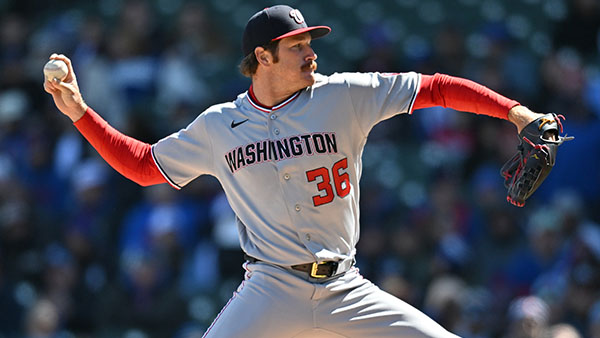
Hudson has shut out home runs completely while Mikolas has surrendered six in fewer innings — the number treats these starters as comparable when the gap is stark.
Miles Mikolas vs Bryan Hudson: Washington Nationals at Chicago White Sox Betting Preview
The market is treating this matchup with far more respect for Washington than the numbers suggest. Yes, the Nationals arrive with a slightly better record at 11-15 compared to Chicago’s 10-15, and road teams getting plus money always carry appeal. But when you dig into the pitching contrast here, the line feels mispriced.
Miles Mikolas has been catastrophic through his first 19.2 innings, posting a 9.15 ERA with a bloated 1.98 WHIP that screams regression candidate. Meanwhile, Bryan Hudson has shown impressive control with an 11.8 K/9 rate and zero home runs allowed. At Chicago -126, the market isn’t fully accounting for this gap in starting pitching quality.
The run environment suggests a tight game where pitching edges matter, and home field advantage provides just enough cushion to make this number attractive despite both teams’ offensive limitations.
Game Info & Betting Lines
- Date/Time: Friday, April 24, 2026 | 7:40 PM ET
- Venue: Guaranteed Rate Field (0.98 park factor)
- Probable Starters: Miles Mikolas vs Bryan Hudson
- Moneyline: Washington Nationals +104 / Chicago White Sox -126
- Run Line: Chicago White Sox +1.5 (-188) / Washington Nationals -1.5 (+155)
- Total: 9 (Over -122 / Under +102)
Why This Number Feels Close
The market is balancing legitimate concerns about Chicago’s offense against Washington’s road struggles. Both teams carry negative run differentials, and the White Sox rank poorly with just a .702 OPS this season. Washington actually grades out slightly better offensively at .741 OPS, which explains why they’re not bigger underdogs despite the pitching mismatch.
Chicago’s recent offensive inconsistencies are real – they’ve managed just modest run production even during their better stretches. The Nationals also showed life in Tuesday’s 11-4 victory over Atlanta before falling back to earth with consecutive losses.
But the market appears to be undervaluing the stark difference in pitcher reliability. While Chicago’s offense may not be explosive, they’re getting home field advantage and a significant edge on the mound at a reasonable price. The line suggests these teams are closely matched when the pitching data tells a different story.
What Separates the Pitching
This matchup presents one of the clearest pitching advantages you’ll find at this price point. Mikolas has been historically poor through four starts, allowing six home runs in fewer than 20 innings while posting a -0.85 WAR that ranks among the worst qualified starters in baseball. His Statcast arsenal shows why: his four-seam fastball at 92.4 mph generates just a 20.8% whiff rate with a dangerous .370 xwOBA against.
Hudson represents the opposite profile. His 53.1% four-seam usage at 91.9 mph creates a solid 26.6% whiff rate with much better command, evidenced by his .292 xwOBA against on the fastball. More importantly, Hudson’s sweeper at 80.7 mph gives him a reliable secondary weapon, while Mikolas struggles with consistency across his entire six-pitch mix.
The control disparity matters significantly in this run environment. Hudson’s 11.8 K/9 rate suggests he can work around traffic, while Mikolas’ elevated walk rate and home run problems create constant pressure. Washington’s lineup features some quality pieces like James Wood (.638 xwOBA) and CJ Abrams (.437 xwOBA), but they’ll face a pitcher who hasn’t allowed a single home run in 10.2 innings.
Hudson’s ability to limit hard contact becomes crucial when facing Wood, who leads the NL with 10 home runs. The matchup data shows Wood’s 31.6% whiff rate could play into Hudson’s strikeout profile, while Mikolas has struggled against power hitters all season.
The Pushback
The obvious concern here is Chicago’s offensive limitations undermining any pitching advantage. The White Sox rank among baseball’s worst with their .702 OPS, and their recent games show an inconsistent approach at the plate. Even with Hudson dealing, can this lineup generate enough runs against a Washington bullpen that’s actually performed better than Chicago’s?
There’s also the early-season variance factor to consider. Mikolas’ struggles may represent small-sample noise rather than true decline, especially given his track record of competent performance in previous seasons. His .370 xwOBA against on the fastball could normalize quickly with better command.
The bigger issue is Chicago’s tendency to waste quality pitching performances. They’ve shown flashes of offensive capability – Munetaka Murakami homered in five straight games recently – but lack consistent run production. In a tight game environment, that offensive inconsistency could neutralize Hudson’s effectiveness and make this a coin flip regardless of the starting pitching edge.
Run Environment & Game Shape
The total sits at 9 with Guaranteed Rate Field’s 0.98 park factor suggesting a neutral-to-pitcher-friendly environment. This setup favors the team with the better starter, as bullpens become less critical in lower-scoring affairs.
Both teams’ negative run differentials support the under-9 market expectation, but Mikolas’ volatility creates uncertainty about the actual scoring range. When a starter allows home runs at his rate, games can shift quickly from pitcher’s duels to moderate-scoring affairs.
The projected 5-4 type game means every marginal advantage matters. Hudson’s zero home runs allowed becomes more valuable in this context, as does Chicago’s home field edge in late-inning situations. The run environment amplifies the starting pitching gap rather than diminishing it.
Joe Jensen’s Pick
JENSEN’S PICK: Chicago White Sox Moneyline -126 — 2 Units
I looked at the run line here, but Chicago’s offensive limitations make multi-run separation unlikely even with the pitching advantage, so the -1.5 at +160 is a “no go”.
This comes down to getting a clear starting pitching edge at a reasonable price with home field advantage as the tiebreaker. Mikolas’ 9.15 ERA and six home runs allowed in 19.2 innings represents genuine struggle, not small-sample variance. Hudson’s control and ability to limit hard contact gives Chicago the reliability edge they need.
The market is pricing these teams closer than the pitching matchup suggests. At -126, I’m getting fair value on the better starter with home field advantage. Not going heavier given Chicago’s offensive inconsistencies, but this represents solid value in a tight market.