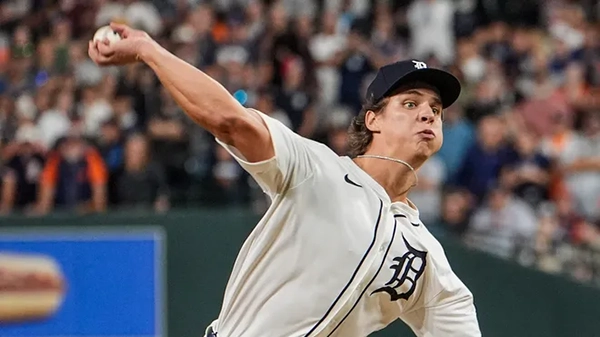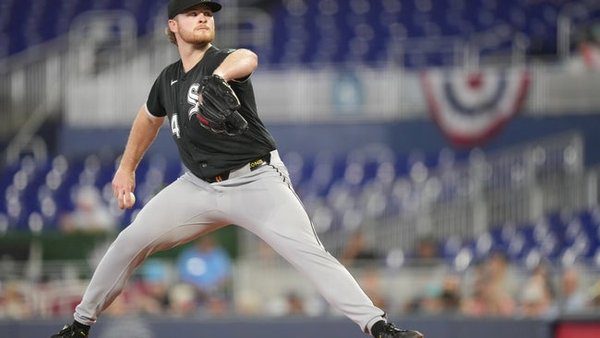
The rotation mismatch screams Orioles advantage — yet the moneyline refuses to budge past pick’em territory. This disconnect between starting pitcher quality and market pricing creates the exact friction sharp bettors hunt for in early-season spots.
Trevor Rogers vs Shane Smith: Baltimore Orioles at Chicago White Sox Betting Preview
The market sees two 4-6 teams meeting in Chicago and sets a modest line reflecting that mediocrity. What it’s missing is the chasm between these starting pitchers that goes far beyond early-season noise. Trevor Rogers has been elite through 13 innings with a 1.38 ERA and 0.62 WAR, while Shane Smith has posted a catastrophic 19.29 ERA that signals deeper problems than small-sample variance.
Baltimore proved yesterday they can execute in tight games, beating Chicago 2-1 with spot starter Brandon Young. Now they get their best pitcher against Chicago’s worst. The Orioles’ modest offensive profile (.681 OPS) doesn’t need to be spectacular when facing a starter who’s hemorrhaging runs at this rate.
Game Info & Betting Lines
- Date/Time: Tuesday, April 7, 2026 | 3:10 PM ET
- Venue: Guaranteed Rate Field (Park Factor: 0.98)
- Probable Starters: Trevor Rogers vs Shane Smith
- Moneyline: Baltimore -143 / Chicago +119
- Run Line: Chicago +1.5 (-149) / Baltimore -1.5 (+123)
- Total: 7 (Over -102 / Under -118)
Why This Number Is Close
The market is balancing several legitimate factors that keep this line from exploding toward Baltimore. The Orioles’ offense has been pedestrian at .246/.321/.360, ranking among the weaker attacks in the league. Road teams face natural disadvantages, and Chicago did win three straight before yesterday’s loss. There’s also the early-season hesitancy to overreact to small samples — Rogers has just 13 innings, Smith even fewer.
But the market is underweighting the severity of pitching quality gaps in April. Teams are still finding their rhythm offensively, making elite starting pitching even more valuable. Chicago’s team ERA of 6.19 versus Baltimore’s 4.33 suggests this isn’t just about one bad starter — it’s systemic pitching problems that Rogers can exploit. The line feels like it’s pricing Rogers and Smith as roughly equivalent arms with team quality making the difference.
What Separates the Pitching
This isn’t a comparison between two pitchers finding their footing — it’s a meeting between genuine competence and utter chaos. Rogers has backed his 1.38 ERA with strong peripherals, posting a 1.08 WHIP while limiting traffic and avoiding the big inning. His 5.54 K/9 isn’t dominant, but his command profile suggests sustainability beyond these 13 innings.
Smith’s 19.29 ERA tells the story of a pitcher who can’t locate strikes or get outs when he needs them. The underlying metrics likely support this disaster — you don’t post numbers this extreme through bad luck alone. Rogers creates the type of steady, mistake-free innings that force opposing offenses to manufacture runs through patience and execution. Smith creates the type of chaotic, high-leverage situations where even modest lineups can explode for crooked numbers.
The gap here isn’t marginal — it’s the difference between a pitcher in command and one fighting for survival every batter. Rogers gives Baltimore six professional innings with minimal damage. Smith gives Chicago early deficits and short outings that stress an already struggling bullpen.
The Pushback
Here’s what keeps me from backing up the truck: Baltimore’s offense has been genuinely poor at .681 OPS, and they may not capitalize fully on Smith’s struggles. Pedro Lopez-level disasters can sometimes survive against weak attacks who can’t string together quality at-bats. The sample size concern with Rogers is real — 13 innings is nothing, and even good pitchers can fall apart quickly in April.
Chicago also has home field and desperate motivation after yesterday’s loss ended their three-game winning streak. The White Sox are missing key hitters like Kyle Teel (.786 OPS) and Brooks Baldwin (.697 OPS), but their remaining lineup could still get to Rogers if his command wavers. That said, the underlying skill gap between these pitchers is too wide to ignore. Rogers may regress, but Smith’s peripherals suggest his struggles are real, not variance.
Run Environment & Game Shape
The total of 7 suggests the market expects a pitcher-friendly game at Guaranteed Rate Field (0.98 park factor). This environment actually amplifies the Rogers advantage — in low-scoring games, the pitcher who avoids mistakes and limits baserunners has enormous value. Rogers projects to give Baltimore 6-7 innings of professional work, while Smith likely forces Chicago’s bullpen into early, high-leverage situations.
This sets up as a 6-3 type game where Baltimore builds an early lead through Smith’s struggles and Rogers maintains it through steady execution. The run environment makes the pitching gap the decisive factor, not offensive firepower or home field edge.
Joe Jensen’s Pick
JENSEN’S PICK: Baltimore Orioles Moneyline — 2 Units
I looked at the run line here, but this environment is too tight for multi-run separation despite the pitching edge. Baltimore’s modest offensive profile (.681 OPS) makes laying 1.5 runs risky even against Smith’s disaster numbers. The moneyline captures the core thesis — Rogers outclasses Smith significantly — without needing offensive explosion from a pedestrian Orioles lineup.
This is strong conviction at 2 units based on multiple confirming signals: the massive starter gap, Baltimore’s execution in yesterday’s win, and Chicago’s systemic pitching problems reflected in their 6.19 team ERA. I’m not going heavier only due to early-season caution, but this pitching gap is real and the price doesn’t fully reflect it.