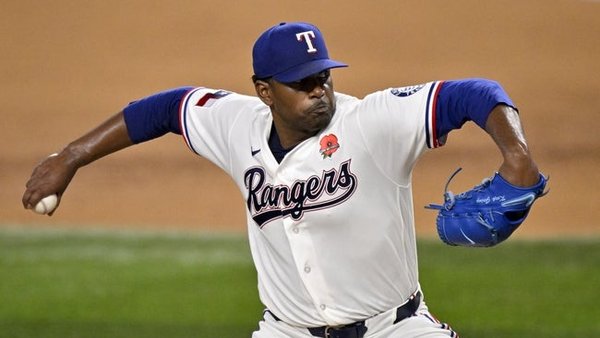
Chicago’s +43 run differential and home-field edge make the White Sox a logical lean — but a projected 0.2-run margin doesn’t cleanly support -132 juice. Rocker’s slider grades as a genuine put-away weapon, Urquidy’s ERA sits at 5.06, and both offenses carry real pop into a park that barely suppresses runs.
Kumar Rocker vs. Jose Urquidy: Texas Rangers at Chicago White Sox Betting Preview
Chicago arrives at this series opener having just walked off the Mets in back-to-back fashion, while Texas comes in having taken the rubber game against the Angels behind Cal Quantrill, who has gone five straight starts allowing one run or fewer across five or more innings — extending his scoreless innings streak to 15. The context is nice, but it’s the structural edge — Chicago’s superior run differential (+43 vs. Texas’s -46) and a clear offensive quality gap — that actually drives the argument here. The price just doesn’t make that argument clean enough to bet with conviction.
The market is pricing this as a modest favorite situation at -132, which reflects a real edge but applies juice that pushes it past the threshold where a narrow projected margin justifies a standalone play. The numbers project a Chicago White Sox 4.7, Texas Rangers 4.5 final — a coin-flip dressed in home team juice. That’s not a number that screams bet.
The pitching gap here is real but not overwhelming, and the offensive matchup contains genuine threats on both sides. This article is about finding the right frame for a side I like — and being honest about why the price keeps it from being more than a lean.
Game Info & Betting Lines
- Date/Time: Monday, August 24, 2026 | 7:40 PM ET
- Venue: Guaranteed Rate Field (Park Factor: 0.98 — slight run suppressor)
- Probable Starters: Kumar Rocker (Texas Rangers) vs. Jose Urquidy (Chicago White Sox)
- Moneyline: Texas Rangers +110 / Chicago White Sox -132
- Run Line: Chicago White Sox -1.5 (+158) / Texas Rangers +1.5 (-193)
- Total: 8.5 (Over -101 / Under -119)
Why This Number Is Close
The market’s case for -132 is straightforward: Chicago is 68-62 with a +43 run differential, playing at home with a lineup that carries a .727 OPS and 174 home runs on the year. Texas is 65-66 with a -46 run differential and an offense that has scored nearly 100 fewer runs on the season. The books are giving you a real team with a real edge.
But here’s the problem — a 0.2-run projected margin doesn’t support -132 pricing. The implied probability on -132 is roughly 57 percent, and the home win probability comes in right at that same threshold. That’s not a number where you hammer a side; that’s a number where you watch the line.
The legitimate case for Texas is built on Rocker’s arsenal profile outperforming his surface ERA, a lineup that has quality bats scattered throughout — Corey Seager (.413 xwOBA), Brandon Nimmo (.426 xwOBA) — and the fact that Urquidy’s ERA sits at 5.06 on the year. The market isn’t wrong to keep this close. It’s pricing a real game with real uncertainty at a price that’s hard to exploit.
Where I think the market is slightly off is in not fully discounting how much of Urquidy’s run prevention relies on sequencing in a park that suppresses runs only marginally. The offensive gap is real; the pitching gap is thinner than I’d like for a -132 play.
What Separates the Pitching
Kumar Rocker is 4-10 with a 4.46 ERA and a 1.40 WHIP this season, logging 121 innings. The surface ERA looks rough, but his arsenal tells a more nuanced story. His slider is the signature offering — thrown 38.1 percent of the time, generating a 40.5 percent whiff rate and holding hitters to a microscopic .228 xwOBA. That’s a genuine plus pitch. The problem is everything else: his sinker comes in at 29.6 percent usage but carries a .381 xwOBA, and his cutter allows a .441 xwOBA. When hitters lay off the slider, Rocker gets exposed. He’s also surrendered 17 home runs in 121 innings — a rate that matters against a Chicago lineup featuring Munetaka Murakami (.509 xwOBA, 10.8 percent barrel rate, 29 HRs) and Miguel Vargas (.424 xwOBA, 7.4 percent barrel rate, 29 HRs). Murakami’s .526 xwOBA against right-handed pitching is the most dangerous mismatch in this game.
Jose Urquidy comes in at a 5.06 ERA with a 2-1 record, and the full dataset doesn’t provide a complete Statcast arsenal breakdown for comparison. What we know is that the Rangers’ top of the order has legitimate contact quality — Seager’s .413 xwOBA is consistent against both lefties (.417) and righties (.412), meaning Urquidy gets no platoon relief there. Nimmo’s .426 xwOBA and .443 mark against right-handed pitching is another red flag.
The gap between the two arms is real but modest. Rocker’s slider gives him a premium put-away pitch Urquidy may not match, but Rocker’s susceptibility to hard contact — and Chicago’s lineup having three legitimate barrel threats — narrows that gap in a hurry. This is a pitching matchup where the park factor (0.98) provides marginal suppression, not enough to dramatically alter run-scoring probabilities.
The Pushback
The strongest case against the Chicago lean starts here: the White Sox offense has gone ice cold recently. Despite a strong season baseline of 4.75 runs per game, they’ve been held quiet in their most recent stretch, and the recent game recaps show a team that’s been winning on walk-off moments and late-inning heroics rather than sustained offensive output. You can’t count on Tristan Peters delivering another ninth-inning bomb. The Rangers, meanwhile, took the series finale against the Angels behind a Quantrill who has quietly become one of the better stories in that rotation — five straight starts of five-plus innings allowing one run or fewer is real, even if it isn’t five consecutive shutout efforts.
Run Environment & Game Shape
The expected run environment here sits right around 9.2 combined, which is only marginally above the 8.5 total. That slight over lean is consistent with two offenses that both carry genuine pop — Chicago’s 174 home runs and Texas’s 143 — facing pitchers with ERA marks above 4.40. The park factor (0.98) is close enough to neutral that it doesn’t meaningfully suppress what should be a run-scoring game. The over/under market at 8.5 looks like a reasonable number, and the lean over is implied by the gap between projected and posted totals rather than any single dominant factor.
The Pick
I like Chicago here, but I don’t love the price. The -132 moneyline implies roughly 57 percent win probability, and the structural edge — run differential, home field, offensive quality — supports that lean. But a 0.2-run projected margin is not the foundation for a full-stake play at that juice. Urquidy’s 5.06 ERA is a real concern, and Rocker’s slider gives Texas a path to keeping this close.
Chicago White Sox ML is a lean only — this is a small parlay leg or beer-money play, not a standalone full-stake bet. At -132, the price exceeds my comfort threshold for the margin involved. If you’re playing this game at all, sprinkle it into a parlay or keep the unit size at the absolute floor. I am not recommending a significant stake here. Pass at full price; small parlay attachment if you want action.
Pick: Chicago White Sox ML (lean) | Parlay leg or beer money only | Not a standalone play at -132