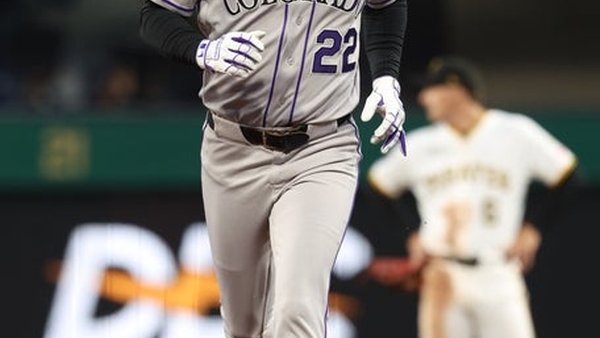
Michael Lorenzen’s 7.11 ERA and a 1.829 WHIP paint a clear picture of Minnesota’s advantage on paper — the friction is that the Twins are priced at -138, a number that leans on starter dominance while glossing over Paredes’ walk-rate concerns and a bullpen that just had its invincibility stripped. The matchup points one way; the price point is where the lean gets complicated.
Michael Lorenzen vs. Mike Paredes: Colorado Rockies at Minnesota Twins Betting Preview
The pitching gap in this game is real. Michael Lorenzen is one of the most exploitable starters in baseball right now — a 2-9 record, a 7.11 ERA, a 1.829 WHIP, and a -1.2 WAR that tells you he’s been actively costing his team. Against him, Minnesota’s lineup carries legitimate power threats. The case for the Twins is clean. The case for paying -138 to back them is where things get complicated.
My juice ceiling on a lean is -130, and -138 doesn’t clear that bar as a standalone play. So what we have here is a side I like without a bet I love — and that’s a distinction that matters before you reach for your wallet.
After yesterday’s gut-punch — the under 9 on this same matchup went down as Minnesota surrendered a seven-run lead, Colorado mounted an eight-run rally, and the Twins needed a walk-off in the tenth to survive — the market has recalibrated. That 9-8 chaos is a reminder that pitching edges don’t always survive bullpen volatility. Today’s game starts fresh, but the context doesn’t disappear.
Game Info & Betting Lines
- Date/Time: Saturday, June 27, 2026 | 7:10 PM ET
- Venue: Target Field | Park Factor: 1.00 (neutral run environment)
- TV: MLB.TV, Twins.TV, Rockies.TV
- Probable Starters: Michael Lorenzen (COL) vs. Mike Paredes (MIN)
- Moneyline: Colorado Rockies +118 / Minnesota Twins -138
- Run Line: Minnesota Twins -1.5 (+155) / Colorado Rockies +1.5 (-188)
- Total: 9.5 (Over +100 / Under -122)
Why This Number Is Close
The market’s logic here is defensible. Lorenzen has been awful, yes — but Minnesota’s own starter, Mike Paredes, is working with a 4.05 ERA in just 20 innings, a 1.200 WHIP, and a walk rate (9 BB in 20 IP) that suggests he’s walking a tightrope. Colorado’s lineup isn’t helpless either: Hunter Goodman carries a .812 OPS with 21 home runs and a .447 xwOBA — the kind of barrel threat (7.4% barrel rate, 28.4% hard-hit rate) that punishes any starter who leaves pitches up. Mickey Moniak at .931 OPS and Troy Johnston hitting .314 round out a lineup that isn’t as thin as the 32-50 record implies.
The books also know what happened last night. When a team blows a seven-run lead and barely survives, sharp money pays attention to bullpen exposure. Minnesota’s relievers — particularly Anthony Banda, who allowed a two-run homer after 18 scoreless appearances — just had their invincibility stripped. The -138 price is the market pricing in starter dominance, but tempering it with legitimate bullpen uncertainty.
Where the market is slightly wrong: Lorenzen’s arsenal is genuinely exploitable in a way that goes beyond surface ERA. His four-seam fastball carries an xwOBA of .421 against — that’s not bad sequencing, that’s a pitch hitters are squaring up consistently. The price doesn’t fully account for how badly this specific matchup sets up for Minnesota’s top of the order.
What Separates the Pitching
This is not a coin-flip pitching matchup. Lorenzen’s four-seam fastball sits at 94.1 mph but generates just a 9.4% whiff rate with an xwOBA-against of .421 — hitters are making hard contact against it regularly. His cutter (.413 xwOBA) is barely better. The only offerings showing real swing-and-miss are his changeup (30.9% whiff, .308 xwOBA) and sweeper (33.3% whiff, .307 xwOBA), but those two pitches combine for just 27.2% of his total arsenal usage — less than 30% of what he throws. Worth noting: his sinker accounts for another 16.6% of usage at a .359 xwOBA, which is better than his fastball but still not a weapon that changes the contact quality picture in any meaningful way. The 13 home runs allowed in 76 innings tell the full story.
Now stack that against Minnesota’s lineup. Byron Buxton owns a .450 xwOBA with a 10.6% barrel rate and 31.2% hard-hit rate — and in 9 career PA against Lorenzen, he’s hit .250 with a home run. Kody Clemens is 1-for-2 with a home run in just 2 PA against Lorenzen, and his .397 xwOBA and 29.4% hard-hit rate make him a legitimate run-production threat. These are not small-sample flukes — the quality-of-contact profiles match the history.
Paredes is the legitimate concern on the other side. His four-seam fastball runs at 93.0 mph and generates a respectable .305 xwOBA with a 15.8% whiff rate — that’s a serviceable pitch. His changeup (25.8% whiff, .318 xwOBA) gives him a genuine swing-and-miss option. But his cutter bleeds, carrying a .417 xwOBA-against, and his walk rate in 20 innings is concerning. Hunter Goodman’s .484 xwOBA against left-handed pitching is a red flag for any southpaw, but Paredes throws right, and Goodman’s right-on-right number drops to .433 — still dangerous but less catastrophic.
The gap favors Minnesota. Lorenzen creates high-leverage innings through hard contact and walks. Paredes, despite his own flaws, is several tiers above where Lorenzen is operating right now.
The Pushback
Here’s where I have to slow down. Paredes has thrown 20 innings. That sample is thin enough that the 4.05 ERA could be telling you almost nothing. Nine walks in 20 frames is a pace that invites traffic jams, and Colorado’s lineup — particularly Goodman (.447 xwOBA) and Willi Castro (.409 xwOBA vs. right-handed pitching) — has the contact quality to make Paredes pay when he falls behind in counts. Minnesota’s offense is real — 102 home runs and 404 runs scored on the season — but they’re also 39-44 and coming off a series where the Dodgers put up 12 runs and 17 hits against them two nights before the walk-off win. The Twins are a good team on paper right now, not a great one in practice.
The bullpen angle cuts both ways. Yes, Colorado’s pen blew a nine-run lead last night, but Anthony Banda’s streak ending doesn’t automatically mean Minnesota’s relievers are suddenly bulletproof. The Rockies showed they can manufacture chaos late — McCarthy’s three-run shot and Goodman’s 451-foot blast off Banda proved that much. If Paredes walks four batters through four innings and hands the game to the bullpen in the fifth, the Twins’ -138 tag looks a lot less comfortable.
Run Environment & Game Shape
Target Field plays at a neutral 1.00 park factor, so the environment itself isn’t tipping the scales. The total sitting at 9.5 — with the over available at +100 — reflects the market’s expectation that this is a high-scoring environment given both starters’ tendencies to allow traffic. The run line at +155 for Minnesota -1.5 is interesting in the abstract but requires a level of starter dominance from Paredes that his 20-inning track record doesn’t support. I’m not touching the run line here.
The total is similarly unattractive. After last night’s 17-run explosion, the books adjusted accordingly. The over at a flat price is tempting but requires Paredes to be bad early and Lorenzen to be bad throughout — which is plausible but not the kind of edge worth chasing off a single data point. The game shape more likely features early Minnesota scoring off Lorenzen, a Colorado counterpunch through their middle of the order, and late-game volatility that makes the margin unpredictable. That’s a game that could finish 6-4 or 8-7 with equal probability, which doesn’t give the total a clean angle either way.
The pitching gap is real and meaningful. The price is real and limiting. Minnesota should win this game more often than the implied 42% that +118 suggests for Colorado — but -138 implies the Twins win roughly 58% of the time, and while the numbers support that lean, they don’t support paying past my -130 ceiling to act on it. The side is Minnesota. The price is the problem.
The Play
Minnesota Twins moneyline is the lean — but -138 exceeds my -130 juice ceiling, and that means this does not qualify as a standalone rated play. Zero units. If you’re building a parlay and need a home-side leg that has genuine analytical support, this fits the profile — the pitching gap is real, the Statcast matchup favors Minnesota’s top of the order, and Lorenzen’s arsenal is exploitable in ways the surface ERA already confirms. As beer-money action on its own, it’s defensible. As a full-unit bet at -138? It’s not. The side is right. The price isn’t. Lean Minnesota, no units, parlay leg or small stakes only.