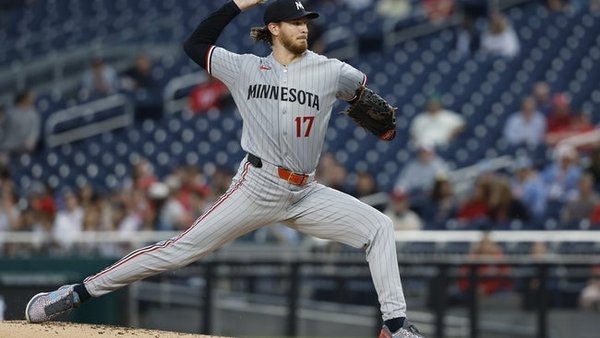
Witt and Buxton are both out, stripping each offense of its most dangerous bat at a neutral park — and yet the 9.5 total is barely moving. Cameron’s 1.41 WHIP and Ober’s 4.56 ERA set up a grind-it-out environment, but the over case is real enough that this number sits at a genuine crossroads rather than a clear lean.
Noah Cameron vs. Bailey Ober: Kansas City Royals at Minnesota Twins Betting Preview
After Wednesday’s 4-0 Royals win and Tuesday’s 3-2 Twins walk-off, this series has played entirely to low-scoring outcomes — both games came in well under 9.5, and today’s matchup gives you structural reasons to expect more of the same. The numbers project a combined 9.4 runs, a hair under the posted total, and that carries real weight when you consider who’s not in either lineup. Bobby Witt Jr. (.800 OPS, 13 HR) is on the 10-Day IL with a back injury, removing Kansas City’s best offensive engine. Byron Buxton (.864 OPS, 25 HR) won’t play for Minnesota, sitting with the hip soreness that forced him out of Tuesday’s game in the fifth inning. Two of the most dangerous bats in this series are watching from the dugout.
Neither starter on the mound Thursday — Noah Cameron for Kansas City or Bailey Ober for Minnesota — is an elite shutdown arm. These are mid-rotation starters with elevated ERAs and legitimate question marks. But the combination of mediocre pitching AND depleted lineups creates a specific environment: games that grind, not games that explode. The question isn’t whether these starters are good enough to dominate. It’s whether the offenses, already below average and now missing their top contributors, can generate enough traffic to push a combined total over 9.5 runs at a neutral park.
The numbers say no — barely. And at -108, the price is reasonable enough to take the lean seriously.
Game Info & Betting Lines
- Date/Time: Thursday, July 30, 2026 | 1:40 PM ET
- Venue: Target Field | Park Factor: 1.00 (neutral — no run inflation)
- TV: MLB.TV, Twins.TV, Royals.TV
- Probable Starters: Noah Cameron (5-8, 4.93 ERA) vs. Bailey Ober (7-3, 4.56 ERA)
- Moneyline: Kansas City Royals +120 / Minnesota Twins -142
- Run Line: Minnesota Twins -1.5 (+140) / Kansas City Royals +1.5 (-170)
- Total: 9.5 (Over -112 / Under -108)
Why This Number Is Close
The market is doing something sensible here. At 9.5, the books are acknowledging two starters who’ve posted ERAs north of 4.50, a Twins lineup that still carries legitimate middle-of-the-order threats in Ryan Jeffers (.928 OPS), Trevor Larnach (.834 OPS), and Kody Clemens (.791 OPS, 18 HR), and a Kansas City offense that averaged 4.19 runs per game on the season. The -112 juice on the over suggests the market leans ever so slightly toward the under on its own — but not aggressively. It’s a balanced number acknowledging genuine two-way risk.
The legitimate case for the over is real: Cameron has a 1.41 WHIP, which means he’s consistently putting runners on base. And Royals manager matchup history notwithstanding, the Twins have shown they can erupt — they put up 11 runs against Oakland last Sunday. If either starter gets knocked around early and turns the game over to a depleted bullpen, the total can clear 9.5 on one bad inning alone.
But here’s where I think the market is slightly off: the key absences aren’t baked in as deeply as they should be. Losing Witt and Buxton isn’t a footnote — it’s removing the two highest-OPS bats from lineups that were already below league average in run production. The Royals as a team sit at a .709 OPS. The Twins check in at .730. Neither of those numbers screams offensive firepower even at full strength, and today they’re running out without their most dangerous contributors at a park with zero run inflation.
What Separates the Pitching
Neither Cameron nor Ober inspires confidence as a game-controlling force, but the gap between them matters more for understanding game shape than for declaring a winner.
Noah Cameron (5-8, 4.93 ERA, 1.41 WHIP) generates whiff volume through secondary pitches — his changeup produces a 32.7% whiff rate at 81.0 mph, though its .302 xwOBA tells you it’s a swing-and-miss weapon that doesn’t fully suppress quality contact. His curveball is the better put-away option: a 27.7% whiff rate and an excellent xwOBA of .232 against — that’s a legitimate weapon. His cutter (20.9% whiff, .335 xwOBA) works as an effective complement. The concern is his four-seam fastball: 92.3 mph average velocity, a 14.2% whiff rate, and a troubling .400 xwOBA against. When hitters sit fastball against Cameron, they punish it. His 1.41 WHIP tells you he gives up baserunners at an elevated clip, but his 100 strikeouts in 107.2 innings (8.4 K/9) show he can escape jams.
Against this Twins lineup, the key matchup signal is Kody Clemens, who carries a .399 xwOBA overall and a .396 xwOBA against right-handed pitching — he’s a genuine threat against Cameron’s fastball-heavy profile. Josh Bell (.404 xwOBA vs. RHP) and Royce Lewis (.360 xwOBA) provide additional danger in the middle of the order.
Bailey Ober (7-3, 4.56 ERA, 1.25 WHIP) works differently. His primary pitch is a changeup thrown at 35.6% usage with a 22.5% whiff rate — it generates swings and misses, but its .338 xwOBA against tells you it isn’t suppressing hard contact at an elite level. It’s a whiff generator, not a true contact-killer, and that distinction matters when you’re evaluating how far Ober can lean on it. His sweeper is actually the sharper weapon when it comes to contact suppression: a 31.6% whiff rate and an outstanding .169 xwOBA against — that’s a genuine put-away pitch. His four-seamer sits at 88.4 mph, a below-average velocity for a starter that makes pitch sequencing critical. Ober’s 7-3 record flatters him somewhat; the ERA and WHIP suggest a pitcher who’s won games more than dominated them.
Against the Kansas City lineup, Jac Caglianone (.460 xwOBA, .485 xwOBA vs. RHP) is the most dangerous matchup — a power-and-barrel threat who has hit right-handed pitching hard all year. Carter Jensen (.368 xwOBA vs. RHP) and Lane Thomas (.361 xwOBA overall) round out a top of the order that can make life difficult for Ober if he’s missing with his changeup.
The Pushback
Here’s the honest case against the under: Cameron’s 1.41 WHIP is a real liability. He puts runners on at an elevated rate game after game, and if the Twins get multiple men on base in consecutive innings, a depleted Kansas City bullpen — already missing Cole Ragans and Kris Bubic to long-term IL — could pile on against a shaky backend. That scenario alone could push the total to 10 or 11 without Kansas City doing much on their end of the ledger. Minnesota’s middle-order threats — Clemens, Bell, and Lewis — are legitimate, and Cameron has given up 14 home runs in 107.2 innings. One wrong pitch in a hitter’s count against Clemens or Bell and this game can shift in a hurry.
I hear all of that. But the counter-argument keeps coming back to the same structural facts: no Witt, no Buxton, a neutral park, and two offenses that were already below league average before the scratches. The Twins’ 11-run explosion against Oakland happened with a full lineup and against a compromised pitching staff. Today the variables are different. The risk of a blowup inning is real but not the most likely outcome when both offenses are this stripped down.
The Pick
This series has played under in back-to-back games, the two most dangerous bats are sitting, and Target Field gives you zero run-inflation cushion. Cameron’s curveball (.232 xwOBA) gives him a weapon to limit damage, and Ober’s sweeper (.169 xwOBA) can bail him out in critical spots. Neither offense is built to manufacture a crooked number right now. The combined 9.4 run projection says this number is a tick high, and I’m inclined to agree. The price is fair at -108.
Bet: Under 9.5 (-108) — 1 unit, lean confidence.