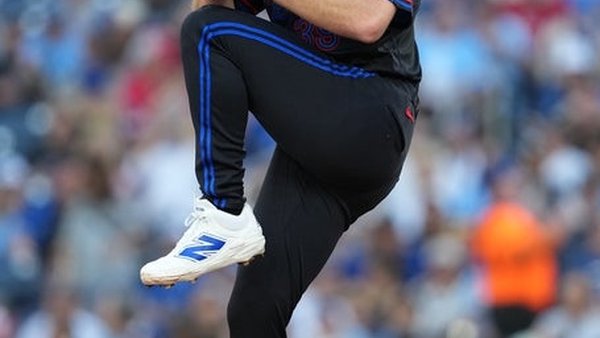
Trey Yesavage has walked 39 batters in 75 innings — a 4.68 BB/9 rate that becomes a direct liability against a Chicago lineup that has drawn 324 walks this season. Sean Burke’s deeper arsenal and 1.17 WHIP tell a different story than the -118 moneyline does, and a 84-run differential gap between these clubs is being treated like noise.
Sean Burke vs. Trey Yesavage: Chicago White Sox at Toronto Blue Jays Betting Preview
The White Sox come into Rogers Centre at -118 — nearly pick’em pricing against a Toronto club sitting at 46-52 with a -42 run differential. Chicago carries a +42 run differential, an 84-run swing that isn’t a rounding error. That gap reflects genuine two-way superiority, and the market doesn’t seem to care.
Saturday’s 1-0 Bieber gem complicated the narrative. Shane Bieber was sharp and the Blue Jays executed a tight, well-managed win — but that result came in a series Chicago had dominated 4-0 entering Saturday, outscoring Toronto 26-11 across those four full-season meetings before that single blemish. The market may be anchoring too heavily on one recency data point while ignoring the broader body of evidence.
The core thesis is straightforward: Sean Burke holds a meaningful starter edge over Trey Yesavage, Chicago’s offense is measurably superior, and the price of -118 doesn’t account for the gap between these two clubs. That’s the inefficiency worth attacking today.
Game Info & Betting Lines
- Date/Time: Sunday, July 19, 2026 | 12:15 PM ET
- Venue: Rogers Centre (Dome | Park Factor: 1.00 — neutral run environment)
- TV: Peacock, Sportsnet, TVA
- Probable Starters: Sean Burke (CHW, 6-4, 3.41 ERA) vs. Trey Yesavage (TOR, 4-4, 3.72 ERA)
- Moneyline: Chicago White Sox -118 | Toronto Blue Jays +100
- Run Line: Chicago White Sox -1.5 (+136) | Toronto Blue Jays +1.5 (-164)
- Total: 8.5 (Over +102 | Under -124)
Why This Number Is Off
The market is pricing this game as a genuine toss-up, which makes sense on the surface — Yesavage’s 3.72 ERA is respectable, Toronto is at home in a dome, and Chicago just got shut out 1-0. But those factors are doing a lot of work to obscure an uncomfortable reality for Toronto bettors.
The legitimate case for the Blue Jays: home field, a crowd energized by yesterday’s victory, and a starter who has been functional if not dominant. Toronto also benefits from the fact that Burke has allowed 13 home runs in 105.2 innings — Rogers Centre, while neutral in park factor, is still a dome that can play fast on humid July afternoons when balls carry.
But here’s the problem with leaning Toronto at even money: their lineup is walking wounded. Jesus Sanchez, Addison Barger, and Lenyn Sosa are all on the IL, stripping meaningful contributors from the middle of the order. Meanwhile, Yesavage has walked 39 batters in just 75 innings — a 4.68 BB/9 rate that is a live grenade against a Chicago lineup that has drawn 324 walks this season. The market is pricing the name on the home jersey. The numbers say the gap is real and the price is wrong.
What Separates the Pitching
Burke and Yesavage look similar at first glance — both right-handed, both hovering in the low 3s for ERA. But the Statcast picture pulls them apart in meaningful ways.
Burke’s arsenal is deeper and more deceptive. His four-seam fastball sits at 94.8 mph and accounts for 37.9% of his pitches, holding hitters to a .281 xwOBA — that’s above-average suppression for a fastball at that velocity. His slider grades as a genuine weapon at 30.1% whiff rate with a .292 xwOBA, and his knuckle curve at 79.7 mph adds a third distinct look at 23.2% whiff rate. The combination of three legitimate swing-and-miss offerings gives Burke the ability to work through a lineup multiple times without becoming predictable. His 1.17 WHIP and 2.79 WAR in 105.2 innings tell the story of a starter who is eating innings and limiting damage.
Yesavage works primarily off a three-pitch mix — 45.8% four-seamers at 94.4 mph, plus a split-finger that generates elite whiffs at 39.7% and a slider at 35.7% whiff rate. Those are impressive swing-and-miss numbers, but the walk rate undermines everything. The Statcast numbers on the Chicago side are telling. Murakami carries a .502 xwOBA against right-handed pitching with a 10.0% barrel rate. Colson Montgomery is at .441 xwOBA against righties. Sam Antonacci, batting leadoff, posts a .404 xwOBA vs. RHP. When Yesavage’s command wavers — and at 4.68 BB/9 it does — he’s feeding a lineup built to punish exactly that kind of mistake.
On the other side of the matchup, Burke faces Toronto’s top of the order in Ernie Clement and Nathan Lukes — Blue Jays hitters who grade out as manageable targets. Clement carries a .288 xwOBA with a 1.4% barrel rate and went 0-for-4 in his limited BvP sample against Burke. Lukes posts a .315 xwOBA overall and a .324 xwOBA vs. RHP — contact-oriented but not a power threat. Burke, walking only 33 batters in 105.2 innings — nearly half Yesavage’s BB/9 — faces a depleted Toronto lineup that gives him far less to fear.
Then there’s Kazuma Okamoto, Toronto’s most dangerous hitter at a .429 xwOBA. He’s 0-for-3 with three strikeouts against Burke in their BvP sample. Small sample, but directionally consistent with what the whiff numbers suggest.
The WAR gap — 2.79 for Burke versus 1.74 for Yesavage — reflects this divergence accurately. Burke’s done it across more innings against better competition. That’s the pitching edge the -118 price isn’t accounting for.
The Pushback
Saturday happened, and it can’t be ignored. Chicago managed four hits against Bieber and a lights-out Toronto bullpen that rolled through the final three innings without a threat. Vladimir Guerrero Jr. reached base three times, and the Blue Jays won with a single run. That’s not a fluke — it’s a reminder that this lineup, even healthy, can go cold in a hurry.
There’s also Chicago’s 7-13 record against AL East opponents this season. Road games in the division have been a problem, and Rogers Centre is a legitimate road environment with a crowd that got a jolt from yesterday’s result. If Yesavage’s splitter is working and he’s locating his slider early in counts, Chicago’s right-handed bats could get tied up in a way that makes the 4.68 BB/9 irrelevant — you don’t walk your way into runs if the strikeouts pile up first.
I also looked hard at the Chicago -1.5 run line at +136. The number is tempting given the full-season series dominance, but I’m passing. The projected scoring sits at 4.5 Chicago to 4.4 Toronto — essentially a coin flip on margin, and this series has already shown it plays as a one-run environment. Saturday was 1-0. Buying the run line in a projected near-even game in a one-run series context is chasing value that probably isn’t there. The moneyline is the cleaner bet.
Run Environment & Game Shape
Rogers Centre plays at a neutral 1.00 park factor, and the total sitting at 8.5 with the Under juiced to -124 tells you where the market expects this game to land — under that number, in a low-to-mid scoring environment. That framing actually helps Chicago more than Toronto. In tighter, lower-scoring games, the team with the superior walk discipline and the starter who limits free passes holds a compounding advantage. Every time Yesavage falls behind in a count, he’s one mistake away from a rally. Burke, pitching to contact with a high-whiff secondary arsenal, is built for exactly this kind of game shape.
The walk differential is the central lever here. Chicago’s 324 team walks against Yesavage’s 4.68 BB/9 creates a pressure situation that doesn’t require a five-run explosion to matter — it just requires the Blue Jays’ command to slip for two or three batters in a row. In a game projected to land in the 4-5 run range for each team, Chicago’s ability to manufacture baserunners through discipline rather than raw power gives them an edge that compounds in precisely the low-margin environments this series has produced. Saturday was an outlier in execution, not evidence of a trend reversal. The numbers across the full body of work — the 84-run differential swing, the 4-0 series record entering this weekend, the superior starter — all point the same direction.
The Pick
This is a two-unit play on the Chicago White Sox moneyline at -118. Moderate confidence.
The market is treating this like a coin flip because of Saturday’s shutout and Toronto’s home-field edge. I think that’s an overcorrection. Burke is the better pitcher by a meaningful margin, Chicago’s offense is structurally superior, and the price of -118 undervalues a team with a genuine edge in every component category — starting pitching, walk discipline, and overall run differential. The injuries to Toronto’s lineup only widen the gap. I got burned on this series yesterday, and I’m coming back for the right reasons, not the emotional ones.
Bet: Chicago White Sox Moneyline (-118) | 2 Units | Moderate Confidence