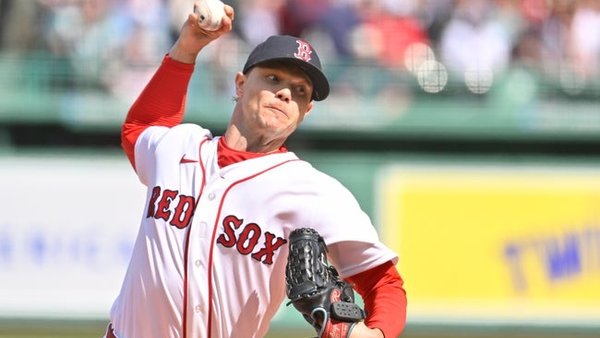
Sonny Gray’s 2.82 ERA and 1.18 WHIP represent one of the sharpest pitching edges on the September slate — yet the total is set at 8.0 as if Bassitt’s 4.97 ERA and 1.58 WHIP carry equal weight on the other side. The run environment at Camden Yards is neutral, Baltimore’s lineup is playing short-handed, and the Under is priced a full nine cents cheaper than the Over.
Sonny Gray vs. Chris Bassitt: Boston Red Sox at Baltimore Orioles Betting Preview
Yesterday’s game in this series ended 1-0. One run. Nine innings. That’s not a coincidence — that’s what happens when you put a dominant arm on the mound at a neutral park and let the environment do its job. Today, the pitching matchup shifts significantly: Sonny Gray takes the ball for Boston, and he’s been the best version of himself all season. The question for the bettor isn’t whether Gray is good — it’s whether the market has already fully accounted for it at a total of 8.0.
The honest answer is: mostly, but not entirely. Boston’s moneyline sits at -149, which clears my juice ceiling of -131 and forces the decision off the outright winner market. That’s where the Under 8.0 enters as the cleanest vehicle. Gray suppresses run scoring. Baltimore’s lineup is thinned by injuries. The park is neutral. And the numbers project a combined 9.3 runs — a figure being dragged upward by Chris Bassitt’s volatility, not by any legitimate expectation of offensive firepower from either side.
That tension — a legitimate pitching edge blocked from moneyline expression by price, combined with a shaky opposing arm in a quiet run environment — is the foundation of this play.
Game Info & Betting Lines
- Date/Time: Saturday, September 5, 2026 | 7:05 PM ET
- Venue: Oriole Park at Camden Yards | Park Factor: 1.01 (essentially neutral)
- TV: MLB.TV, MASN, NESN
- Probable Starters: Sonny Gray (BOS) vs. Chris Bassitt (BAL)
- Moneyline: Boston Red Sox -149 / Baltimore Orioles +123
- Run Line: Boston Red Sox -1.5 (+118) / Baltimore Orioles +1.5 (-142)
- Total: 8.0 (Over -114 / Under -105)
Why This Number Is Close
The market is doing something reasonable here. Setting the total at 8.0 acknowledges Gray’s dominance while also hedging against Bassitt’s instability. The books know that a 4.97 ERA and 1.58 WHIP starter creates over exposure — Boston’s lineup could torch him early, and if the Red Sox score four or five runs in the first three innings, the total is in serious jeopardy regardless of what Gray does on the other side. That’s a legitimate argument for the Over.
But here’s where I think the market is slightly off: it’s pricing this game as though both offenses are functioning at full capacity. Baltimore is missing Tyler O’Neill (shoulder, 10-Day IL) and Ryan Mountcastle (oblique, 60-Day IL) — two genuine lineup contributors gone from their natural positions in right field and first base respectively. The CF slot is covered by Luis Robert Jr., and Pete Alonso, Gunnar Henderson, and Christian Encarnacion-Strand give this order legitimate teeth. But the lineup that takes the field tonight is still operating below its ceiling, and a team-wide OPS of .711 isn’t a number that scares an elite starter to begin with. Boston has also gone cold recently, scoring just one run yesterday against a far less accomplished arm in Shane Baz.
The Under at -105 is attractively priced relative to the Over at -114. The market leans very slightly toward the Over happening, which means sharp action on the Under could have real value. The edge isn’t enormous — the total is already low — but the pitching gap makes it real enough to play.
What Separates the Pitching
The gap between these two starters is as wide as you’ll find in a regular-season game this late in the year. Sonny Gray is 16-4 with a 2.82 ERA and 1.18 WHIP over 143.2 innings — a Cy Young-caliber season by any measurement. His arsenal is built for exactly this kind of opponent. His sweeper generates a 37.5% whiff rate and holds hitters to a .198 xwOBA, functioning as a genuine out pitch. His sinker sits at 92.1 mph with a .264 xwOBA against — contact-suppressing, groundball-inducing, run-prevention at the design level. His curveball adds another 30.5% whiff rate, and together these three offerings rotate through a Baltimore lineup that strikes out at an alarming clip: Coby Mayo at 30.8% K-rate, Samuel Basallo at 26.2%, and Christian Encarnacion-Strand at 25.7%.
Gray’s 8.02 K/9 isn’t an abstract number — it’s a structural advantage against this specific group of hitters. Pete Alonso is the threat (xwOBA .486, 33 HR, 2 HR in 14 career PA vs. Gray), but even Alonso strikes out 23.2% of the time, and Gray has allowed just 15 home runs all season over 143-plus innings. That’s an average of roughly one HR per 9.5 innings — below-average long-ball risk for a pitcher whose sinker and sweeper are designed to keep the ball on the ground.
Chris Bassitt, by contrast, is operating at the opposite end of the spectrum. His 4.97 ERA and 1.58 WHIP tell the story, but the Statcast data confirms it: his four-seam fastball — used just 7.2% of the time — carries a .509 xwOBA against. His cutter, his most-used secondary at 19.4%, sits at a .397 xwOBA against. Bassitt leans heavily on a sinker (38.3% usage, 91.9 mph) that produces just a 10.8% whiff rate. He does have a curveball (27.6% whiff) and a sweeper (35.0% whiff) as genuine weapons, but the overall package generates soft-contact outcomes inconsistently. Wilyer Abreu has already gone 9-for-20 (.471) with 2 HR in 20 plate appearances against him — the Boston lineup has answers.
The Pushback
The concern with the Under isn’t Gray — it’s Bassitt. If Boston bats around on him in the first two or three innings, this total is cooked before Gray even warms up in the second. Bassitt’s blowup ceiling is real: a 4.97 ERA over 79.2 innings includes starts where he’s surrendered four or five runs before getting out of the fourth inning. The Red Sox lineup, even in a cold stretch, has the personnel to light him up — Abreu’s history against Bassitt alone is an alarm bell, and Roman Anthony (xwOBA .437, hard-hit 32.8%) is the kind of left-handed bat that feasts on right-handers with Bassitt’s profile.
There’s also the emotional overhang from last night. Benches and bullpens cleared in the eighth inning after a contentious double play, and that kind of tension doesn’t evaporate between games. If something spills over early on Saturday — a hit batter, a close play, another flash point — pitchers lose their rhythm, counts get deeper, and the controlled game shape this Under needs starts to dissolve.
And finally: the total is already compressed. At 8.0, you don’t need a blowout to push — you just need one bad inning from Bassitt and a single run from Baltimore’s better bats, and suddenly the teams are sitting on seven runs through five innings with live bullpens on both sides.
Run Environment & Game Shape
Camden Yards plays almost perfectly neutral at a 1.01 park factor — this isn’t a bandbox that inflates totals, and it’s not a pitcher’s haven either. What it does is remove the venue as an independent variable, which means the game shape is almost entirely dictated by the starters. Gray’s profile — sinker-heavy, sweeper-reliant, low walk rate (37 BB in 143.2 IP) — points toward a well-contained outing with a clean path into the sixth or seventh. That’s where the Under gets its best chance: if Gray goes six-plus and allows two runs or fewer, Baltimore needs Bassitt to hold Boston to five or fewer, which is a tall ask given his season-long volatility but not an impossible one given Boston’s recent offensive silence.
The honest game shape here is something like 4-2 or 3-1 in Boston’s favor — a game where Gray does his job, Bassitt struggles but survives five innings, and the bullpens combine to hold the back half. That scenario cashes the Under comfortably. Yes, the low end is very much in play — a 1-0 finish happened literally last night — and the high end requires Bassitt to implode early and often. At -105, the Under is the right side. The price is fair, the pitching edge is real, and the environment supports a low-scoring game. I’m playing it at 2 units with moderate confidence.
Bet: Under 8.0 (-105) — 2 Units | Moderate Confidence