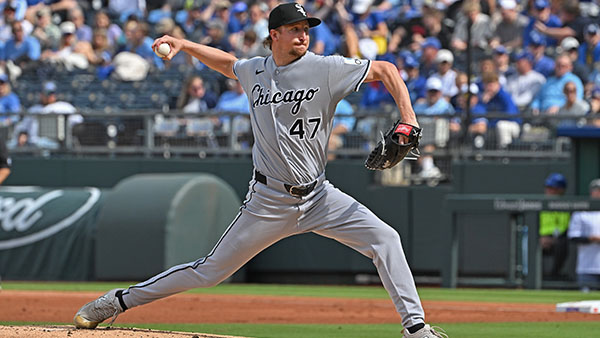
The Twins enter this one as -119 home favorites despite an 8-14 record since the trade deadline and a -59 run differential — while Chicago sits 106 runs better on the season and owns a 53.6% projected win probability. The market is pricing Target Field geography, not roster quality, and that gap between implied and projected probability is where the tension lives.
Erick Fedde vs. Bailey Ober: Chicago White Sox at Minnesota Twins Betting Preview
After Chicago’s 7-4 victory in Friday’s series opener, the narrative around this matchup is straightforward on the surface: the AL Central-leading White Sox carry momentum into Target Field, while the Twins limp through a post-deadline stretch that has produced an 8-14 record since the trade deadline and left Minnesota sitting four games out of the final wild-card spot. The market, however, is still giving the home team a pricing edge that the underlying numbers don’t support.
Minnesota opens as a -119 moneyline favorite, with Chicago available at +111. The numbers project this as nearly a dead-even contest — Chicago 4.8, Minnesota 4.7 — and the White Sox carry a 53.6% win probability. That gap between implied market probability and projected outcome is where the value lives today, and it’s built on team quality, momentum, and a run differential swing that doesn’t lie: Chicago is at +47, Minnesota at -59. That’s a 106-run gap between clubs the market is treating as roughly comparable.
The pitching matchup is real — both Erick Fedde and Bailey Ober are mid-rotation arms who won’t dominate the box score — but neither starter creates the kind of run suppression that would justify fading the better team at plus money. This is a value lean, not a stomp, and the case rests primarily on price and organizational quality.
Game Info & Betting Lines
- Date/Time: Saturday, August 29, 2026 | 2:10 PM ET
- Venue: Target Field | Park Factor: 1.00 (neutral run environment)
- Probable Starters: Erick Fedde (CWS) vs. Bailey Ober (MIN)
- Moneyline: Chicago White Sox +111 / Minnesota Twins -119
- Run Line: Minnesota Twins -1.5 (+158) / Chicago White Sox +1.5 (-193)
- Total: 9.5 (Over -105 / Under -115)
Why This Number Is Off
The market is doing what it typically does with a home team in a meaningful series game — it’s applying a home-team lean and trusting the recent name recognition of Target Field as a playoff-relevant environment. That logic has a legitimate foundation. Minnesota is fighting for a wild-card spot, the crowd will be engaged, and home field does provide a real if modest edge in run scoring and pitcher comfort.
But here’s the problem: the Twins aren’t actually a playoff-caliber club right now. An 8-14 stretch since the deadline, a -59 run differential, and a roster that has been outscored by opponents at a rate that makes the wild-card math increasingly charitable — these aren’t the markers of a team that should be favored in a coin-flip game. The market is pricing hope and geography, not performance.
Chicago, meanwhile, is 6-4 over its last 10, won last night by three runs, and brings a lineup that has consistently put runs on the board all season. The +111 price on the White Sox implies roughly a 47.4% win probability — the numbers put it closer to 53.6%. That 6-plus point gap in implied probability is where the edge lives. It’s not massive, but in a near coin-flip game, getting plus money on the team you believe is slightly better is exactly the spot to extract value.
What Separates the Pitching
On paper, the gap between these two starters is narrower than the overall team quality gap. Fedde carries a 4.18 ERA and 1.39 WHIP through 118.1 innings, while Ober sits at a 4.49 ERA and 1.26 WHIP across 108.1 frames. Ober’s lower WHIP and walk rate — 29 BB vs. Fedde’s 43 BB — make him the more efficient operator today, and that’s a genuine consideration when evaluating how this game is likely to flow.
Looking at the arsenals, Fedde leans heavily on a sweeper that generates real swing-and-miss — 22.5% whiff rate and a .293 xwOBA against at 36.7% usage — paired with a changeup at 12.2% usage that actually suppresses contact better at .288 xwOBA. His sinker at 30.4% usage is more hittable (.360 xwOBA), and his cutter (.390 xwOBA) is the pitch Minnesota’s right-handed bats will look to punish. Kody Clemens (.397 xwOBA overall, .398 vs. RHP) and Josh Bell (.398 vs. RHP) sit in spots four and five and will see plenty of that cutter. Bell is 0-for-7 with three strikeouts in limited career looks against Fedde, which matters in context.
Ober’s calling card is a sweeper used at just 11.7% but with a .173 xwOBA and 36.9% whiff rate — legitimately elite when deployed. His primary weapons are a changeup (34.2% usage, .364 xwOBA) and a four-seam at 88.1 mph (32.2% usage, .339 xwOBA). The velocity is below average, and that 88.1 mph fastball is vulnerable when hitters are locked in. Munetaka Murakami — sitting at a .502 xwOBA and .521 vs. RHP — is the Chicago bat most likely to do damage against soft stuff, and his 10.4% barrel rate gives him legitimate over-the-fence power in a park with a neutral factor. Murakami and Miguel Vargas (.424 xwOBA) give Chicago two bats in the top three of the order that profile as genuine threats against a finesse arm like Ober.
The real gap here isn’t starter vs. starter — it’s team pitching ERA: Chicago at 4.16, Minnesota at 4.70. That systemic run prevention advantage, compounded by a bullpen that is effectively a wash between the two clubs, is what tips the scales in Chicago’s favor when the game gets to the middle innings. The White Sox aren’t overwhelming — they’re just the better-constructed roster at this moment in the season, and the price doesn’t reflect it.
Lineup Edges & Injury Context
Both rosters are navigating injury lists that complicate depth, but Chicago’s core lineup remains intact. The White Sox are running out the same group that dropped 10 runs on Texas earlier this week — Brenton Doyle, Murakami, Vargas, Randal Grichuk, and Tristan Peters, who extended his five-game home run streak before going quiet Friday. That lineup has the top-of-order Statcast profile to do damage: Murakami’s 10.4% barrel rate and 36.2% hard-hit rate are legitimate power threats, and Vargas at .483 xwOBA vs. left-handed pitching is a reminder that he feasts when the matchup tilts his way — though Ober is a righty, so the relevant split here is Vargas’s .399 vs. RHP, still a solid number.
For Minnesota, Byron Buxton is listed day-to-day with a hip issue, which is a meaningful development. Buxton carries an .830 OPS and a .424 xwOBA with 25 home runs — losing him, even partially, strips a genuine middle-of-the-order threat from a lineup that is already struggling to generate runs consistently. The Twins are down to leaning on Ryan Jeffers (.837 OPS, .371 xwOBA) and Kody Clemens (.762 OPS, 22 HR) as the primary power sources, and both are mid-tier performers who profile well against league-average pitching, not as game-changers.
Minnesota’s top-of-order matchup against Fedde is also worth noting: Brooks Lee is 0-for-4 with no strikeouts in limited looks, and Ryan Jeffers is 0-for-3 against him. The Twins don’t have deep at-bat history against Fedde, but the early numbers don’t suggest they’ve found him easy to square up.
The Bet
This is a moderate edge built on legitimate price inefficiency, not a screaming spot. The White Sox are the better team by standings, run differential, and team ERA, and they’re available at plus money in a game the numbers rate as a near coin-flip. Getting 53.6% win probability at +111 is the kind of spot where you take the value and let it play out.
Target Field’s neutral park factor (1.00) removes any meaningful environmental concern. The pitching matchup is competitive but doesn’t flip the edge back to Minnesota. And the Twins’ recent track record — 8-14 post-deadline, four games out of the wild card — makes the home-team pricing look like a market inefficiency that the sharper money should be able to identify.
Bet: Chicago White Sox Moneyline (+111) — 2 units | Moderate Confidence