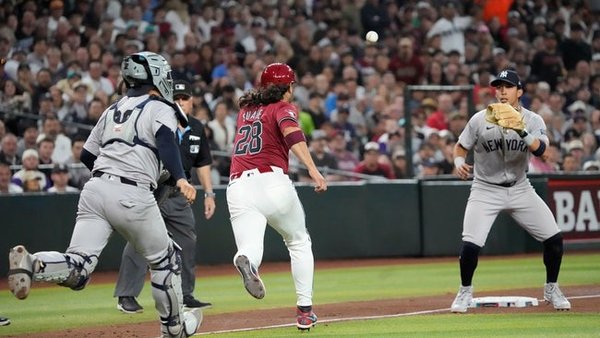
Saturday’s 24-run chaos inflated a total that the underlying numbers simply do not support. Arizona’s .695 team OPS and Minnesota’s -20 run differential point to a combined 9.1 projected runs — yet the market posted 9.5 after the blowout, pricing the anomaly instead of the structural profile. The number is about half a run high, and the dome environment at Chase Field does nothing to change that math.
Mike Paredes vs. Jose Cabrera: Minnesota Twins at Arizona Diamondbacks Betting Preview
The series finale between Minnesota and Arizona presents a specific kind of analytical puzzle: a total that looks reactive rather than forward-looking. The books posted 9.5 after Saturday’s 16-8 blowout, and while that number isn’t outrageous, the numbers project just 9.1 combined runs — a gap that doesn’t sound like much until you factor in the structural context underneath it. Neither of these teams is a true run-scoring powerhouse. Arizona carries a .695 team OPS and has scored only 329 runs on the season. Minnesota’s offense is stronger on paper at .736 OPS, but both clubs sit in negative run differential territory — Minnesota at -20, Arizona at -23 — which tells you they bleed runs on both sides of the ball more than they manufacture them.
The 24-run output on Saturday was an outlier, not a baseline. A 10-run fifth inning driven by a Byron Buxton grand slam and a parade of bullpen arms is not a repeatable event. What today actually sets up is a Sunday afternoon dome game on Peacock, with a park factor of 0.97 that leans slightly pitcher-friendly, and two offenses that averaged well below yesterday’s fireworks for most of this season. The under at -122 is priced fairly, and the run-scoring context backs the lean.
That said, I want to be direct about the biggest variable in this game: Arizona’s starter, Jose Cabrera, has zero available data. That unknown is real and it matters. I’ll come back to it throughout this piece because ignoring it would be irresponsible analysis.
Game Info & Betting Lines
- Date/Time: Sunday, June 21, 2026 | 3:15 PM ET
- Venue: Chase Field, Phoenix (Dome | Park Factor: 0.97 — slightly pitcher-friendly)
- TV: Peacock
- Probable Starters: Mike Paredes (MIN) vs. Jose Cabrera (ARI)
- Moneyline: Minnesota Twins +118 / Arizona Diamondbacks -138
- Run Line: Arizona Diamondbacks -1.5 (+152) / Minnesota Twins +1.5 (-184)
- Total: 9.5 (Over +100 / Under -122)
Why This Number Is Slightly Off
The 9.5 is a defensible total. The market isn’t wrong for setting it here — yesterday’s box score demanded a response, and a combined nine-plus is reasonable when one team just scored 16. The over at +100 is essentially free money in juice terms, which signals that the books are genuinely split on whether regression kicks in immediately. That’s the legitimate case for the other side: the Twins have gone 7-3 in their last 10 games, their lineup is rolling, and Byron Buxton has 24 home runs with what looked like a locked-in approach at the plate on Saturday.
But here’s the problem — the 9.5 is priced on the memory of an anomaly, not on the structural profile of these two clubs. Arizona’s pitching staff carries a 4.32 ERA and a 1.297 WHIP — functional and serviceable, not elite, but not a sieve either. Minnesota’s offense averages 4.92 runs per game on the season, which means even a normal Twins output lands around five runs. Add Arizona’s 4.33 runs per game and you’re at roughly 9.2 projected — right in line with where the season-long run-scoring rates point at 9.1. The market has the total about half a run high. That’s not a massive gap, but at -122 juice, it’s enough to find value in the under when the structural evidence points this direction.
What Separates the Pitching
The matchup between Mike Paredes and the unknown quantity of Jose Cabrera is where this bet gets its most interesting wrinkle — and its biggest risk.
Paredes brings a small but readable Statcast profile to the mound. His four-seam fastball sits at 93.1 mph and is his primary weapon at 40.5% usage, generating a .290 xwOBA against — that’s a legitimate weapon at the top of his arsenal. His changeup is the secondary anchor at 24.6% usage, sitting 87.3 mph with a 26.1% whiff rate, and his sweeper adds a third look at 20.7% usage with a 20.8% whiff rate. What these numbers tell you is that Paredes sequences well and misses bats at a reasonable clip, even if his raw strikeout rate (6 K/9) isn’t elite. His 1.00 WHIP across 15 IP also signals he keeps traffic manageable.
Against the Arizona lineup, the profile plays reasonably well. Tim Tawa leads off with a .274 xwOBA and checks in even weaker against right-handed pitching specifically (.233 vsRHP), and Geraldo Perdomo — a contact-first hitter with a 10.6% whiff rate — makes contact but doesn’t hit the ball hard. Ildemaro Vargas sits at a .283 xwOBA against righties, and Pavin Smith checks in at .298 vsRHP with a 20.6% whiff rate. The top of Arizona’s order is manageable for a right-hander who sequences his three-pitch mix intelligently. The concern is that Arizona’s lineup isn’t deep enough to put up crooked numbers without getting a few things to break right at once.
On the other side, Cabrera is a complete blank. No ERA, no WHIP, no arsenal data — nothing. That unknown cuts both ways. He could be a volatile spot starter who unravels quickly, which would blow up the under before the fourth inning. Or he could be a pitch-to-contact type who eats innings and limits damage in a low-leverage dome environment. Without data, neither outcome can be dismissed — which is precisely why this is a 2-unit play rather than a larger one.
Lineup and Injury Context
Ryan Jeffers — one of Minnesota’s best hitters at .295/.949 — is on the 10-Day IL with a hand injury, so the Twins are running Victor Caratini behind the plate instead. That’s a meaningful downgrade in the lineup. Arizona is also missing Jordan Lawlar (hamstring) and Carlos Santana (thigh), thinning out a lineup that was already running a .695 team OPS. Both teams are walking into this series finale a bit dinged up, and depleted offenses running out against an unknown pitcher on a dome field with a 0.97 park factor is not a recipe for a high-scoring Sunday afternoon.
The Diamondbacks’ lineup as currently constructed leans heavily on Corbin Carroll (.925 OPS, .283 AVG) and Ketel Marte (.762 OPS) to generate run-scoring opportunities. Without Lawlar and with the roster shuffled, the bottom half of the order — Tommy Troy (.710 OPS), Jorge Barrosa — offers little run-creation depth. Arizona averaged 4.33 runs per game on the season, and that number gets harder to sustain when the lineup is this thin.
The Dome Factor and Game Environment
Chase Field with the roof closed is one of the more neutral environments in the NL West. The 0.97 park factor confirms it plays just slightly below league average for run scoring — the heat is managed, wind is irrelevant, and pitchers generally aren’t disadvantaged by the atmosphere. For a Sunday afternoon game in June in Phoenix, the dome will almost certainly be closed, which removes one of the few volatility variables that could push the total over.
The over is sitting at +100. That juice line tells you the books aren’t confident, but it also tells you they’d rather be on the under side if they had to pick. A half-run edge with the structural run-scoring data behind it, in a controlled dome environment, with two offenses running below .700 collective OPS — that’s a workable under spot.
The Bottom Line
This isn’t a slam-dunk. The Cabrera unknown is a genuine wildcard that keeps this at 2 units rather than a stronger play. If he’s a wreck, this game could hit 12 runs before the sixth inning. But the weight of the available evidence — Arizona’s 4.32 ERA staff, Minnesota averaging 4.92 runs per game, both teams in negative run differential territory, a 0.97 park factor in a closed dome, and a depleted lineup on both sides — all points toward regression from Saturday’s outlier.
The market set 9.5 in reaction to 24 runs. The season-long averages say these teams combine for closer to 9.1. At -122, the under has a thin but legitimate edge, and that’s enough for me to pull the trigger at moderate confidence.
Bet: Under 9.5 (-122) — 2 Units