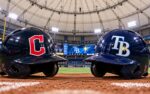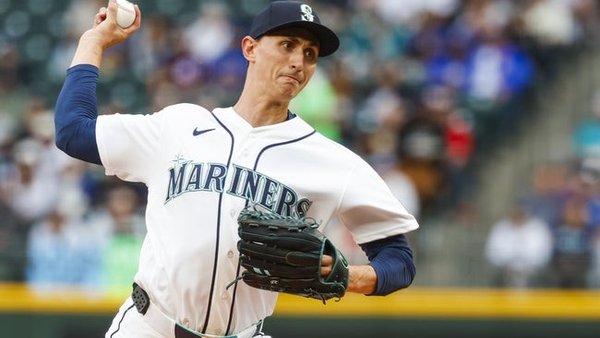
Bradley’s 36.5% cutter whiff rate against a Seattle lineup posting a .687 OPS creates a run-environment case the posted total is only barely acknowledging. T-Mobile’s 0.92 park factor and a Buxton-less Minnesota offense add structural weight to the under side — but the bullpen damage on both rosters keeps this number from being a comfortable lean.
Taj Bradley vs. George Kirby: Minnesota Twins at Seattle Mariners Betting Preview
After yesterday’s 4-3 Seattle walk-off ended the series opener, the pitching matchup shifts significantly — from Logan Gilbert to George Kirby, and from Connor Prielipp to Taj Bradley. That matters. Today’s contest presents a similar structural case to yesterday’s low-scoring affair, though with enough friction to warrant careful handling.
The core thesis isn’t complicated: two above-average starters take the mound in a retractable-roof stadium that structurally suppresses run scoring, against two offenses that are operating well below league-average levels. Minnesota’s lineup is missing its most dangerous bat, Seattle’s lineup is operating near the bottom of the league in OPS, and the park factor at T-Mobile doesn’t do any favors for hitters. The Under at -118 reflects a price the market has already pulled tight — but not tight enough to eliminate the edge.
The question isn’t whether 7.5 is a low total — it obviously is. The question is whether two thinned-out bullpens and some variance can push this game past that number. My read is that the starting pitching quality, the park, and the lineup damage combine to keep the scoring constrained, even if it’s closer than comfortable.
Game Info & Betting Lines
- Date/Time: Sunday, August 2, 2026 | 4:10 PM ET
- Venue: T-Mobile Park (retractable roof) | Park Factor: 0.92 (run-suppressing)
- Probable Starters: Taj Bradley (MIN, 9-4, 3.65 ERA) vs. George Kirby (SEA, 8-9, 3.98 ERA)
- Moneyline: Minnesota Twins +124 / Seattle Mariners -134
- Run Line: Seattle Mariners -1.5 (+152) / Minnesota Twins +1.5 (-184)
- Total: 7.5 (Over -104 / Under -118)
Why This Number Is Close
The market landed at 7.5 for good reason. Both starters carry sub-4.00 ERAs. T-Mobile Park runs at a 0.92 factor, meaning it structurally gives back about 8% of run production relative to a neutral park. Seattle’s offense ranks among the weakest in the data at .229 AVG and .687 OPS. Minnesota’s lineup, while slightly more productive on the season (.725 OPS), is entering without Byron Buxton, who is on the 10-Day IL (hip) and was slashing .864 OPS with 25 home runs before going down. The market knows all of this — and it’s priced accordingly.
The legitimate case for the Over centers on two compromised bullpens. Minnesota is without Abel, Sands, and Banda. Seattle is without Brash, Vargas, and Criswell. When starters exit — and in a Sunday game, pitch count management often shortens outings — the relief corps on both sides is thinner than the season numbers suggest. Late-inning runs become more attainable, not less, when you’re handing the ball to secondary relievers.
But here’s the problem with the Over case: both games in this series (4-3, 5-3) felt run-heavy by total, but neither actually blew past the number in a convincing way. The runs that scored were manufactured in tight spots, not generated by offenses operating at full throttle. The structural suppressors — park, pitchers, lineup gaps — still contained the damage. The Under at -118 reflects a market that’s priced the game correctly directionally but may still be underweighting just how limited these offenses are.
What Separates the Pitching
Taj Bradley is the cleaner arm here by measurable margin. His 2.92 WAR and 3.65 ERA back a Statcast profile that holds up under scrutiny: his four-seam fastball sits at 97.0 mph and accounts for 47% of his usage, but it’s his cutter — deployed 23.5% of the time at 89.7 mph — that generates a 36.5% whiff rate and an xwOBA-against of just .221. That cutter is a genuine swing-and-miss weapon against right-handed bats, and Seattle’s lineup leans right-handed through the middle. His split-finger at 19.7% usage adds another suppression layer at .236 xwOBA. The combination of a mid-to-upper-90s fastball and a pair of off-speed weapons with whiff rates above 30% is how you post a 10.37 K/9 against sub-.700 OPS lineups.
George Kirby is effective in a different way — his value comes from exceptional control rather than swing-and-miss volume. Just 25 walks in 120 innings is the best walk rate in this dataset, and it means Kirby rarely hands out free bases to keep innings alive. His sweeper (29.5% usage, 87.2 mph) generates a 26.2% whiff rate and limits contact quality at .268 xwOBA, serving as his best put-away option against right-handed hitters. His four-seamer at 96.6 mph is firm but gives up a .317 xwOBA — the pitch Minnesota’s lineup can target. Dominic Canzone’s .441 xwOBA and 8.5% barrel rate make him a threat, and he has gone 2-for-8 with four strikeouts in limited BvP against Bradley — suggesting Bradley may have the slight edge in the marquee individual matchup of the night.
The gap between these two arms isn’t enormous, but Bradley’s whiff profile and WAR advantage are real. What matters for the total is that both starters are capable of six-plus innings against these lineups without surrendering crooked numbers — and in a pitcher-friendly park running a 0.92 factor, that’s the recipe for keeping the combined run total in check.
Key Hitter Threats to Watch
Minnesota’s most dangerous active bats tonight are Ryan Jeffers (.925 OPS, .388 xwOBA, 6.1% barrel rate) and Kody Clemens (.780 OPS, .398 xwOBA, 6.4% barrel rate). Jeffers is hitting .400 in 5 BvP plate appearances against Kirby, which is a small sample but worth tracking — if he gets into a hitter’s count against Kirby’s .317 xwOBA four-seamer, there’s real damage potential. Clemens has gone 3-for-9 with two strikeouts in BvP. The Buxton absence is the ceiling suppressor: without his .864 OPS and 25 home runs in the middle of the order, this Minnesota lineup simply can’t string together as many big innings.
On the Seattle side, Randy Arozarena (.836 OPS, .391 xwOBA) had a massive game yesterday but has gone 0-for-3 with a strikeout in his career BvP sample against Bradley — and his .345 xwOBA against righties vs. .407 against lefties signals a potential step back tonight facing a right-hander with Bradley’s whiff arsenal. Julio Rodríguez (.403 xwOBA, 12 BvP PAs, .333 average, 1 HR) is the name to watch — he has history against Bradley and has done damage. Note that Brendan Donovan (3B), who logged a .839 OPS in limited at-bats this season, is on the 10-Day IL with a groin injury and will not factor into tonight’s lineup at all.
Statcast Edge: Bradley’s Cutter vs. Seattle’s Lineup
The most decisive pitch-level mismatch in this game is Bradley’s cutter against Seattle’s right-handed core. Cole Young (.369 xwOBA overall, 16.7% whiff rate) leads off and will see that cutter early. Cal Raleigh, hitting fifth, carries a 32.8% strikeout rate and a 29.9% whiff rate — exactly the kind of contact profile Bradley’s off-speed weapons exploit. Raleigh has gone 3-for-9 with 2 home runs in BvP against Bradley, which is the one alarming data point in an otherwise encouraging matchup breakdown. That’s the real swing variable: if Raleigh gets into a fastball count, he’s proven he can do damage in this matchup specifically.
Against Kirby, the numbers tell a more mixed story for Minnesota. Larnach (.366 xwOBA vs. RHP) has gone 3-for-10 with a home run and 3 strikeouts in BvP. Royce Lewis, who has been one of Minnesota’s hottest hitters this series, has just 2 PAs against Kirby and went 0-for-2 — too small to read much into. The Kirby walk-rate story matters here: with just 25 walks in 120 innings, Minnesota hitters are going to have to earn their baserunners and can’t count on free passes to manufacture runs.
Pushback: Why I’m Not Comfortable with This Price
Let me be honest about the friction here, because there’s real resistance to this play.
First, -118 on an Under 7.5 is a compressed price. You’re laying juice on a low total in a game where both starters could realistically exit in the fifth or sixth inning on a Sunday. The thin bullpens on both sides mean that the back half of this game could easily be contested by arms that aren’t on the team’s top reliability tier. The Over case isn’t built on offense — it’s built on bullpen degradation, and that’s a legitimate path to 8+ runs even when the starters are dealing.
Second, the numbers themselves — 8.1 combined projected runs (Seattle 4.1, Minnesota 4.1) — sit above the 7.5 line. That’s not a massive gap, but it means the numbers are leaning Over, not Under, before you factor in any adjustments. Betting the Under here means going against that lean and trusting the structural suppressors — park, pitcher quality, lineup gaps — to do work that the raw run expectations suggest they may not fully accomplish.
Third, the series context. Yesterday’s game ended 4-3. Friday’s ended 5-3. Neither game cleared a high bar, but both produced totals in the 7-8 run range. If you’re playing Under 7.5, you need this game to be tighter than either of the first two in the series. That’s possible — Bradley is a better arm than Prielipp, and the matchup data favors him — but it’s not a given.
The reason I’m still on the Under at -118 is that the structural case is genuinely strong: a retractable-roof, pitcher-friendly environment running a 0.92 park factor, two offenses with sub-.700 OPS marks, Buxton on the IL, Donovan on the IL, two starters with legitimate suppression profiles, and a market price that hasn’t fully baked in how limited these lineups are. The Under wins if the starters do their job for five-plus innings. That’s not a big ask given the matchup data.
Handicapper Notes: Rejected Angles
I looked at the Seattle moneyline at -134 and couldn’t get there — the starting pitching edge is slight, and at that price you’re paying for a coin-flip outcome. Minnesota’s +124 carries theoretical value given the component breakdown, but the Buxton absence and road travel make this feel like a trap. The run line is even more fraught: Seattle -1.5 at +152 requires a two-run margin, and with Bradley on the mound, I’m not confident in the Mariners’ ceiling in this specific matchup. The Under is the cleanest play in this game, and it’s where I’m putting 2 units.
The Pick
Bet: Under 7.5 (-118) — 2 Units | Confidence: Moderate
The structural case is built on real suppressors: a pitcher-friendly park at 0.92, two legitimate starting pitchers with strong suppression profiles, two lineups with meaningful absences and sub-.700 OPS marks. The -118 price is not a gift, and the numbers lean slightly Over — that’s real resistance. But Bradley’s cutter (36.5% whiff, .221 xwOBA), Kirby’s elite walk rate (25 BB in 120 IP), and the park factor combine to create a scenario where 7 runs or fewer is a realistic and likely outcome. Two units on the Under.