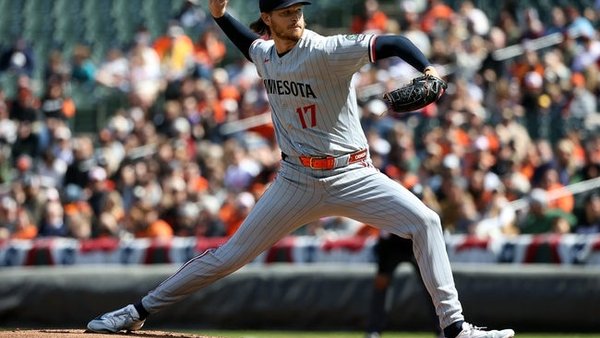
McClanahan’s changeup generates a 44.6% whiff rate while Minnesota has struck out 232 times across 26 games. The -136 price treats this like a neutral matchup — the strikeout profiles suggest otherwise.
Shane McClanahan vs Bailey Ober: Tampa Bay Rays at Minnesota Twins Betting Preview
After watching Junior Caminero and Jonathan Aranda combine for four home runs in last night’s 6-2 Rays victory, the market is still undervaluing what Tampa Bay has working in their favor for game two. The moneyline sits at -136, pricing the Rays as modest home favorites, but that number doesn’t reflect the meaningful edge Shane McClanahan creates against a Minnesota offense that’s struggled with strikeouts all season.
The Twins have struck out 232 times across their season — a concerning rate given their offensive struggles. Their .232 team batting average reflects deeper contact issues that play directly into McClanahan’s strength. Meanwhile, the Rays offense led by Yandy Diaz hitting .340 with a .915 OPS continues to create separation from Minnesota’s offensive production. Yesterday’s momentum matters, but the pitching matchup drives today’s outcome.
Game Info & Betting Lines
- Date/Time: Saturday, April 25, 2026 | 4:10 PM ET
- Venue: Tropicana Field (Park Factor: 0.95)
- Probable Starters: Bailey Ober (2-0, 4.15 ERA) vs Shane McClanahan (1-2, 5.00 ERA)
- Moneyline: Minnesota Twins +113 / Tampa Bay Rays -136
- Run Line: Tampa Bay Rays -1.5 (+159) / Minnesota Twins +1.5 (-194)
- Total: 8 (O -115 / U -105)
Why This Number Feels Defensive
The market is balancing McClanahan’s elevated 5.00 ERA against his strikeout upside, creating a line that acknowledges Tampa Bay’s home advantage but doesn’t fully account for the matchup dynamics. The Rays at -136 reflects caution about McClanahan’s early-season struggles and Minnesota’s power potential with 32 home runs compared to Tampa Bay’s 24.
But that pricing misses the specific edge McClanahan creates against this Twins lineup. Minnesota’s team-wide strikeout issues — 232 strikeouts in their 26 games — represents a fundamental contact problem that becomes amplified against a pitcher throwing 94.8 mph four-seamers 43.5% of the time with a 44.6% whiff rate on his changeup. The market is treating this as a coin flip when the strikeout differential suggests otherwise.
The offensive gap reinforces this edge. Tampa Bay’s .256 team average against Minnesota’s .232 creates a meaningful separation, with Diaz anchoring a lineup that’s shown consistent production. Yesterday’s explosion wasn’t an outlier — it was this offensive advantage manifesting against Twins pitching.
What Separates the Pitching
McClanahan’s strikeout arsenal creates problems Minnesota hasn’t solved. His 9.0 K/9 rate against Ober’s 8.3 K/9 might look marginal on paper, but the pitch mix tells a different story. McClanahan’s changeup generates a 44.6% whiff rate at 86.3 mph, holding hitters to just 0.177 xwOBA — a devastating weapon against a Twins lineup that’s struggled with off-speed recognition.
The contrast becomes sharper when examining Ober’s profile. His changeup sits at 83.0 mph with only a 22.3% whiff rate and 0.313 xwOBA against. While Ober’s sweeper shows promise at 43.3% whiff rate, he only throws it 9.8% of the time. McClanahan can attack with his changeup 26.1% of the time, creating consistent swing-and-miss opportunities that Ober can’t match.
More concerning for Minnesota is how their top hitters match up. Byron Buxton carries a 29.2% strikeout rate with a 30.0% whiff rate — exactly the profile McClanahan exploits. Trevor Larnach has already faced McClanahan in five plate appearances this season, going 0-for-5 with three strikeouts. When your top two hitters are vulnerable to the opposing starter’s best weapons, run creation becomes problematic.
Ober’s bigger concern is Tampa Bay’s patience at the plate. Yandy Diaz posts just a 13.4% strikeout rate with a .365 xwOBA, representing a clear mismatch against Ober’s changeup-heavy approach. Junior Caminero brings power upside with a 7.3% barrel rate and .381 xwOBA, creating multiple threats Ober must navigate carefully.
The Pushback
McClanahan’s 5.00 ERA and negative WAR (-0.06) raise legitimate questions about his current form. The strikeout numbers look impressive, but he’s allowed 18 runs in 18 innings — that’s not sustainable dominance. His four-seam fastball shows concerning contact quality with a 0.477 xwOBA against, though this comes from a limited early-season sample that may not reflect his true talent level.
The Rays’ negative run differential (-8) despite their 14-11 record also creates pause. They’ve been fortunate in close games, and that luck factor makes laying -136 feel expensive. Minnesota’s power numbers — 32 home runs in 26 games — show they can change games quickly when they connect.
But here’s what brings me back to Tampa Bay: the specific matchup trumps the general concerns. McClanahan’s strikeout rate against Minnesota’s contact struggles creates a concrete edge that outweighs his run-prevention issues. The dome environment at Tropicana neutralizes weather variables, letting the pitcher-hitter dynamics play out cleanly.
Run Environment & Game Shape
The total sits at 8 with both starters carrying elevated ERAs, creating an environment where the market expects moderate scoring but not an explosion. Tropicana’s 0.95 park factor slightly suppresses offense, favoring the home pitcher in a contained environment.
This scoring range amplifies McClanahan’s strikeout edge. In a projected 4-5 run game, every inning where he can neutralize Minnesota’s top hitters becomes magnified. The Rays’ ability to scratch across runs against Ober’s more hittable arsenal creates separation that compounds over nine innings.
Why I’m Rejecting the Run Line
The run line at +159 for Tampa Bay -1.5 offers significant value, but McClanahan’s early-season volatility makes me hesitant to need two runs of separation. His tendency to allow crooked numbers — even while striking hitters out — creates too much variance for a bet that requires margin.
Minnesota’s power potential with players like Byron Buxton (5 HR) and Alex Jackson (5 HR) means one swing can change the run line outcome even if Tampa Bay controls the game. The moneyline captures the edge without requiring a specific margin of victory.
The Bottom Line
Tampa Bay Rays -136 provides the cleanest way to back a pitcher-hitter matchup that creates meaningful separation. McClanahan’s strikeout weapons against Minnesota’s contact struggles, combined with Tampa Bay’s offensive depth, creates value that the market hasn’t fully recognized.
The concerns about McClanahan’s early-season form are valid, but the specific advantages he holds over this Twins lineup outweigh those broader questions. In a league where edges are increasingly narrow, this matchup dynamic provides concrete reasons for confidence.
Play: Tampa Bay Rays -136 (2 units)