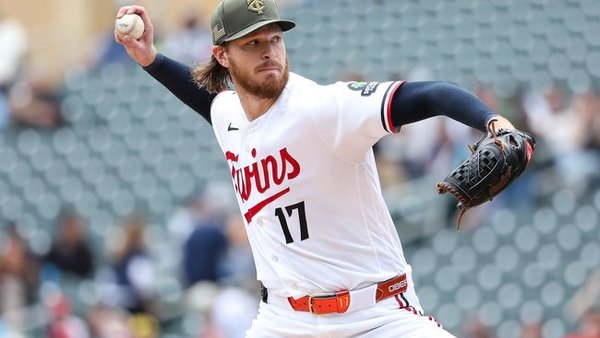
Kansas City’s nine-of-ten home record has the books treating this like a clear Royals edge at -116 — but the surface read doesn’t hold up against a -102 season run differential, two injured lineup pieces, and a projected margin of 0.2 runs. The moneyline is pricing momentum; the underlying offense data points somewhere else entirely.
Bailey Ober vs. Michael Wacha: Minnesota Twins at Kansas City Royals Betting Preview
Kansas City closed out Tuesday’s series opener 8-2, then did it again Wednesday 2-1 behind nine Noah Cameron strikeouts over eight innings. The momentum is real, the home crowd has been loud, and the Royals have won nine of their last ten at Kauffman Stadium. That’s the market noise. The signal underneath it is different.
The projected score lands at Kansas City 4.5, Minnesota 4.3 — essentially a push. At those numbers, a moneyline price of +108 on the Twins represents genuine plus-money value on what the numbers treat as near-even probability. The core bet here is not that the Twins are the better team; it’s that you’re being paid over even-money to back a coin-flip result. That’s the argument.
The pitching matchup adds texture. Michael Wacha carries a cleaner ERA into this one, but Bailey Ober is walking into a Kansas City lineup that ranks among the worst offenses in the American League by run differential. The price doesn’t fully account for that context.
Game Info & Betting Lines
- Date/Time: Thursday, August 6, 2026 — 7:30 PM ET
- Venue: Kauffman Stadium — Park Factor 0.95 (mildly pitcher-friendly)
- TV: ESPN
- Probable Starters: Bailey Ober (MIN, 7-3, 4.45 ERA) vs. Michael Wacha (KC, 5-8, 3.51 ERA)
- Moneyline: Minnesota Twins +108 / Kansas City Royals -116
- Run Line: Minnesota Twins -1.5 (+168) / Kansas City Royals +1.5 (-205)
- Total: 9 (Over -110 / Under -110)
Why This Number Is Close
The market has done its homework. Kansas City’s nine-of-ten home stretch is genuine; the Royals aren’t manufacturing that record on soft competition. Wacha’s 3.51 ERA over 138.1 innings is a real number backed by a real sample. And Minnesota just dropped three straight — two of them in this building. The books are pricing home momentum and a legitimate pitching edge for Wacha, and it shows up in the -116 chalk on KC.
But here’s what the market is slightly overweighting: Kansas City’s season-long run differential is -102. A team that has been outscored by 102 runs on the season doesn’t suddenly become a dangerous offense because it’s playing at home. Their team OPS sits at .712 — below the Twins’ .726 — and their lineup tonight is missing Maikel Garcia and Vinnie Pasquantino to injury. The market is reading the recent home record; the underlying offense data reads much weaker.
The flip side is that Minnesota’s lineup isn’t operating at full strength either. Byron Buxton is on the 10-Day IL with a hip injury, removing a .864 OPS, 25-homer threat from the middle of the order. That’s a real dent. The line accounts for most of it — +108 isn’t a bargain, but it clears the juice ceiling in a game where the projected margin is 0.2 runs. That’s enough to warrant a look.
What Separates the Pitching
On surface stats, Wacha looks like the clear advantage: 3.51 ERA versus Ober’s 4.45, more than 50 additional innings pitched, and a 2.56 WAR that more than doubles Ober’s 1.06 mark. The bet here isn’t premised on Ober being the superior pitcher — he isn’t by these measures. The value argument rests entirely on the coin-flip projected margin and the plus-money price, not on any pitching quality edge for Minnesota.
Ober’s arsenal leans heavily on deception over velocity. His changeup, thrown 35.3% of the time at 82.8 mph, generates a 22.6% whiff rate and a .338 xwOBA against — usable. His sweeper is the weapon to watch: at just 11.5% usage, it posts a 33.3% whiff rate and an elite .166 xwOBA. When Ober deploys it selectively, it’s a genuine swing-and-miss pitch. The problem is his sinker (.594 xwOBA) and curveball (.634 xwOBA) are punishing when he misses location, and his 14 homers allowed in only 87 innings is a legitimate red flag in a ballpark with even mild elevation.
Wacha brings better velocity — his four-seamer sits at 93.0 mph — and a changeup that is arguably his best pitch at 23.5% usage, .240 xwOBA, and a 28.6% whiff rate. His sinker (93.1 mph) generates weak contact. The gap between their arsenals is real, but it gets complicated when you match Wacha against the Twins’ lineup. The BvP concern on Ober’s side is real: Bobby Witt Jr. carries a .427 xwOBA against right-handed pitching and holds a .429 average with 1 HR in 28 PA against Ober. Jac Caglianone posts a .491 xwOBA against righties. Both are capable of making Ober pay for location mistakes.
The counterpoint for Minnesota: Wacha’s 5-8 record despite a 3.51 ERA tells a run-support story. The Twins’ lineup, even without Buxton, is playing .726 OPS ball — better than what Kansas City has put out all season. Ryan Jeffers (.383 xwOBA) and Josh Bell (.381 xwOBA) represent genuine contact quality in the heart of the order. Kody Clemens, sliding into the cleanup spot, is at a .391 xwOBA with a 6.2% barrel rate — not a pushover lineup even in its current form.
The Pushback
The honest case against this lean starts with Buxton. A .864 OPS, 25-homer centerfielder is not just a lineup slot — he’s a middle-of-order presence that fundamentally changes how opposing pitchers approach the lineup. Without him, Minnesota’s offense loses its most dangerous power bat, and Kody Clemens sliding into his spot is a meaningful downgrade in impact, even if the xwOBA numbers look fine in isolation.
Kansas City’s home momentum is also harder to dismiss than a -102 run differential might suggest. Nine wins in ten home games since July 5 is the best home record in baseball over that stretch. Noah Cameron just put up nine strikeouts in eight innings. The Royals aren’t playing like a -102 team in this building right now, and that recent performance is part of the pricing too.
Minnesota’s bullpen is also a concern. Anthony Banda (lat) and Cole Sands (elbow) are both on the IL, and the Twins have been burning relievers after giving up five runs in the eighth inning in Seattle just days ago. If Ober exits early, the backend gets thin. Kansas City’s pen has its own absences — Carlos Estevez, Nick Mears, Connor Seabold, and Beck Way are all unavailable — but the Royals have been managing it better at home.
As for the run line: both sides are easy passes. Minnesota -1.5 at +168 asks you to ride a road underdog to cover in a game projected to land within 0.2 runs — the math doesn’t work. Kansas City +1.5 at -205 means laying $205 to win $100 in a near-coin-flip; the juice eats the edge entirely. The only number that makes sense here is the Twins moneyline at +108.
The Pick
This is a coin-flip game with a 0.2-run projected margin. The Royals deserve their favorite status — Wacha’s ERA, innings, and WAR all support it. But the value isn’t in who’s the better team; it’s in getting paid over even-money when the numbers say the gap between these two clubs tonight is thinner than the market implies. Kansas City’s -102 run differential, a depleted lineup missing Garcia and Pasquantino, and Wacha’s history of run-support problems all give the Twins enough of a hook at this price.
Bet: Minnesota Twins moneyline (+108), 1 unit, lean.
For the latest line movement and sharp-side tracking on this game, check our live odds page before placing your bet — lines on a game this close can shift quickly around first pitch.