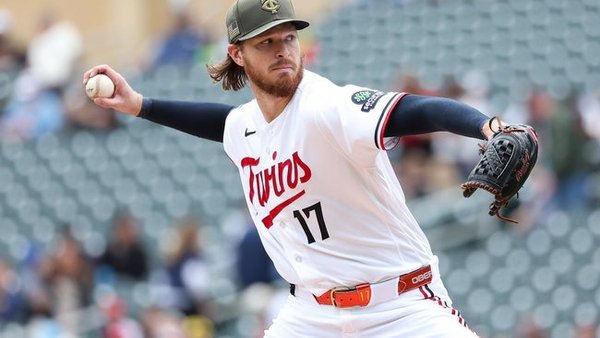
Bailey Ober (3.63 ERA) and Sonny Gray (2.93 ERA) are the two best starters of this three-game set, yet the total sits at 7.5 — a number built on team-level run averages that include opener and bullpen games neither man is pitching today. Fenway’s 1.08 park factor adds ambient risk, but two sub-3.65 ERA arms against below-average lineups tell a different story than the raw projection does.
Bailey Ober vs. Sonny Gray: Minnesota Twins at Boston Red Sox Betting Preview
After yesterday’s White Sox moneyline loss is a reminder that no edge is automatic, today’s slate presents a cleaner setup — not because one team is dramatically superior, but because the pitching context genuinely suppresses the run environment. Minnesota took Saturday’s game 4-2 behind Taj Bradley’s strong return, making this series 2-0 for the Twins with Sunday’s rubber game now featuring the two best starters of the weekend.
The market has set the total at 7.5, which feels reasonable on the surface — Fenway carries a 1.08 park factor, both lineups have shown they can score, and the Friday blowup (8-6) is still fresh. But that Friday game was a bullpen affair: Connor Prielipp lasted four innings, and the Twins’ rally came entirely against Justin Slaten in the seventh. That game tells us almost nothing about what happens when Bailey Ober and Sonny Gray take the mound.
The numbers project Boston 4.9, Minnesota 4.8 — a 9.7 combined total that technically sits above 7.5. That honest tension is what makes this a lean, not a lock. But those projections are built on team-level run averages. The actual pitching arms on the mound today — both well above the 4.50 league ERA baseline — argue the number gets suppressed from the top down.
Game Info & Betting Lines
- Date/Time: Sunday, May 24, 2026 — 1:35 PM ET
- Venue: Fenway Park | Park Factor: 1.08 (mildly hitter-friendly)
- TV: MLB.TV, Twins.TV, NESN
- Away Starter: Bailey Ober (5-2, 3.63 ERA, 1.07 WHIP, 57 IP)
- Home Starter: Sonny Gray (5-1, 2.93 ERA, 1.125 WHIP, 40 IP)
- Moneyline: Minnesota Twins +136 / Boston Red Sox -162
- Run Line: Boston Red Sox -1.5 (+140) / Minnesota Twins +1.5 (-170)
- Total: 7.5 (Over -108 / Under -112)
Why This Number Is Close
The market is not wrong to set this at 7.5. Fenway does add ambient run risk — the short left-field wall punishes mistake pitches, and Byron Buxton’s .422 xwOBA profile means any hanging offering gets punished. The lineups also showed Friday that they can generate offense in bunches when given weaker arms to attack.
The case for the over rests on two things: park environment and the 9.7 combined run projection. If you weight the team-level run averages at face value — Boston 3.71 runs/game, Minnesota 4.65 runs/game — you land above the total. The market clearly sees that math too, which is why the over is priced at a slightly better number (-108) than the under (-112).
But here’s where I think the market is slightly off: those team-level averages include starts from openers, bulk relievers, and struggling rotation arms. Today is not a league-average pitching day. When two starters with sub-3.65 ERAs and WHIPs under 1.13 take the mound, the team-level baselines overstate expected offense. The -112 juice on the under is reasonable — not steep enough to price out the edge the pitching matchup creates.
Line shopping and juice management are covered in detail in our MLB betting guide — useful context before committing to today’s number.
What Separates the Pitching
Sonny Gray has been the cleaner arm this season. His 2.93 ERA and 1.125 WHIP across 40 innings are built on exceptional walk prevention — just 9 BB in 40 IP — which limits the multi-base threat sequences that inflate scores. Gray’s arsenal is genuinely five pitches wide, but the distribution tells the real story: his Cutter leads all offerings at 21.1% usage, followed closely by his Sinker (19.6%), Curveball (18.7%), 4-Seam (18.5%), and Sweeper (17.3%). That’s a remarkably even spread that keeps hitters from sitting on any single offering. The Curveball is a legitimate put-away option at a 31.1% whiff rate, and the Sinker generates soft contact at .293 xwOBA with a 29.1% put-away rate. Gray also carries a changeup — deployed at just 4.1% usage — but when he does reach for it, it’s devastatingly effective: a .185 xwOBA-against makes it the most untouchable pitch in his bag, a genuine surprise weapon precisely because batters see it so rarely. Against the Twins’ lineup — which is missing Ryan Jeffers (10-Day IL, broken wrist) and his .949 OPS — Gray faces a group where the cleanup threat is largely Victor Caratini and a lineup that bottoms out quickly.
Bailey Ober is the less dominant arm but is hardly soft. His 3.63 ERA and 1.07 WHIP actually beat Gray in surface-level contact prevention, and his sweeper is a legitimate weapon: 35.4% whiff rate and .200 xwOBA-against at just 10.1% usage. His changeup (36.6% usage, 24.0% whiff, .325 xwOBA) is the primary pitch. The concern with Ober is the Boston lineup’s best hitter, Willson Contreras, who carries a .494 xwOBA this season and a .569 xwOBA against left-handed pitching. Ober is right-handed, which cuts that split advantage — Contreras sits at .465 xwOBA vs. righties, still dangerous, but less threatening than his left-on-left profile. In 8 career PA against Ober, Contreras is hitting .125 with 0 HR and 3 K — a meaningful, if small, signal.
The gap between these two starters is real but not enormous. What matters is that both are suppression profiles against below-average offenses, and neither is pitching through a rough stretch.
The Pushback
The raw projection of 9.7 combined runs — and I’m not going to pretend that doesn’t matter. That number sits above 7.5 by a meaningful margin, and it’s not a bad-faith estimate. Boston’s bullpen has also been shaky enough that if either starter exits early, the back end of this game could look very different. Danny Coulombe is on the IL (neck), and Nick Burdi is day-to-day. A short outing from either starter plus a leaky bullpen is the fastest path to a backdoor over.
Buxton’s 6 PA sample against Gray (.600, 1 HR) is too small to weight heavily, but it’s not nothing — he’s the one Twins hitter whose raw power can erase a suppressed run environment in a single at-bat. And Fenway’s 1.08 park factor isn’t a dealbreaker, but it does mean the margin for error on the under is thinner than it would be at, say, Oakland.
The Friday 8-6 game also lingers. Yes, it was a bullpen game — but two teams that can put up eight combined runs in one inning aren’t locked into low-scoring baseball by default.
Rejected Angles
Over: The 9.7 projection is the strongest argument for the over, and I respect it. But the projection averages across all game types; it doesn’t specifically account for the above-average starter quality on both sides today. When the starters’ actual ERA and WHIP profiles are this far below league average, I think the raw team-run-average inputs overstate expected scoring. Passed.
Moneyline (Boston -162): Gray is the better arm on the mound and Boston gets the home-field edge, but -162 is asking me to pay heavy juice on a team that’s 22-29 on the season with a -15 run differential. The juice isn’t commensurate with the edge here. Passed.
Run Line (Minnesota +1.5 at -170): The numbers show a strong edge on the away run line, but laying -170 on a team that’s also 25-27 and traveling into Fenway against a 2.93 ERA arm is too much chalk for the actual edge available. The value evaporates when you have to pay that price. Passed.
The Pick
The 9.7 projection is real, and I’m not dismissing it — but it’s doing something today’s specific matchup doesn’t support. It’s averaging in games with openers, struggling starters, and bullpen arms. What’s actually on the mound Sunday is Sonny Gray with a five-pitch spread built around a Cutter-Sinker-Curveball core, a surprise changeup that hitters can’t sit on at .185 xwOBA-against, and a walk rate of 9 BB in 40 innings; and Bailey Ober with a sweeper posting a 35.4% whiff rate and a .200 xwOBA-against. Both are pitching against offenses that rank in the bottom third of the league in OPS. The Fenway park factor adds ambient risk, and the bullpen fragility is a genuine concern, but neither starter has given any indication of a short outing. At -112, the under carries a reasonable price for a pitching matchup that genuinely suppresses the run environment from the first pitch.
Bet: Under 7.5 (-112) — 2 units — Moderate Confidence