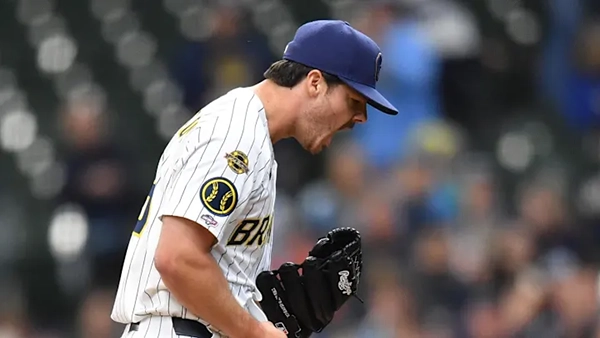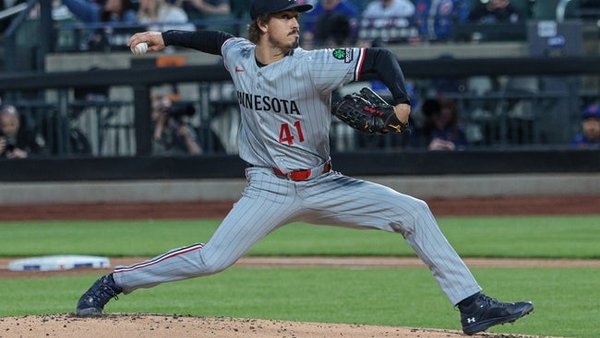
Joe Ryan carries a 3.02 ERA into Guaranteed Rate Field against Sean Burke’s 4.08 — a full run of separation at a park that neither inflates nor masks what these two arms are. The market has responded by pricing Minnesota at -116, barely distinguishable from a coin flip, which leaves the starter gap doing most of the work in a spot where the number barely compensates for it.
Joe Ryan vs. Sean Burke: Minnesota Twins at Chicago White Sox Betting Preview
The White Sox just walked off Monday’s series opener with a 3-1 win behind Anthony Kay’s six dominant innings, and Murakami’s 18th homer set the tone early. Chicago’s got momentum, a seven-game winning streak over Minnesota, and home-field backing a lineup that’s quietly become one of the more dangerous in the AL Central. The market has responded by setting the Twins as only a modest -116 moneyline favorite — barely a price at all.
But the reason to lean Minnesota tonight isn’t about streaks or momentum. It’s about the pitching matchup the price doesn’t fully reward. Joe Ryan carries a 3.02 ERA into this start against a Sean Burke at 4.08 ERA — a full run of separation at a nearly neutral park (factor 0.98). That gap doesn’t disappear because Chicago won last night. It just means the market is respecting the White Sox’s real-world performance more than their projected output.
The -116 price clears the juice ceiling cleanly. The numbers project Minnesota winning 4.4 to 4.2 — thin, but real. When a legitimate starter advantage is priced this close to even money, that’s not a number to walk past.
Game Info & Betting Lines
- Date/Time: Tuesday, May 26, 2026 — 7:40 PM ET
- Venue: Guaranteed Rate Field — Park Factor 0.98 (near-neutral)
- Probable Starters: Joe Ryan (MIN, 3-3, 3.02 ERA) vs. Sean Burke (CHW, 2-3, 4.08 ERA)
- Moneyline: Minnesota Twins -116 / Chicago White Sox -102
- Run Line: Minnesota Twins -1.5 (+150) / Chicago White Sox +1.5 (-178)
- Total: 7.5 (Over -122 / Under +100)
Why This Number Is Close
The market is essentially pricing this as a near coin-flip, and there’s a legitimate case for that framing. Chicago is 27-26 — a .500 club, not a rebuilding afterthought. Their lineup ranked by home-run production (72 team HR) is legitimate, and they’re playing at home in a series where they’ve now won seven straight against this specific opponent. The book is accounting for all of that when it sets the White Sox at -102.
What the market is also doing is partially discounting Ryan’s advantage because of context: the total sits at just 7.5, suggesting books expect a low-scoring environment where one big swing can erase a starter edge entirely. In tight-margin games, bullpen variance matters as much as starting pitching. Minnesota’s bullpen has its own injury concerns — Cole Sands and Garrett Acton are both on the IL — and that uncertainty rightfully pushes the number toward even.
But here’s where I think the market is slightly off: -116 doesn’t fully compensate for a starter gap this wide. A full ERA run of separation between Ryan and Burke is not a marginal difference — it’s the difference between a reliable mid-rotation arm and a pitcher who profiles closer to a back-end option. The line is close to right, but it’s not quite right. That’s where the lean lives.
What Separates the Pitching
Ryan and Burke are not comparable arms, and the Statcast data makes that clear beyond the ERA gap. Ryan’s knuckle curve is generating a .131 xwOBA against — that’s an elite, nearly unhittable offering. His sweeper sits at .195 xwOBA with a 30.6% whiff rate, and his four-seam fastball at 92.8 mph keeps hitters honest at .308 xwOBA with a 22.4% whiff rate. What Ryan creates is a steady diet of weak contact and chase opportunities — his arsenal doesn’t generate loud innings.
Burke’s profile is different in a telling way. His four-seamer runs harder at 94.2 mph but produces only a 16.2% whiff rate — hitters are making contact on it. His changeup is his biggest vulnerability: a .467 xwOBA against in a 5.1% usage slot that he clearly can’t lean on. His knuckle curve at .297 xwOBA is functional but not dominant, and his slider at .332 xwOBA is hittable. His WHIP of 1.21 and K/9 of 7.8 over 53 innings define a pitcher who allows traffic without the strikeout rate to escape it.
The matchup that stands out most for Minnesota: Byron Buxton carries a .427 xwOBA overall against this season’s competition, with a .421 xwOBA versus right-handed pitching — Burke is right-handed. Buxton’s 11.0% barrel rate and 31.2% hard-hit rate project a real damage ceiling against Burke’s contact-prone arsenal. Munetaka Murakami poses the mirror threat for Chicago — a .514 xwOBA with a .525 mark versus right-handed pitching is the single most dangerous bat in this game. Ryan will need to navigate him with the sweeper and knuckle curve rather than relying on his fastball. The gap between these two starters is real and measurable.
The Pushback
There are real reasons this isn’t a confident play. Chicago’s seven-game winning streak over Minnesota is not just noise — these teams have played each other recently, and the White Sox have won every time. That’s a behavioral pattern the number respects. Murakami homered Monday, Romo went deep in the second, and Kay was lights out. The White Sox lineup isn’t sleepwalking into this game.
Minnesota is also dealing with the Jeffers injury — their best hitter by OPS (.949) is on the 10-Day IL with a hand issue. That strips real production from the middle of the order and places more pressure on Buxton and a lineup that’s been inconsistent away from home.
The Twins are +2 in run differential overall at 26-28 on the season. That’s a club that has been outscoring opponents by the narrowest of margins — and Pythagorean expectation suggests a team running a +2 differential at a sub-.500 record is operating close to the edge of sustainable performance. They’ve won close games more often than the underlying run data would typically support. That’s worth flagging as a risk, not a reason to back off entirely, but a reason not to push past 1 unit.
The run line at +150 is tempting given the projected score sits inside a single run, but the White Sox power threat — Murakami (18 HR), Vargas (12 HR), Montgomery (13 HR) — makes covering -1.5 too binary a proposition. I’m not chasing that number. And the total? The over at -122 is too steep for a game with a near-neutral park and two starters who both project to limit big innings. The under at +100 has appeal, but the projected total of 8.7 runs argues against it. I’ll stay off the total entirely.
Run Environment & Game Shape
Guaranteed Rate Field carries a 0.98 park factor — essentially neutral, with a fractional lean toward pitchers. That context matters here because a near-neutral environment doesn’t inflate or deflate either starter’s expected performance. Ryan’s .131 xwOBA knuckle curve and .195 xwOBA sweeper play in any park; the surface doesn’t soften Burke’s .467 xwOBA changeup vulnerability either.
The 7.5 total tells you the books expect this game to be decided by starting pitching more than offensive explosion. Both rotations have enough quality to keep scores below double digits, but the shape of this game favors Ryan’s ground-ball and weak-contact profile over Burke’s higher-traffic approach. In a game projected to stay tight through six innings, the starter who limits hard contact and sequences off-speed pitches effectively is the one most likely to hand his team a lead worth protecting.
The game shape that matters most here: low-scoring environments amplify the starter gap rather than diminish it. When runs are scarce, the pitcher generating .131 and .195 xwOBA on his two best offerings is worth more than the one giving up hard contact on a 94.2 mph fastball that hitters are squaring up at a 16.2% whiff rate. Ryan’s arsenal is built for exactly this kind of game.
The Pick
Ryan’s ERA edge is real, the Statcast gap is measurable, and -116 is within the juice ceiling for a lean. The Twins’ thin run differential and the Jeffers injury are legitimate friction points, and the White Sox seven-game streak against this opponent is not something to dismiss — but none of that changes the starting pitching math enough to walk away. Bet: Minnesota Twins moneyline -116, 1 unit, lean confidence.