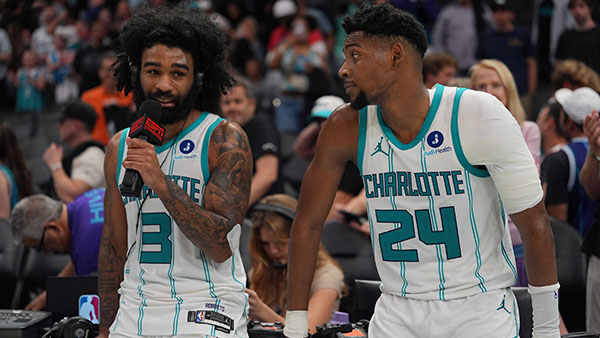
Bash sees a play-in game with real market tension — Charlotte’s offensive firepower meets Orlando’s home clutch edge, and the number may not reflect the full story in a win-or-go-home spot.
The Setup: Charlotte Hornets at Orlando Magic
The line opened with Charlotte as a 3.5-point road favorite, and that’s where we sit heading into Friday night’s elimination game. The Hornets just survived overtime chaos against Miami, riding LaMelo Ball’s late-game heroics and Miles Bridges’ buzzer-beating block to stay alive. Orlando, meanwhile, dropped their shot at the 7-seed in Philly and now faces a must-win at home with their season on the line.
This is the kind of spot where the market tries to balance recent form against situational pressure. Charlotte’s got the offensive firepower — they’re posting 118.4 offensive rating on the season, which is legitimately elite. But Orlando’s clutch record (27-16, 62.8% win rate in tight games) tells you they know how to play with their backs against the wall. The projection sees this game as essentially a pick’em once you account for home court, but the market’s laying 3.5 with the road team. That gap creates the conversation.
Game Info & Betting Lines
- Date: Friday, April 17, 2026
- Time: 7:30 PM ET
- Venue: TBD
- TV: Prime Video
- Spread: Charlotte Hornets -3.5 (-110) | Orlando Magic +3.5 (-110)
- Total: 218.5 (Over -110 | Under -110)
- Moneyline: Charlotte -164 | Orlando +132
Why This Line Exists
The market’s giving Charlotte respect for their offensive rating edge and their ability to score in bunches. When you’re running 118.4 points per 100 possessions against Orlando’s 113.6 defensive rating, that’s a 4.8-point mismatch on paper — and that’s real. The Hornets also shot better from the field all season (46.0% vs 46.4% isn’t the story, but 37.8% from three vs 34.3% is), and they’ve got more offensive rebounding punch at 30.6% compared to Orlando’s 25.1%. That 5.5-percentage-point gap in offensive boards is the kind of thing that shows up in second-chance points and extra possessions.
But here’s what keeps this number from ballooning: Orlando’s home/road split (25-15 at home vs 19-20 on the road) and their clutch execution. They’ve won 62.8% of their clutch games this season compared to Charlotte’s 35.7%, and in a play-in elimination game, that matters. The Magic also take care of the ball better (12.4% turnover rate vs Charlotte’s 13.5%), which limits transition opportunities for a Hornets team that wants to run. The pace blend sits at 99.1 possessions, which is deliberate but not grinding — enough to let both teams operate in their comfort zones.
The total at 218.5 feels like the market’s pricing in some playoff tension and tighter rotations. My model projects 227.7, which is a 9.2-point gap favoring the over. That’s significant, but it’s also a play-in game where possessions get more valuable and teams tighten up defensively in the fourth quarter.
Charlotte Hornets Breakdown
Charlotte’s offense is the story here. Ball dropped 30 and 10 in the overtime win over Miami, and Bridges added 28 with nine boards. Coby White hit the turnaround three to force overtime, which tells you they’ve got multiple guys who can make plays when the game slows down. Brandon Miller (20.2 PPG) and Kon Knueppel (18.5 PPG, 42.5% from three) give them legitimate scoring balance, and their 64.3% assist rate shows they’re moving the ball and creating quality looks.
The concern is their clutch record. At 10-18 in close games with a -0.9 plus-minus in those spots, they’ve struggled to finish. Ball made the key layup against Miami, but he also made critical mistakes down the stretch that nearly cost them. Their 23.7% three-point shooting in clutch situations is rough, and that’s a real vulnerability if this game comes down to the final possessions.
Moussa Diabate is questionable after logging 36 minutes in the Miami game, but the injury report suggests they’ll monitor him closely. If he’s limited, that could impact their rebounding and interior defense, though Bridges and Miller have shown they can carry the load.
Orlando Magic Breakdown
Orlando’s season has been about defense and clutch execution. Their 113.6 defensive rating isn’t elite, but it’s solid enough, and their 8.5 steals per game (compared to Charlotte’s 7.0) shows they’re active and disruptive. Paolo Banchero (22.2 PPG, 8.4 RPG) and Franz Wagner (20.6 PPG) are their primary creators, and Desmond Bane (20.1 PPG, 39.1% from three) gives them a legitimate floor-spacer who can punish closeouts.
The clutch numbers are what stand out. A 27-16 record in tight games means they’ve been here before and know how to execute under pressure. Jalen Suggs (5.5 APG, 1.8 SPG) runs the offense and defends multiple positions, and Anthony Black (15.0 PPG) provides secondary creation. Their 64.7% assist rate is slightly better than Charlotte’s, which suggests they’re just as unselfish but maybe a bit more efficient in half-court sets.
Jonathan Isaac is questionable with a left knee sprain after missing over a month. If he’s out, Tristan da Silva and Jamal Cain will need to absorb frontcourt minutes, which could hurt their rim protection and rebounding. But in a must-win home game, don’t be surprised if they find a way to get him on the floor.
The Matchup
This game comes down to whether Charlotte can impose their offensive tempo and shooting quality, or whether Orlando can slow it down and win in the clutch. The pace blend at 99.1 possessions suggests we’re not getting a track meet, but it’s not a grind-it-out game either. Charlotte’s 4.8-point offensive mismatch against Orlando’s defense is real, but the Magic’s turnover edge and clutch execution keep them in striking distance.
The rebounding battle matters. Charlotte’s 5.5-percentage-point edge in offensive rebounding could be the difference in a tight game, especially if Ball and Bridges are crashing hard. But Orlando’s home court and their ability to execute in the final five minutes (40.1% shooting in clutch situations vs Charlotte’s 37.4%) gives them a real path to staying within the number or winning outright.
The total is where I see the clearest angle. The model projects 227.7 against a posted number of 218.5, and while play-in games can tighten up, both teams have the offensive firepower to push this over. Charlotte’s 116.0 PPG and Orlando’s 115.7 PPG suggest both sides can score, and the pace blend supports enough possessions to get there. The 9.2-point edge on the total is strong, and I trust the offensive efficiency more than I trust playoff-style defensive intensity in a play-in format.
Bash’s Best Bet & The Play
The Play: Over 218.5 (-110)
I’m taking the over here. the projection projects 227.7, which is a 9.2-point gap, and both teams have the offensive talent to get there. Charlotte’s 118.4 offensive rating against Orlando’s defense creates real scoring opportunities, and Orlando’s home offense (114.2 offensive rating) should be able to keep pace. The pace blend at 99.1 possessions is enough to generate scoring chances without grinding this into a rock fight.
Play-in games can get tight in the fourth quarter, but both teams need to win to stay alive, which means they’ll be aggressive offensively. Charlotte just put up 127 in overtime against Miami, and Orlando’s got Banchero, Wagner, and Bane who can all score in bunches. The 218.5 number feels like the market’s overcompensating for playoff tension, and I think we see enough possessions and shot quality to push this over the total.
Risk note: If this game turns into a defensive slugfest in the fourth quarter, the under could cash. But I trust the offensive firepower and the pace blend to get us there.