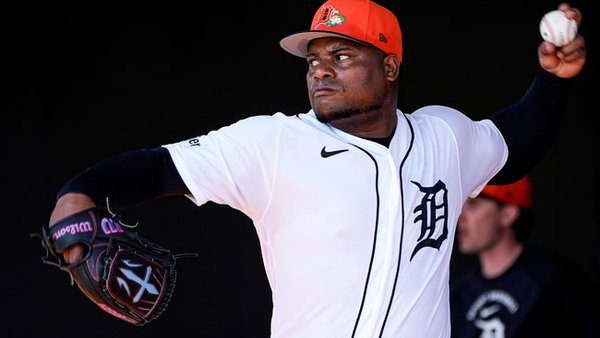
I’ve circled this Tigers moneyline at plus money — Verlander’s veteran savvy against a struggling Soroka creates a gap the market hasn’t fully recognized, especially with Detroit riding early momentum while Arizona searches for their first win.
Justin Verlander vs Michael Soroka: Detroit Tigers at Arizona Diamondbacks Betting Preview
The market sees a veteran arm facing uncertainty against a home team desperate for their first win, but the pitching differential tells a clearer story than the records suggest. Justin Verlander brings a 3.85 ERA (2025) and proven durability to Chase Field, while Michael Soroka limped through just 89.2 innings last season with a concerning 4.52 ERA. Detroit’s 2-1 start with a +6 run differential creates genuine value as road underdogs.
Arizona’s 0-3 record with a -8 run differential reflects more than bad luck — their depleted rotation puts extra pressure on Soroka to deliver quality innings. The Tigers showed offensive life in Friday’s comeback win behind rookie Kevin McGonigle, suggesting they can manufacture runs against vulnerable pitching. At plus money, Detroit offers legitimate value in what projects as a tight contest.
Game Info & Betting Lines
- Date/Time: Monday, March 30, 2026 | 10:10 PM ET
- Venue: Chase Field (Park Factor: 0.97 — neutral)
- Probable Starters: Justin Verlander (DET) vs Michael Soroka (ARI)
- Moneyline: Detroit Tigers +100 / Arizona Diamondbacks -120
- Run Line: Arizona -1.5 (-181) / Detroit +1.5 (+149)
- Total: 9 (Over -115 / Under -105)
Why This Number Is Close
The market correctly identifies the obvious concerns: Verlander is 43 years old coming off a subpar 2025 campaign, while home teams typically command respect in dome environments. Arizona’s talent level on paper justifies some favoritism, especially with Lourdes Gurriel Jr. (.248 average, 19 HRs in 2025) providing proven offensive production.
But the line undervalues Detroit’s superior early-season form and the pitching gap. Verlander’s 3.85 ERA and 1.36 WHIP (2025) represent clear upgrades over Soroka’s 4.52 ERA and limited 89.2 innings of work. The Tigers’ +6 run differential through three games suggests better overall execution, while Arizona’s winless start creates pressure that benefits the road underdog. At plus money, Detroit doesn’t need to dominate — they just need to stay competitive in a game that projects close.
What Separates the Pitching
The fundamental difference lies in proven durability versus injury uncertainty. Verlander logged 152 innings in 2025 with an 8.11 K/9 rate, demonstrating he can still miss bats despite declining velocity. His 1.36 WHIP reflects decent command, and veteran pitchers often maximize their effectiveness early in seasons when their stuff plays up.
Soroka’s 89.2 innings (2025) tell a story of ongoing health concerns that limited his effectiveness. While his 9.54 K/9 rate suggests swing-and-miss potential, the 4.52 ERA indicates he struggled to translate strikeouts into consistent results. His 1.13 WHIP is actually superior to Verlander’s, but the limited sample size raises questions about sustainability over meaningful innings.
The key gap centers on game management and experience. Verlander has navigated countless high-leverage situations, while Soroka is still rebuilding confidence after injury struggles. In a dome environment that neutralizes weather factors, the pitcher who better commands the strike zone and limits hard contact gains significant advantage. Verlander’s track record suggests better odds of delivering 5-6 quality innings.
The Pushback
The genuine concern here is Verlander’s age and declining stuff. At 43, even minor velocity dips get exposed quickly, and his 2025 numbers weren’t dominant by any measure. Early-season form can be misleading — three games hardly establishes sustainable trends, and Arizona’s talent advantage could emerge as lineups settle in.
Soroka’s strikeout rate (9.54 K/9 in 2025) actually exceeds Verlander’s, suggesting his stuff can be effective when healthy. The Diamondbacks’ dome environment eliminates weather variables that often favor road underdogs, and desperate home teams sometimes find extra motivation. Arizona’s 0-3 start might actually create the urgency needed to break through against an aging arm.
Still, the pitching matchup fundamentally favors experience over uncertainty. Verlander’s durability track record matters more than Soroka’s higher strikeout rate, especially when Detroit has shown better offensive execution through three games.
Run Environment & Game Shape
Chase Field’s 0.97 park factor creates a neutral scoring environment that amplifies pitching advantages. The posted total of 9 suggests the market expects a moderate-scoring game, which typically favors the better starting pitcher. In tight contests decided by 1-2 runs, veteran presence and early execution become magnified factors.
This environment should suit Verlander’s approach — he’s historically excelled at minimizing crooked numbers and keeping games within reach. Soroka’s higher strikeout rate loses some value in a park that doesn’t suppress offense, while his home run struggles (12 HRs in just 89.2 IP) could prove costly against Detroit’s developing power threats. The likely 4-3 or 5-4 scoring range favors the team with better starting pitching depth.
Joe Jensen’s Pick
JENSEN’S PICK: Detroit Tigers Moneyline +100 — 2 Units
I looked at the run line, but this environment projects too close for confident multi-run separation. The total presents some under appeal given both pitchers’ potential, but Verlander’s age creates enough uncertainty to avoid that lean. The straight moneyline at plus money provides the best risk-reward balance.
Detroit’s superior early-season execution, combined with the pitching experience gap, creates legitimate value as road underdogs. Verlander doesn’t need to be dominant — he just needs to outpitch a struggling Soroka over 5-6 innings while the Tigers’ emerging offense provides support. Two units reflects moderate confidence in a betting environment where early-season variance demands measured approaches.