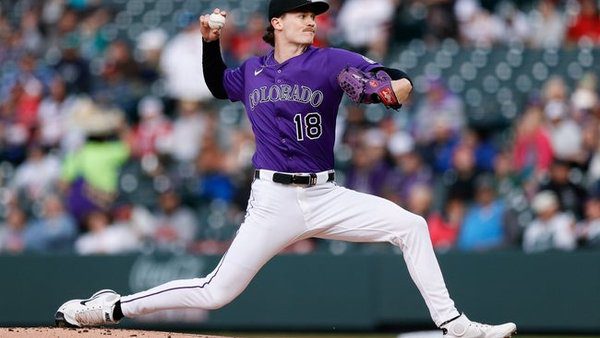
The pitching depth disparity between these clubs creates a total environment the market may have undervalued. Coors Field’s elevation factor compounds the mound concerns for Colorado’s starter.
Cody Bolton vs Ryan Feltner: Houston Astros at Colorado Rockies Betting Preview
The market has set this total at 10.5, which acknowledges Coors Field’s extreme run environment but doesn’t fully account for the volatility that comes with two starters operating on minimal 2026 innings. Bolton has worked just three frames with a deceiving 3.00 ERA, allowing one home run in three innings, while Feltner shows a pristine 0.00 ERA through an equally small sample.
Houston arrives after a high-scoring 10-12 loss to Oakland, showing their offense can put up double digits but also struggle defensively. The Astros have been productive early this season with a +15 run differential through 10 games, and they’re walking into the most hitter-friendly environment in baseball. With both teams dealing with significant bullpen injuries, the stage is set for a game that pushes well past this posted number.
Game Info & Betting Lines
- Date/Time: Monday, April 6, 2026 | 8:40 PM ET
- Venue: Coors Field (1.38 park factor)
- Probable Starters: Cody Bolton (HOU) vs Ryan Feltner (COL)
- Moneyline: Houston -186 / Colorado +153
- Run Line: Colorado +1.5 (+100) / Houston -1.5 (-120)
- Total: 10.5 (Over -112 / Under -108)
Why This Number Is Too Low
The market is balancing Feltner’s perfect early-season ERA against Bolton’s concerning home run allowed through three frames. There’s legitimate reason for caution – both pitchers could be legitimately sharp early in the season, and 10.5 already represents a high total by most standards.
But the market isn’t fully pricing in the Coors Field multiplier effect when combined with small sample uncertainty. That 1.38 park factor doesn’t just add runs – it amplifies every mistake, every hanging breaking ball, every fastball that catches too much plate. When you’re dealing with starters who have faced 37 total batters combined this season, the margin for error evaporates in this environment. Houston’s +15 run differential through 10 games suggests they’re seeing the ball well, and Colorado showed life with four runs against Philadelphia on Sunday.
What Separates the Pitching
Bolton enters with gaudy strikeout numbers (15 K/9) but the home run allowed through three innings tells a different story about his command in the zone. That 1.33 WHIP through three innings suggests he’s been around the plate enough to get swings and misses, but also enough to get hit hard when hitters connect. The velocity and movement that generate strikeouts can become liabilities at 5,280 feet.
Feltner presents the opposite profile – a 0.66 WHIP and zero home runs allowed through his small sample, but with a more modest 12 K/9 rate. His success appears built on command rather than overpowering stuff, which historically plays better at Coors than raw velocity. However, three innings of data creates massive variance – one bad inning could completely flip his profile.
The gap here isn’t in stuff or early results, but in the reliability of these numbers. Both pitchers are operating with spring training preparation and facing their first real test of sustained innings. At Coors Field, that inexperience gets magnified, and the park’s tendency to turn routine contact into extra bases means even well-located pitches can become problems.
The Pushback
The strongest case against the over centers on both pitchers potentially showing genuine improvement rather than small sample flukes. Feltner’s pristine early numbers could signal legitimate command development, while Bolton’s strikeout rate suggests he might be developing into a more dominant pitcher. Both hurlers could simply be better versions of themselves, making this a lower-scoring affair than the park factor suggests.
Early-season conditioning also favors starters staying longer in games. Fresh arms with clean mechanics often show their best form in April, and both pitchers could realistically work deeper into this contest than their limited inning totals suggest. The injury situations for both bullpens might actually force managers to ride their starters longer, keeping the stronger arms on the mound rather than turning to depleted relief corps.
Houston’s explosive offense has also shown they can be just as volatile defensively, as evidenced by allowing 12 runs to Oakland. If both teams’ hitting struggles simultaneously, Coors Field’s advantages become irrelevant. The park can’t manufacture offense if neither lineup is seeing the ball well.
That said, the Coors Field environment overwhelms these concerns. Even if both pitchers are legitimately improved, the park factor creates a margin for error that doesn’t exist anywhere else. Houston’s 15-run differential through 10 games shows offensive capability, and they’re facing a Colorado team that just pushed across four runs against a quality Phillies staff.
Run Environment & Game Shape
The market expects a moderate-scoring game in the 10-11 run range, which feels conservative given Coors Field’s extreme offensive environment. This park doesn’t just inflate home runs – it turns routine fly balls into doubles and creates larger gaps for extra-base hits. With temperatures expected in the 60s and light winds, conditions favor offensive production.
Both teams’ injury situations point toward shorter outings for starters and earlier bullpen usage. Houston’s missing Bennett Sousa and Enyel De Los Santos from their relief corps, while Colorado is without key arms as well. This setup creates a game where scoring opportunities extend later into innings as weaker relievers enter high-leverage situations. The likely scoring range sits between 11-13 total runs, making the posted 10.5 an attractive target.
Joe Jensen’s Pick
JENSEN’S PICK: TOTAL OVER 10.5 – 2 UNITS
The combination of small sample uncertainty, Coors Field’s extreme offensive environment, and depleted bullpens creates the perfect recipe for a game that sails past this number. Both pitchers are operating with limited 2026 data, and the park’s 1.38 run factor amplifies every mistake. Houston has shown offensive capability early this season, and even Colorado’s lineup can produce in this environment. Take the over with confidence in what should be a high-scoring affair in the thin air of Denver.
RUN LINE REJECTION: While Houston’s -186 moneyline suggests clear superiority, the -1.5 run line at -120 doesn’t offer enough value given both teams’ offensive volatility. This game projects to be decided by 1-2 runs in either direction, making the moneyline the better straight bet if you favor Houston. Focus on the total where the value is clear.