Note we had an issue with posting.
Chicago deploys an emergency starter yet maintains depth advantages that the -175 price hasn’t fully absorbed. Backhus’ contact-heavy approach creates exploitable weakness against a Cubs offense that has found its rhythm.
Kyle Backhus vs Cubs Spot Starter: Philadelphia Phillies at Chicago Cubs Betting Preview
With Matthew Boyd sidelined on the 15-day IL with a biceps injury, Chicago turns to an emergency starter against Kyle Backhus’ 5.40 ERA. But that surface reading misses the striking difference in how these teams generate outs. The Cubs’ staff depth advantage becomes even more pronounced when Philadelphia’s struggling offense faces a Chicago rotation that has maintained quality depth despite injuries.
The broader context amplifies this edge. Philadelphia arrives having been outscored 49-14 during a seven-game losing streak, while the Cubs have outscored opponents 51-18 during their seven-game winning streak. The form disparity between these clubs is stark, and even with an emergency starter, the Cubs’ superior bullpen depth creates the foundation for that trend to continue.
This isn’t about dismissing the Phillies’ talent — Schwarber and Harper remain legitimate threats. But it’s about recognizing that the Cubs’ superior organizational depth and current offensive rhythm create a compelling case that the moneyline price hasn’t fully absorbed, even accounting for the rotation uncertainty.
Game Info & Betting Lines
- Date/Time: Wednesday, April 22, 7:40 PM ET
- Venue: Wrigley Field (Park Factor: 1.02 – slightly hitter-friendly)
- Probable Starters: Kyle Backhus (0-0, 5.40 ERA) vs Chicago TBD (Boyd on IL)
- Moneyline: Philadelphia Phillies +144 / Chicago Cubs -175
- Run Line: Cubs -1.5 (+123) / Phillies +1.5 (-149)
- Total: 8.5 (Over -110 / Under -110)
Why This Number Feels Heavy But Holds Up
The -175 price on Chicago reflects legitimate concerns about rotation uncertainty and the Phillies’ power potential. The market remembers that Schwarber leads the club with eight home runs and a .917 OPS, while Harper sits at .900 OPS despite the team’s struggles. These are hitters who can change games quickly, and an unplanned starter creates additional volatility that favors the underdog.
The Cubs’ recent dominance also pushes this line toward the expensive side. Seven straight wins creates market momentum, and backing the hot team at Wrigley Field with playoff aspirations feels like the obvious play. But here’s where the market pricing still holds value: the gap in organizational depth runs deeper than just the starting rotation, and Philadelphia’s offensive struggles suggest they can’t capitalize on Chicago’s pitching uncertainty.
The Cubs’ team ERA of 3.45 versus Philadelphia’s 4.99 represents a massive staff-wide gap that extends beyond just the starting matchup. With the Phillies missing five relievers to injury and the Cubs maintaining bullpen depth despite their own injury concerns, Chicago’s late-game advantage becomes more significant when the game reaches the middle innings.
What Separates the Pitching Depth
The peripheral numbers reveal why Backhus’ contact-heavy approach creates vulnerability against Chicago’s improved offensive rhythm. Backhus relies heavily on his sinker at 61.1% usage, but it’s generating only a 16.1% whiff rate at 90.8 mph. While his sweeper shows promise with a 30.8% whiff rate, the overall arsenal lacks the swing-and-miss component that creates clean innings against quality lineups. The .367 xwOBA against his sinker suggests hitters are making solid contact when they connect.
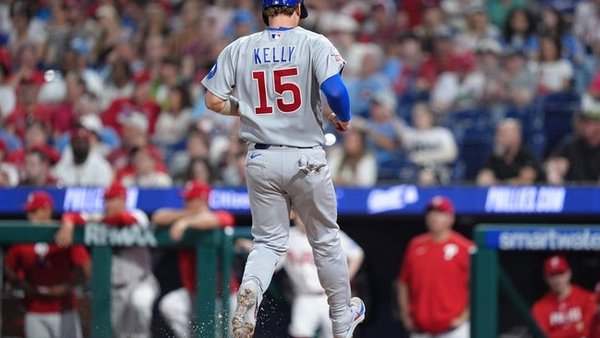
The Cubs’ lineup presents specific mismatches for Backhus’ approach regardless of who takes the mound for Chicago. Nico Hoerner’s .340 xwOBA shows consistent contact quality, while Ian Happ’s .491 xwOBA demonstrates elite barrel production with a 10.1% rate. Carson Kelly’s .435 xwOBA with 7.5% barrels suggests the Cubs can generate quality contact consistently against Backhus’ sinker-heavy attack.
Even with rotation uncertainty, Chicago’s organizational depth advantage becomes apparent when examining both teams’ injury lists. While the Cubs deal with multiple reliever injuries, their core bullpen pieces remain available. Philadelphia’s five injured relievers create a situation where Backhus may need to pitch deeper into the game than optimal, while Chicago can deploy fresher arms earlier if their emergency starter struggles.
The Cubs’ recent offensive surge — scoring 51 runs during their seven-game winning streak — reflects improved sequencing and clutch hitting that extends beyond individual matchups. Yesterday’s seven-run output against Philadelphia demonstrates how this lineup can exploit vulnerable pitching, even when facing quality opponents early in games.
The Pushback
Starting an emergency pitcher against major league hitting creates legitimate concerns about early-game vulnerability. Professional hitters can exploit unfamiliar arms quickly, and Schwarber and Harper represent the type of middle-of-the-order threats who can capitalize on uncertainty. The rotation shuffle removes the primary analytical edge that made Chicago attractive at this price point.
Philadelphia’s power potential also creates volatility that works against laying this price with reduced pitching certainty. Schwarber’s eight home runs already demonstrate his ability to impact games with one swing, while Harper’s .274 average shows he’s making consistent contact despite the team’s overall struggles. Yesterday’s loss featured both hitters going deep, proving that individual talent can override broader team trends even when facing quality pitching.
The Phillies’ bullpen injuries might actually work in their favor here if it forces them to extend Backhus deeper into the game. A longer leash could allow him to work through his command issues and settle into a rhythm, while Chicago’s emergency starter faces immediate pressure to perform without established major league experience. The Cubs’ offensive advantages may not materialize if they fall behind early and face a pitcher who gains confidence as the game progresses.
But here’s what keeps me on Chicago despite the rotation concerns: the gap in organizational quality remains significant enough to overcome short-term uncertainty. The Cubs’ .754 team OPS versus Philadelphia’s .658 mark represents sustainable offensive advantage, while their superior run prevention (3.45 ERA vs 4.99) suggests depth beyond just starting pitching. Even with an emergency starter, Chicago’s overall talent level and current form create enough edge to justify the current price.
Recommendation: Chicago Cubs -175 (3 units)