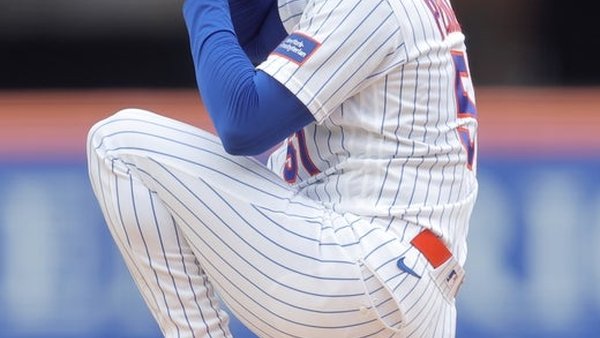
A 2.57 ERA differential screams pitching advantage — but that assumes a 13-22 road team can execute at -172. The matchup edge is obvious, the price margin less forgiving.
Freddy Peralta vs Michael Lorenzen: New York Mets at Colorado Rockies Betting Preview
The market sees a struggling road team visiting Coors Field and prices accordingly, but the pitching matchup tells a different story entirely. Freddy Peralta brings a respectable 3.52 ERA and solid peripherals to face Michael Lorenzen, whose 6.09 ERA and negative WAR (-0.42) represent one of the season’s worst starting pitcher performances.
Yes, the Mets are just 13-22 with significant injuries throughout their lineup, and road favorites can be overvalued when teams are struggling. But yesterday’s 4-2 victory over these same Rockies proved New York can execute at altitude when they have the pitching advantage. Colorado has now dropped five straight and six of seven, showing current form that matches their underlying pitching problems.
The question isn’t whether the Mets deserve to be road favorites — it’s whether this particular pitching edge creates value despite the unflattering team records.
Game Info & Betting Lines
- Date/Time: Tuesday, May 5, 2026 | 8:40 PM ET
- Venue: Coors Field (Park Factor: 1.38)
- Probable Starters: Freddy Peralta (1-3, 3.52 ERA) vs Michael Lorenzen (2-3, 6.09 ERA)
- Moneyline: New York Mets -172 / Colorado Rockies +144
- Run Line: New York Mets -1.5 (-106) / Colorado Rockies +1.5 (-113)
- Total: 10 (Over -104 / Under -118)
Why I’m Wrestling with This Price
Normally, a 2.57 ERA differential between starters would have me hammering the better pitcher, especially at only -172. But backing a 13-22 road team that’s been getting blown out regularly? That’s exactly where the books make their money on suckers who can’t see past surface stats.
The Mets’ offensive core is gutted. Francisco Lindor, Luis Robert Jr., and Kodai Senga all on the injured list. Their lineup card reads like a Triple-A roster outside of Juan Soto, who’s carrying a .301 average but can’t hit for an entire team. Even Juan’s .482 xwOBA looks vulnerable against a right-hander who, despite his struggles, has kept lefties to a more manageable .469 xwOBA against this season.
Colorado gets the natural altitude boost at home, and their offense has actually outproduced New York’s this year — 4.22 runs per game versus the Mets’ anemic 3.49. When you’re backing a road team that can barely push across four runs nightly, even superior pitching might not matter.
But then I see Lorenzen’s 1.76 WHIP and that devastating -0.42 WAR, and I start questioning whether I’m overthinking this. When a pitcher is getting hit that hard in the regular season, what happens when he faces even a depleted major league lineup at Coors Field? That’s the tension that keeps me staring at this -172 price, unsure if it’s a trap or a gift.
What Separates the Pitching
Peralta’s arsenal creates the type of problems Lorenzen simply cannot match. Peralta’s four-seam fastball sits at 95.7 mph with 45.9% usage and generates a solid .277 xwOBA against, while his split-finger offering (11.4% usage) produces a devastating 58.3% whiff rate. That’s a pitcher who can miss bats and limit hard contact even in Coors Field’s thin air.
Lorenzen’s profile tells the opposite story. His 1.76 WHIP and 6.09 ERA reflect serious command issues, with his sinker (20.0% usage, 90.2 mph) producing just a 6.5% whiff rate and .357 xwOBA against. When hitters make that much contact against a pitcher who struggles with location, Coors Field amplifies every mistake.
The Statcast data reveals the depth of this gap. While Peralta’s sweeper generates 35.3% whiffs and his splitter dominates with that 58.3% rate, Lorenzen’s best secondary pitch — his changeup at 37.2% whiffs — still allows a .379 xwOBA against. In a park where every barrel becomes dangerous, Peralta’s ability to generate empty swings creates a massive advantage over Lorenzen’s contact-heavy approach.
The Run Line Temptation
This pitching gap had me seriously considering the run line at -1.5 (-106). When you have this type of starter advantage in a high-scoring environment, getting plus odds on the better team covering seems like the obvious play. Peralta’s dominance could easily translate to a multi-run lead, especially if Lorenzen’s command issues surface early.
The logic seemed sound: Colorado’s offense has struggled during this five-game losing streak, Lorenzen’s gotten hammered consistently, and Coors Field should amplify any pitching advantage rather than neutralize it. Even the Mets’ depleted lineup scored four runs here yesterday, suggesting they can produce enough offense to cover a spread when they have superior starting pitching.
But Coors Field variance ultimately killed that angle for me. The altitude creates enough unpredictable bounces, wind currents, and atmospheric changes that even dominant pitchers can get touched up quickly. Peralta could cruise for five innings, then watch three routine fly balls carry over the wall in the sixth. In this environment, betting run line margins feels like gambling on weather patterns rather than skill edges.
More concerning is the bullpen factor. Both teams’ relief corps carry ERAs over 3.90, meaning whichever starter exits first hands the game to equally unreliable arms. If Peralta’s pitch count climbs early or the Mets need to protect a narrow lead, that run line advantage could evaporate the moment he leaves the mound.
Run Environment & Game Shape
The total sits at 10, which accounts for Coors Field’s 1.38 park factor and both teams’ offensive capabilities. This is a run environment where the better pitcher gains additional leverage — when runs come easier, the team with superior starting pitching can build and protect leads more effectively.
Peralta’s ability to limit hard contact becomes crucial in this setting. While Lorenzen’s contact-heavy profile could produce multiple big innings if his command wavers, Peralta’s 26.5% whiff rate on his four-seamer and that devastating 58.3% whiff rate on his splitter provide the swing-and-miss stuff needed to navigate Coors Field successfully.
The matchup data reinforces this edge. Colorado’s top hitters show concerning strikeout rates against Peralta’s arsenal — Mickey Moniak’s 25.5% K rate and Hunter Goodman’s 32.4% K rate suggest they’ll struggle against a pitcher who can consistently locate his splitter for strikes. Meanwhile, the Mets’ contact-oriented approach should find success against Lorenzen’s location issues.
The Pick
I’m passing on this game despite identifying a clear pitching edge. The -172 price creates too narrow a margin for error when backing a 13-22 road team, regardless of the matchup advantages. While Peralta should dominate Lorenzen on paper, the combination of New York’s offensive limitations, road favorite variance, and Coors Field unpredictability makes this more of a stay-away spot than a betting opportunity.
The pitching gap is real and significant, but sometimes the right read is recognizing when the price doesn’t compensate for the execution risk. In this case, laying nearly 3-to-2 odds on a struggling team, even with superior pitching, feels like the market successfully pricing in too many variables for profitable action.
Pick: Pass (0 units) — Pitching edge negated by price and team context