Atlanta’s 25-11 record earns them underdog status at +120 while Seattle sits three games under .500. Elder’s 1.88 ERA faces a lineup averaging just .230 as the market overvalues home momentum.
Bryce Elder vs George Kirby: Atlanta Braves at Seattle Mariners Betting Preview
The market sees this as a home field advantage play, pricing Seattle as -142 favorites after their dramatic comeback win yesterday. But strip away the emotional hangover from that 5-4 rally, and you’re left with a fundamental mismatch: Bryce Elder’s dominant 1.88 ERA against a Seattle offense that ranks among baseball’s worst at .230 team average.
Atlanta arrives with an .808 OPS and 61 more runs scored than Seattle (209 vs 148). The Braves are getting plus money despite owning baseball’s best record, while the Mariners sit three games under .500. Yesterday’s comeback was impressive theater, but it doesn’t erase the season-long gap between these lineups.
The market is pricing in T-Mobile Park’s run-suppressing environment and Seattle’s home momentum, but that creates value on the better team at the better price.
Game Info & Betting Lines
- Date/Time: Tuesday, May 5, 2026, 9:40 PM ET
- Venue: T-Mobile Park (Park Factor: 0.92)
- Probable Starters: Bryce Elder (3-1, 1.88 ERA) vs George Kirby (4-2, 3.00 ERA)
- Moneyline: Atlanta Braves +120 / Seattle Mariners -142
- Run Line: Atlanta Braves +1.5 (-172) / Seattle Mariners -1.5 (+142)
- Total: 8 (Over -104 / Under -118)
Why This Number Is Close
Seattle’s -142 price reflects legitimate factors working in their favor. The Mariners just mounted a four-run comeback from a 4-0 deficit, showing the kind of resilience that can carry over. T-Mobile Park’s 0.92 park factor historically favors pitchers, and George Kirby has been solid with his 3.00 ERA and improved walk rate.
Home field in baseball typically adds about 30 cents to the line, and Seattle’s recent fight suggests they won’t fold easily. The market also knows Atlanta is dealing with injury concerns — Michael Harris II is day-to-day with a quad issue, and Ronald Acuña Jr. just hit the IL with a hamstring strain.
But here’s the problem: this line treats these teams as roughly equal when the season-long evidence suggests otherwise. Atlanta’s +80 run differential dwarfs Seattle’s +3, and the Braves’ offensive depth goes well beyond their injured stars. The market is overvaluing one game’s emotional swing while undervaluing months of superior performance.
What Separates the Pitching
Bryce Elder enters with devastating command, posting a 1.05 WHIP while limiting opponents to just 2 home runs across 43 innings. His slider sits at 36.7% usage with a 50.3% whiff rate and .287 xwOBA against — a legitimate out pitch that creates weak contact. Elder’s 94.4 mph four-seam carries a .375 xwOBA against, but he’s not relying on it for strikeouts, instead using it to set up his slider.
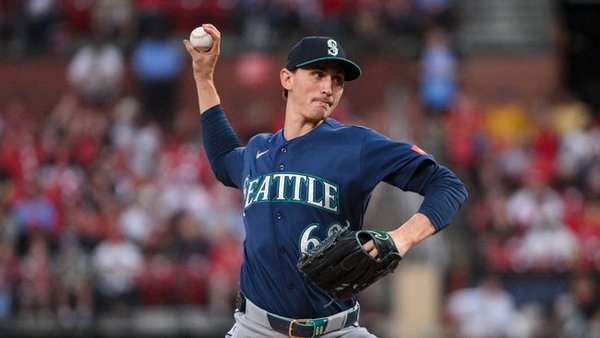
George Kirby brings a different profile with his 95.5 mph four-seam (48.2% usage) generating a 23.5% whiff rate and .314 xwOBA against. His sweeper at 83.8 mph creates swing-and-miss (41.9% whiff rate), but the concern is his sinker — 20.2% usage with just a 5.8% whiff rate and .400 xwOBA against. When Kirby falls behind in counts, he’s forced to that vulnerable sinker.
The critical gap is in mistake management. Elder has allowed just 2 home runs all season, while Kirby has given up 4 in similar innings. Against Atlanta’s power threats like Matt Olson (xwOBA .491, 9.5% barrel rate) and Drake Baldwin (xwOBA .467, 8.2% barrel rate), those mistake pitches become crooked numbers.
The Pushback
Seattle’s comeback yesterday wasn’t just luck — it showed legitimate offensive depth when Luke Raley launched a three-run homer and J.P. Crawford delivered the game-winner. That’s exactly the type of clutch hitting that can carry over, especially at home where the crowd energy remains high.
The concern is Atlanta’s recent offensive drought. Despite their season-long dominance, the Braves have managed just 4 runs in yesterday’s loss, and losing Harris II removes another bat from an already depleted lineup. Kirby’s improved walk rate (2.2 per nine) suggests better command than his early career showed.
That said, what works against this is Seattle’s fundamental offensive weakness — their .230 team average ranks among baseball’s worst, and their .699 OPS creates too many low-scoring games. One comeback doesn’t erase months of struggling to generate consistent offense against quality pitching.
Run Environment & Game Shape
T-Mobile Park’s 0.92 park factor combined with both pitchers’ solid seasons points toward a tight, low-scoring affair. The total sits at 8, suggesting the market expects something in the 4-3 or 5-3 range. This environment actually favors Atlanta — when runs are at a premium, the team with superior offensive depth and the better starter holds the edge.
Elder’s dominance creates longer at-bats for Seattle’s struggling hitters, while Atlanta’s patient approach (117 walks vs Seattle’s 143 despite scoring 61 more runs) should work against Kirby when he’s forced to challenge with his vulnerable sinker. In a pitcher-friendly environment, small margins get amplified, and Atlanta’s advantages in starting pitching and lineup depth become more pronounced.
Joe Jensen’s Pick
JENSEN’S PICK: Atlanta Braves Moneyline +120 — 2 Units
I looked at the +1.5 run line, but at -172, you’re risking nearly two dollars to win one in an environment where single-run games are common. The moneyline offers better value when you’re backing the superior team. Atlanta Braves 4, Seattle Mariners 3.
The market is pricing in home field and yesterday’s momentum, but that creates an opportunity to back a 25-11 team getting plus money. Elder’s season-long dominance paired with Atlanta’s offensive depth should handle a Seattle lineup that’s shown one night of fight against months of struggle. I’m not going heavier because Harris II’s status adds some uncertainty, but this line feels 15-20 cents too generous toward the home side.