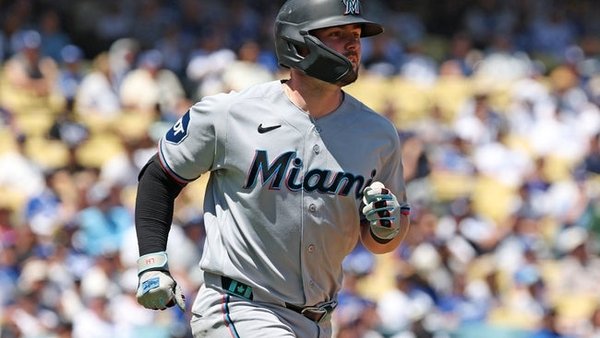
Young’s 6.14 ERA and 1.64 WHIP creates a stark contrast against Perez’s 9.66 K/9 rate over double the innings. The -124 line treats this as a coinflip when the pitching profiles show a clear gap.
Why the Marlins’ Modest Price Looks Too Good
The market has Miami as a modest home favorite at -124, which feels about right for two identical 16-20 teams meeting on Wednesday night. But this line doesn’t fully account for the stark contrast between these starting pitchers. Brandon Young enters with a 6.14 ERA and alarming 1.64 WHIP across just 14.2 innings, while Eury Perez has been significantly more reliable with a 4.46 ERA over 36.1 innings of work.
Baltimore snapped their five-game losing streak with yesterday’s 9-7 victory, but that high-scoring affair actually reinforces the pitching concerns. Young’s control issues — just 5.5 K/9 with a bloated walk rate — create the exact type of chaos that led to 16 runs being scored in Tuesday’s opener. Miami’s superior team pitching (3.86 ERA versus Baltimore’s 4.96) suggests they’re better equipped to handle this run environment at loanDepot park.
Game Info & Betting Lines
- Date/Time: Wednesday, May 8, 2026 | 6:40 PM ET
- Venue: loanDepot park (Park Factor: 0.95 — slightly pitcher-friendly)
- Probable Starters: Brandon Young (2-1, 6.14) vs Eury Perez (2-3, 4.46)
- Moneyline: Baltimore Orioles +106 / Miami Marlins -124
- Run Line: Miami Marlins -1.5 (+162) / Baltimore Orioles +1.5 (-196)
- Total: 8.5 (Over -115 / Under -105)
The fundamental issue here is that the oddsmakers are treating this as essentially a coinflip when the starting pitching matchup tells a different story. Young’s peripherals suggest serious control problems, while Perez has shown swing-and-miss ability over a much larger sample. That creates a betting edge we can exploit.
Why This Number Misses the Mark
The market clearly recognizes these teams are mirror images — identical records, similar offensive output, both struggling at 3-7 in their last 10 games. That explains why we’re looking at a relatively tight line with Baltimore getting plus money on the road. The Orioles’ offensive explosion yesterday also shows they can put up runs when given opportunities.
But the line isn’t properly weighing the pitching disparity. Young’s 6.14 ERA comes with concerning peripherals: that 1.64 WHIP reflects poor command, and his 5.5 K/9 rate suggests hitters are making solid contact. Meanwhile, Perez’s 9.66 K/9 rate over more than double the innings shows legitimate swing-and-miss ability. We’re getting Miami at a price that doesn’t reflect this pitching gap.
The bigger picture matters too. Miami’s team ERA advantage of more than a full run (3.86 vs 4.96) creates depth beyond just the starter. When you’re laying moderate chalk, you want every edge working in your favor — and the run prevention data strongly favors the home side.
What Separates the Pitching
The Statcast data reveals why Perez has been more effective despite his modest record. His 98.1 mph four-seam fastball sits at 50.4% usage with a solid 22.0% whiff rate and .350 xwOBA against. More importantly, his secondary offerings create genuine swing-and-miss — his changeup generates a devastating 52.9% whiff rate with just .230 xwOBA allowed.
Young’s arsenal tells a different story. His 94.1 mph four-seam accounts for 34% of his pitches but allows a concerning .432 xwOBA with just 16.3% whiffs. His slider provides some relief at .301 xwOBA, but his splitter (.382 xwOBA) and sinker (.393 xwOBA) give hitters comfortable looks. The velocity gap is real — Perez’s heater sits four mph harder — but the command difference is more telling.
The head-to-head matchups favor Miami’s approach. Otto Lopez carries a .413 xwOBA with 5.7% barrel rate, and he’s already taken Young deep in limited exposure (1-for-2 with a homer). Liam Hicks brings a .390 xwOBA and has been Miami’s most consistent run producer. Against Perez, Baltimore’s best hope is Pete Alonso at .417 xwOBA, but the veteran first baseman has struggled to find rhythm with just a .215 average despite his power numbers.
The Pushback
Here’s where I need to pump the brakes: 14.2 innings is barely three starts, and small samples in baseball create dangerous optical illusions. One quality outing from Young completely changes his surface numbers, and at +106, we’re not getting massive value on what could be a coin-flip game. If Young’s slider shows up (.301 xwOBA suggests it can be effective), this Baltimore lineup has enough thump to make noise.
Yesterday’s 9-7 win also revealed Baltimore’s offensive ceiling. Adley Rutschman’s clutch ninth-inning hit and Samuel Basallo’s four-RBI performance demonstrate this lineup can capitalize when given chances. The market isn’t completely wrong to keep this line tight — Miami’s .251 team average isn’t exactly intimidating, and both teams have been equally cold recently.
The real concern is laying chalk in a potential pitcher’s duel. If Young settles in early and avoids free passes, Miami could easily struggle to reach four runs against a pitcher whose stuff might be better than his early results suggest.
Run Environment & Game Shape
The 8.5 total reflects the market’s expectation of a moderate-scoring game in a pitcher-friendly environment. loanDepot park’s 0.95 park factor slightly suppresses offense, which should benefit the pitcher with better command and stuff. This isn’t Coors Field where Young’s walks automatically turn into runs.
The game shape favors a team that can scratch across 4-5 runs and hold a lead. Miami’s superior bullpen ERA and overall run prevention makes them better equipped for that scenario. If this stays in the 4-3, 5-4 range as projected, I want the team with better pitching depth holding the lead.
I considered the run line at +162, but that feels too ambitious given how both offenses have struggled. The moneyline gives us the cleanest path to profit without needing Miami to blow this game open. Sometimes the simple bet is the right bet, especially when the pitching matchup creates a clear edge that the market is underpricing.
The Play: Miami Marlins -124 (moneyline)