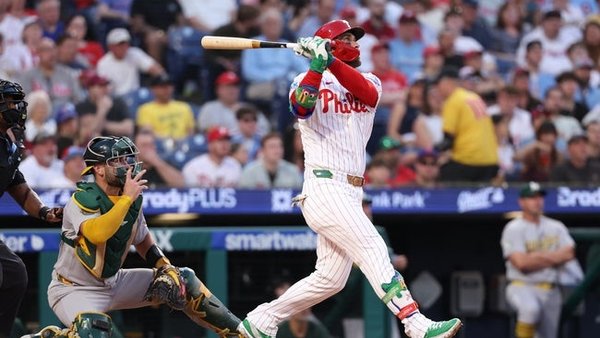
Wheeler’s 94+ mph heat with a 57% whiff rate sweeper creates a different class of at-bat than Springs’ pedestrian stuff. The -172 moneyline accounts for Philadelphia’s offensive struggles but undervalues the strikeout dominance gap.
Jeffrey Springs vs Zack Wheeler: Athletics at Philadelphia Phillies Betting Preview
The market knows Philadelphia destroyed Oakland 9-1 yesterday. They know the Phillies are riding an 8-2 streak in their last 10 games. What they’re undervaluing is the sheer gap between Zack Wheeler’s elite early form and Jeffrey Springs’ pedestrian stuff.
Wheeler has been untouchable through 11 innings — a 2.45 ERA with an 11.45 K/9 rate that’s putting hitters away at a 35.7% clip. Springs sits on the other end of the spectrum with a 3.96 ERA and an 8.15 K/9 that screams ordinary. The Phillies are laying -172, and while that’s steep for a standalone play, the pitching mismatch suggests this number is still shy of where it should be.
Game Info & Betting Lines
- Date/Time: Wednesday, May 6, 2026 | 6:40 PM ET
- Venue: Citizens Bank Park (Park Factor: 1.02 — slight hitter advantage)
- Probable Starters: Jeffrey Springs (3-2, 3.96 ERA) vs Zack Wheeler (1-0, 2.45 ERA)
- Moneyline: Athletics +144 / Philadelphia Phillies -172
- Run Line: Philadelphia Phillies -1.5 (+118) / Athletics +1.5 (-142)
- Total: 8.5 (Over -110 / Under -110)
Why This Number Is Close But Not Quite Right
The market is factoring in Philadelphia’s offensive struggles — a .225 average and .667 OPS that ranks among baseball’s worst. They’re also considering Springs’ respectable 3.96 ERA across 38.2 innings, which provides a larger sample than Wheeler’s 11-inning showcase.
But the -172 moneyline underestimates the magnitude of Wheeler’s strikeout dominance. His 34.4% whiff rate on his four-seamer at 94.3 mph creates a different class of at-bat than Springs’ pedestrian stuff. The price accounts for Philadelphia’s offensive woes but doesn’t fully capture how Wheeler’s arsenal makes those woes irrelevant when he’s dealing.
Springs has allowed 6 home runs in 38.2 innings — a concerning rate when facing a Phillies lineup that includes Kyle Schwarber (11 HRs) and Bryce Harper (7 HRs), even if they’re hitting for low averages. The market sees the Phillies’ .225 team average; it’s missing how their power can capitalize on Springs’ mistake locations.
What Separates the Pitching
Wheeler’s arsenal creates a completely different game environment than Springs can match. Wheeler’s 94.3 mph four-seamer sits as his primary weapon at 33.1% usage, generating a ridiculous 34.4% whiff rate and holding hitters to a .142 xwOBA. When hitters do make contact, they’re not finding barrels — his put-away rate of 35.7% tells the story of at-bats that end before they begin.
Springs operates with a fastball-heavy approach, throwing his 91.3 mph four-seamer 44.5% of the time with a pedestrian 10.6% whiff rate. That’s the difference between dominance and survivability. While Springs’ changeup shows promise with a 43.8% whiff rate, he’s relying on his secondary stuff to bail him out of counts that Wheeler ends with high-octane strikes.
The velocity gap extends beyond raw mph readings. Wheeler’s split-finger sits at 86.0 mph with a 50% whiff rate, while his sweeper at 80.6 mph generates a 57.1% whiff rate that makes hitters look foolish. Springs’ slider at 83.5 mph produces a 28.6% whiff rate — respectable but not devastating. In a sport measured in inches and milliseconds, Wheeler’s arsenal creates separation that Springs can’t bridge.
The Pushback
Here’s what keeps me from loading up: Philadelphia’s offense is genuinely terrible, but Wheeler’s domination creates a different dynamic than standard win probability calculations suggest. A .225 average and .667 OPS would typically spell disaster, but when you’re getting 6-7 innings of elite stuff from your starter, you’re only asking your offense to scratch across 3-4 runs.
The sample size concern is real. Wheeler’s 11 innings represent a tiny snapshot compared to Springs’ 38.2 innings of work. Early-season numbers can be fool’s gold, and Springs has the track record of a pitcher who knows how to manage a game even if he’s not overpowering.
But here’s what changes the calculation: Wheeler’s underlying metrics pass every test. His 34.4% whiff rate on his fastball isn’t luck — it’s velocity and location creating genuine swing-and-miss. When a pitcher combines 94+ mph heat with a 57.1% whiff rate sweeper, that’s not small-sample noise. That’s an elite arsenal hitting its stride. Philadelphia’s offensive struggles become manageable when you’re getting 7+ strikeouts and forcing Oakland to manufacture runs against premium stuff.
Why the Run Line Doesn’t Work Here
I looked hard at the run line at +118, but the math doesn’t support the risk. Wheeler’s dominance doesn’t guarantee he’ll pitch deep enough to create a blowout scenario. Early-season pitchers often face tighter pitch counts, and his 11-inning sample suggests the Phillies might be managing his workload carefully.
More concerning for the run line: both offenses rank bottom-five in runs per game (Oakland 4.38, Philadelphia 3.77), creating a run environment where games stay tight regardless of pitching quality. Philadelphia’s power hitters like Schwarber (.479 xwOBA) and Harper (.447 xwOBA) can change a game with one swing, but they’re not generating the consistent offensive pressure needed to build multi-run leads. When I’m betting a pitcher to dominate, I need the run line to reflect offensive output that simply isn’t there from either side.
Run Environment & Game Shape
Citizens Bank Park’s 1.02 park factor provides a slight offensive boost, but this total sitting at 8.5 suggests the market expects a pitcher-friendly environment. With both offenses struggling — Oakland averaging 4.38 runs per game, Philadelphia at 3.77 — this projects as a game decided by pitching execution rather than offensive explosions.
Wheeler’s dominance creates the type of tight-margin game where one or two mistakes from Springs become magnified. The run environment favors the pitcher who can avoid the big inning, and Wheeler’s strikeout profile provides that margin of error while Springs’ home run tendencies create vulnerability in a park that rewards mistake pitches.
Joe Jensen’s Pick
JENSEN’S PICK: Philadelphia Phillies Moneyline — Beer Money Territory
Projected score: Philadelphia Phillies 5, Athletics 4
The -172 price reflects the market’s respect for Wheeler’s early dominance, but it’s still undervaluing the gap between his elite stuff and Springs’ home-run prone approach. This isn’t a game where I’m backing up the truck — Philadelphia’s offensive struggles are real and concerning. But when you can get a pitcher throwing 94+ with a 57.1% whiff rate sweeper against a lineup that’s managed just 4.38 runs per game, the market is giving you value even at this price.
I’m keeping the bet size conservative — this is beer money, not mortgage money. Wheeler’s strikeout dominance creates enough separation to justify the price, but Philadelphia’s offensive limitations keep this from being a max play. When the pitching mismatch is this stark and you’re getting the elite arm, sometimes you pay the premium and trust the stuff.