Milwaukee carries the edge in every team metric — the problem is Gasser’s complete absence from current-season data. The line treats this as a normal pitching matchup when half the equation is unknown.
Robert Gasser vs Bailey Ober: Milwaukee Brewers at Minnesota Twins Betting Preview
The market has Milwaukee as a modest road favorite at -122, and on paper, that makes sense. The Brewers are 8-2 in their last 10 games with a superior 26-17 record, while Minnesota sits at 20-26 and struggling to find consistency. But here’s the problem — Robert Gasser hasn’t appeared at the MLB level this season. He posted a 3.18 ERA across just 5.2 innings in 2025 before disappearing from the major league level entirely this year.
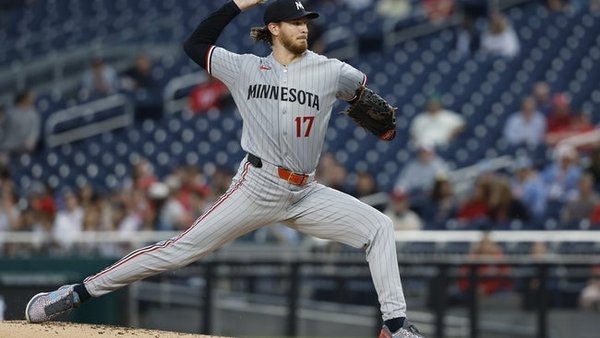
That complete unknown status on the mound creates a betting void that even Milwaukee’s recent hot streak can’t fill. Bailey Ober brings a solid 4-2 record with a 3.46 ERA this season, giving Minnesota the only known commodity in this pitching matchup. The line suggests the market is banking on Milwaukee’s superior team strength, but when you can’t evaluate half the pitching equation, finding clean betting value becomes nearly impossible.
Game Info & Betting Lines
- Date/Time: Sunday, May 17, 2:10 PM ET
- Venue: Target Field (Park Factor: 1.00)
- Probable Starters: Robert Gasser vs Bailey Ober
- Moneyline: Milwaukee Brewers -122 / Minnesota Twins +104
- Run Line: Minnesota Twins +1.5 (-172) / Milwaukee Brewers -1.5 (+142)
- Total: 7.5 (O -122 / U +100)
The Analytics Black Hole: Betting Blind on Unknown Starters
When you’re wagering on an unknown starter, you’re essentially gambling without a statistical foundation — the exact opposite of sharp betting principles. Gasser’s absence from current-season MLB data creates multiple cascading problems for risk assessment. First, you can’t project his pitch count or innings limit, making game script prediction impossible. Second, his current stuff quality remains unknown, eliminating any ability to evaluate platoon advantages or lineup matchups.
Most critically, you can’t calculate expected value without baseline performance metrics. Successful betting relies on identifying gaps between perceived and actual probability, but when half the pitching equation is missing, that calculation becomes pure speculation. The smart play here isn’t just avoiding the moneyline — it’s recognizing that any bet requiring Gasser’s performance as a variable introduces unacceptable uncertainty into your bankroll management strategy.
Why This Number Is Missing the Mark
At -122, Milwaukee sits right at the edge of playable juice territory, and their recent form supports the price. The Brewers have won seven of eight games and carry significant advantages in team ERA (3.32 vs 4.43) and run differential (+62 vs -7). The full pitching context is in our MLB pitching matchup breakdowns — worth a read before you fire.
The concern is that Gasser’s complete absence from current-season data creates a massive analytical blind spot. Last season, he carried a 1.59 WHIP across those 5.2 innings with more walks (4) than strikeouts (5). Those numbers suggested control issues, but the sample was too small to draw meaningful conclusions about his form or role in Milwaukee’s rotation — and they’re now completely stale.
Minnesota’s case rests entirely on having the known starter and modest home field advantage. Ober has been steady with a 1.02 WHIP and respectable peripheral numbers, though his 6.75 K/9 rate suggests he’s more contact-dependent than dominant. That said, contact management against a Milwaukee lineup hitting .245 as a team isn’t an insurmountable challenge.
What Separates the Pitching
This matchup presents a stark contrast between the known and unknown. Ober relies heavily on his changeup (36.3% usage) at 83.0 mph, generating a solid .278 xwOBA against. His four-seam fastball sits at 88.7 mph and comprises 31.4% of his arsenal, while his slider and sweeper provide quality secondary options with whiff rates of 11.6% and 37.0% respectively.
Gasser’s current arsenal remains a complete mystery for this season. Some spring training data shows a pitcher with a sweeper and sinker-heavy approach in previous seasons, but without current-season context, projecting his effectiveness against Minnesota’s lineup becomes pure speculation.
The gap isn’t in stuff quality — it’s in information availability. Ober’s 52 innings this season provide a reliable baseline for his current form, while Gasser’s status remains locked behind spring training reports and minor league numbers that don’t translate directly to major league effectiveness.
The Pushback
The temptation to lean into Milwaukee’s superior team strength is considerable. The Brewers carry a 3.32 team ERA compared to Minnesota’s 4.43, and their run differential of +62 versus -7 suggests a team that consistently outplays its opposition. Brice Turang is slashing .297 with a .922 OPS, providing elite production from the two-hole, while William Contreras delivers steady offensive contributions with a .280 average and .748 OPS behind the plate.
Milwaukee’s recent offensive surge has been impressive, outscoring opponents 21-8 over their last four games. Even with a modest .245 team batting average, they’ve generated enough clutch hitting to win seven of eight games. Their lineup depth creates multiple scoring threats that could exploit Ober’s contact-heavy approach. If you’re playing the run line tonight, Bovada is posting the best juice on the dog — worth a look before you commit.
However, this apparent team strength advantage crumbles under the weight of starter uncertainty. Milwaukee’s bullpen might be solid, but they need length from Gasser to avoid taxing their relief corps in the middle game of a road series. If Gasser struggles early and forces heavy bullpen usage, that team statistical advantage disappears quickly. The recent 2-1 and 3-2 victories over Minnesota demonstrate these teams are closely matched when games reach competitive innings — exactly when starter effectiveness becomes most critical.
Run Environment & Game Shape
Target Field’s neutral 1.00 park factor keeps the total at a modest 7.5, reflecting the market’s expectation of a pitcher-friendly environment. Both teams have shown the ability to manufacture runs in tight games, but neither offense projects as explosive enough to break games open consistently.
The projected 9-run total sits well above the posted number, but that projection assumes average pitching performance from both sides. With Gasser’s unknown status, the actual run environment could shift dramatically based on his early effectiveness or lack thereof. Ober’s steady profile suggests Minnesota can keep pace in a modest scoring game, but only if the Brewers’ starter performs within reasonable parameters — something we simply cannot predict.
The Pick: Pass
The correct play here is no play at all. Gasser’s complete unknown status eliminates the starter edge confidence necessary for profitable betting at these prices. While Milwaukee’s team metrics suggest they should be favored, the inability to evaluate their starting pitching creates too wide a gap in the analytical foundation.
In spots where critical information is missing, the sharp move is preservation of bankroll rather than speculation. Save your units for games where both starting pitchers provide sufficient data for proper evaluation. This game belongs to the entertainment-only category until Gasser establishes a current-season track record.