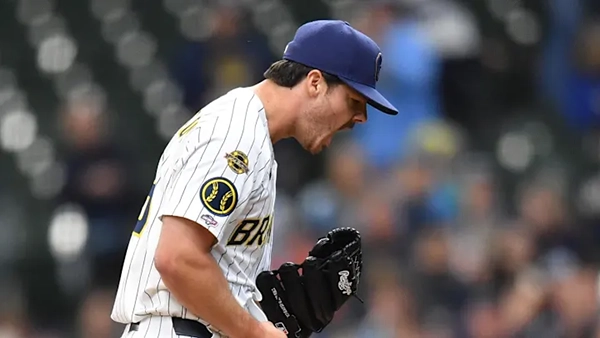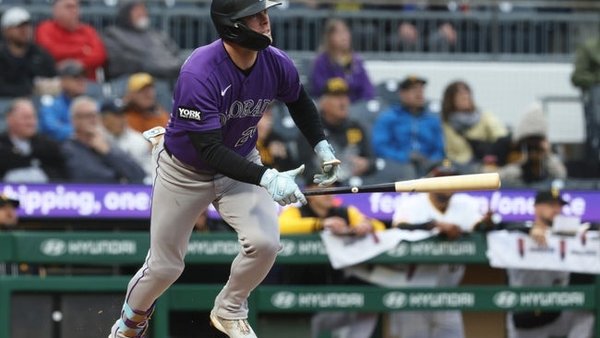
Both offenses are averaging under 4.3 runs per game despite Colorado’s Coors Field advantage — the park factor says one thing, but these broken lineups tell a different story. Kumar Rocker’s improving peripherals create a gap the market is only beginning to price.
Kumar Rocker vs Sammy Peralta: Texas Rangers at Colorado Rockies Betting Preview
The market has set this Tuesday night total at 10.5, and I understand the logic. Coors Field carries a 1.38 park factor, Kumar Rocker has struggled to a 4.34 ERA in his sophomore campaign, and Sammy Peralta posted a brutal 7.59 ERA in limited action last season. On paper, this screams over.
But here’s what the market is missing: both offenses are performing well below their already modest expectations. Texas ranks among the worst offensive teams in baseball at .675 OPS with just 43 home runs in 47 games — an average of 3.77 runs per game that would be historically bad even in a pitcher-friendly park. Colorado sits marginally better at .708 OPS, but that’s disappointing production for a team that should be feasting at altitude.
The pitching matchup creates additional defensive value. While Rocker’s surface numbers look concerning, his underlying metrics suggest improvement — he’s limited walks to 17 in 37.1 innings and surrendered just 4 home runs, indicating better command than his ERA reflects. Peralta remains a complete unknown for 2026, which historically creates betting value on the defensive side rather than assuming offensive explosion.
Game Info & Betting Lines
- Date/Time: Tuesday, May 19, 2026 | 8:40 PM ET
- Venue: Coors Field (Park Factor: 1.38)
- Probable Starters: Kumar Rocker (1-4, 4.34 ERA) vs Sammy Peralta (No 2026 data)
- Moneyline: Texas Rangers -130 / Colorado Rockies +110
- Run Line: Colorado Rockies +1.5 (-150) / Texas Rangers -1.5 (+125)
- Total: 10.5 (O -115 / U -105)
Why This Number Is Too High
The market is pricing this total around Coors Field’s historical reputation and the pitchers’ surface-level struggles, but it’s not properly accounting for how badly both offenses have performed this season. Texas enters averaging just 3.77 runs per game (177 runs in 47 games) with a team OPS that ranks among the worst in recent memory. Even with Coors Field’s altitude advantage, you can’t manufacture runs from lineups that have shown this little power or plate discipline.
Colorado offers only marginally better offensive production despite playing half their games at altitude. Their 4.29 runs per game average (206 runs in 48 games) includes those Coors Field advantages, meaning they’re actually underperforming relative to their home park benefits. When you factor in that both teams are coming off a 7-6 slugfest yesterday, the market may be overreacting to one high-scoring game rather than focusing on season-long offensive struggles.
The legitimate case for the over centers on park factor and both starters’ shakiness. Coors Field doesn’t lie — the 1.38 run environment historically inflates scoring, and Rocker’s 4.34 ERA suggests vulnerability. But the line already accounts for most of that, and the offensive context provides significant pushback against assuming automatic run production.
What Separates the Pitching
The pitching matchup presents an intriguing contrast between known commodity and complete unknown. Rocker brings a power arsenal built around a 96.8 mph four-seam fastball that he throws 37.4% of the time, generating a respectable .323 xwOBA against. His slider sits at 86.9 mph with a 39.8% whiff rate, while his changeup at 90.3 mph creates a 36.7% whiff rate — suggesting his stuff plays better than his 4.34 ERA indicates.
The concerning element for Rocker comes from his cutter usage and results. That pitch generates just a .269 xwOBA against, but he’s thrown it only 10% of the time, suggesting he may not trust his best secondary offering. His 21.4% whiff rate on the fastball is below average, creating traffic when he can’t command the strike zone effectively.
Peralta presents the ultimate analytical challenge. While he carried a brutal 7.59 ERA and 1.875 WHIP in limited 2025 action, we must treat him as analytically unknown for 2026. His 2025 Statcast data showed a 91.7 mph four-seam fastball that allowed a .426 xwOBA against, while his knuckle curve performed better at .356 xwOBA. However, using prior-season peripherals to project current performance creates inherent uncertainty — and that uncertainty typically favors the defensive side in betting markets.
The key difference lies in how each pitcher creates innings. Rocker’s improved walk rate (17 BB in 37.1 IP) suggests better command, while his limited home run production (4 HR) indicates he’s not getting destroyed by mistakes. Peralta’s 2025 profile showed concerning walk issues and poor fastball command, but a full season’s development could have addressed those problems.
The Pushback
The strongest case against the under centers on Coors Field’s undeniable mathematical advantage. That 1.38 park factor isn’t theoretical — it’s based on decades of data showing consistent offensive inflation at altitude. Even poor offensive teams can benefit from the thinner air, and both lineups feature hitters capable of park-aided production.
The concern is that I’m overthinking the offensive struggles. Hunter Goodman carries a .440 xwOBA that suggests elite contact quality, while Josh Jung brings a .385 xwOBA that could translate to multiple extra-base hits at altitude. The Rangers just scored 8 runs against Houston, suggesting their offense isn’t completely broken — maybe they’re due for positive regression in a hitter-friendly environment.
There’s also the bullpen concern. Both teams carry elevated bullpen ERAs, and late-game relief could easily push this total over if the starters keep things competitive through five innings. The line movement toward 10.5 suggests sharp money is seeing something I might be missing.
The Pick
I’m taking the Texas Rangers moneyline at -130.
This comes down to starter reliability and offensive context. Rocker brings known quantities — his Statcast profile shows legitimate stuff with improving command, while Peralta remains a complete unknown. In a park that historically inflates offense, betting the team with the more predictable starting pitcher makes sense.
The moneyline price feels fair but not inflated. At -130, we’re getting reasonable value on the road favorite without the run line complications that make -1.5 bets dangerous in Coors Field. Texas has superior offensive depth when healthy, and their recent 8-0 win over Houston suggests the lineup is capable of breaking out.
The key factor is that while both offenses have struggled, Texas shows better underlying metrics and plate discipline. Their .312 OBP gives them more baserunners to drive home, and in an environment where singles turn into doubles, that patient approach creates multiple scoring opportunities that premium pricing at -130 properly reflects.