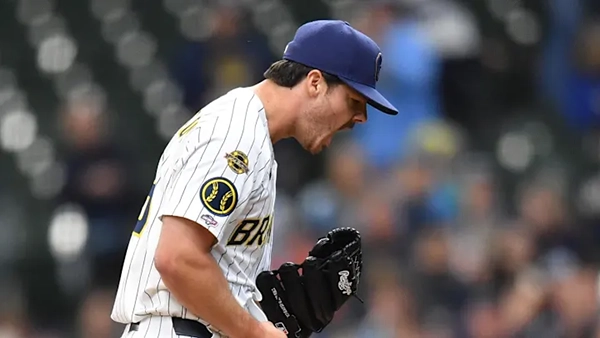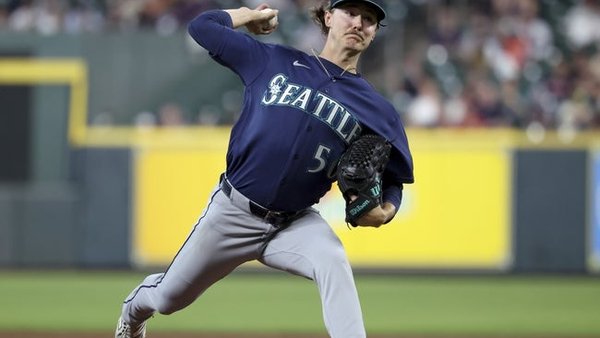
Miller’s 39.3% whiff rate with the sweeper looks dominant — but his 1.69 WHIP in limited action tells a different story. The market is pricing him as proven when the sample size suggests volatility.
Anthony Kay vs Bryce Miller: Chicago White Sox at Seattle Mariners Betting Preview
The market opened this total at 7.5 runs, but my model shows a strong over edge of 1.1 runs with the projected total sitting at 8.6. While both teams are batting under .235 for the season, Seattle’s offensive explosion yesterday revealed the upside potential that’s been dormant all season. The Mariners posted six runs against this same Chicago pitching staff, and with Anthony Kay taking the mound tonight showing significant vulnerabilities, we could see another high-scoring affair despite T-Mobile Park’s 0.92 run factor.
The key insight here is that both offenses have the underlying metrics to support scoring, they just haven’t connected consistently. Chicago’s lineup features Munetaka Murakami with a .934 OPS and 17 home runs, while Seattle gets Luke Raley (.907 OPS) and the always-dangerous Julio Rodríguez. When these hitters catch up to mistake pitches, runs come in bunches.
Game Info & Betting Lines
- Date/Time: Tuesday, May 19, 2026 at 9:40 PM ET
- Venue: T-Mobile Park (0.92 park factor)
- Probable Starters: Anthony Kay (CHW) vs Bryce Miller (SEA)
- Moneyline: Chicago White Sox +128 / Seattle Mariners -152
- Run Line: Chicago White Sox +1.5 (-170) / Seattle Mariners -1.5 (+140)
- Total: 7.5 (Over -115 / Under -105)
Why This Number Is Wrong
The 7.5 total appears reasonable on the surface when you consider both offenses have averaged right around 4.2-4.5 runs per game this season. But the market is missing the volatility factor that makes baseball totals profitable. Both lineups have legitimate power threats, and when they connect, the run production jumps dramatically from their season averages.
Seattle just demonstrated this yesterday with six runs, and Chicago has shown similar capability with 9-run and 8-run performances in their recent homestand. The market is pricing these teams at their floor rather than accounting for the ceiling games that pitching matchups like this can produce. My model projects 8.6 runs, suggesting the market is off by more than a full run.
What Separates the Pitching
The pitching matchup presents clear vulnerabilities on both sides that favor offensive production. Anthony Kay brings a 4.61 ERA and 1.54 WHIP through 41 innings this season, showing particular weakness with his changeup that’s been hammered to a .529 xwOBA against. His four-seam fastball sits at 94.2 mph with just a 15.9% whiff rate, creating plenty of contact opportunities for Seattle’s lineup.
Bryce Miller counters with more swing-and-miss potential but significant concerns about his durability and control. Despite his impressive sweeper (39.3% whiff rate, .140 xwOBA), Miller’s small sample size creates uncertainty. His 1.69 WHIP in just 5.1 innings suggests potential control issues, and one walk in such limited action isn’t the dominant command you’d expect from an elite starter.
The gap between these pitchers is smaller than it appears. While Miller’s stuff grades out better on paper, Kay’s experience and ability to work through lineups multiple times could prove valuable. More importantly, both pitchers have shown vulnerability to hard contact, which sets up perfectly for the power hitters in both lineups to drive up the run total.
The Pushback
The strongest argument against the over centers on both teams’ season-long offensive struggles. Seattle’s .378 slugging percentage ranks among the worst in baseball, and Chicago’s .235 batting average suggests limited ability to string together rallies. T-Mobile Park’s marine layer and dimensions have historically suppressed offensive output, particularly for fly ball hitters.
Additionally, Miller’s limited sample size could be misleading in a positive direction. If his sweeper continues to generate massive whiff rates and his command improves with more innings, he could dominate a Chicago lineup that strikes out 431 times in 47 games. The injury-depleted White Sox roster also lacks the depth to capitalize on mistake pitches if Miller settles into a rhythm.
However, yesterday’s six-run outburst from Seattle suggests these offenses are closer to breakthrough performances than season averages indicate. When both teams have connected this season, the run production has been explosive rather than incremental.
Run Environment & Game Shape
Despite T-Mobile Park’s 0.92 run factor, the game shape points toward offensive opportunities early in the contest. Both starters have shown vulnerability in their first time through opposing lineups, and with quality power hitters like Murakami (.545 xwOBA), Raley, and Rodríguez, early damage seems likely.
The likely game shape involves an early run burst from one or both teams, followed by bullpen work that could maintain offensive production. Seattle’s bullpen ranks 15th in ERA at 3.69, while Chicago’s sits at 4.40, suggesting limited shutdown relief options if starters struggle with command.
Joe Jensen’s Pick
JENSEN’S PICK: Seattle Mariners -1.5 (+140) — 3 Units
While the total offers value, I’m focusing on the run line where my model shows Seattle covering by 1.7 runs. The combination of Miller’s superior stuff, home field advantage, and Chicago’s injury-depleted lineup creates the perfect storm for a multi-run Seattle victory. Yesterday’s 6-1 win demonstrated the Mariners’ offensive ceiling, and with Kay’s contact-heavy arsenal facing a lineup that just found its rhythm, Seattle should cruise to a comfortable win.
The +140 price offers excellent value for a home favorite with clear advantages in pitching and lineup health. I’m passing on the moneyline at -152 (no edge) and the total despite my model’s projection, focusing instead on the spot where multiple factors align for maximum profit potential.