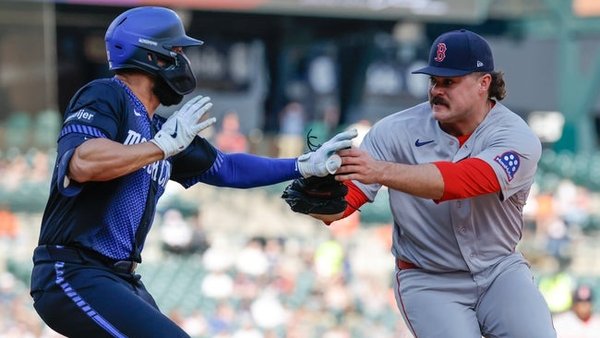
Tolle’s 2.05 ERA creates a clear pitching edge — the moneyline at -154 has moved beyond what the actual talent gap supports between these closely matched teams.
Connor Prielipp vs Payton Tolle: Minnesota Twins at Boston Red Sox Betting Preview
This Friday night matchup at Fenway Park presents exactly the kind of betting trap that kills bankrolls — a game where quality starting pitchers create the illusion of predictability while the moneyline price removes any actual value. Payton Tolle’s 2.05 ERA and Connor Prielipp’s 2.88 mark suggest we’re looking at a tight, low-scoring affair, but Boston’s -154 moneyline crosses into the territory where even a legitimate edge gets erased by the vig.
The market appears to be pricing in Boston’s home field advantage and perhaps overweighting their recent offensive surge against Kansas City, but the underlying numbers tell a different story. When two teams separated by just 10 points of run differential get priced with this much separation, it’s usually time to step back and reassess.
Game Info & Betting Lines
- Date/Time: Friday, May 22, 2026 at 7:10 PM ET
- Venue: Fenway Park (Park Factor: 1.08)
- Probable Starters: Connor Prielipp (1-2, 2.88 ERA) vs Payton Tolle (2-2, 2.05 ERA)
- Moneyline: Minnesota Twins +130 / Boston Red Sox -154
- Run Line: Boston Red Sox -1.5 (+146) / Minnesota Twins +1.5 (-178)
- Total: 8 (Over +104 / Under -128)
Why This Number Is Too Wide
The market is treating Boston as a significant favorite despite both teams hovering around .500 and possessing nearly identical offensive profiles. The Red Sox carry a .680 OPS compared to Minnesota’s .709, while their run differential of -11 actually trails the Twins’ -1 mark. The -154 price suggests Boston should win this game roughly 61% of the time, but the underlying metrics don’t support that level of confidence.
Boston’s recent three-game sweep of Kansas City has likely inflated public perception, but the Royals are scuffling badly and present a much different challenge than Minnesota’s lineup. The Twins just took two of three from Houston, showing they can handle quality pitching, and their offense has actually been more productive on a per-game basis this season.
The line feels driven more by home bias and recent results than by the actual talent gap between these clubs. When you’re dealing with teams this closely matched, paying -154 to back either side represents poor bankroll management, regardless of your lean.
What Separates the Pitching
The pitching matchup favors Boston on paper, but not by the margin the moneyline suggests. Payton Tolle brings a microscopic 0.78 WHIP that’s been his calling card through 30.2 innings, built around a dominant four-seam fastball that sits at 96.3 mph and generates a 23.5% whiff rate. His primary weapon produces just a .140 xwOBA against, suggesting the low ERA isn’t entirely luck-driven.
Connor Prielipp counters with a more diverse approach, leaning heavily on a slider that comprises 38.6% of his arsenal and generates a solid 31.2% whiff rate. His 82.1 mph curveball has been virtually unhittable, producing just a .059 xwOBA, while his changeup offers another quality secondary option. The concern with Prielipp is command — his 0.96 WHIP suggests more baserunners than Tolle allows.
Both starters project for quality innings, but Tolle’s superior command and velocity advantage create a slight edge that the market has amplified beyond its actual value. The gap between a 2.05 ERA and 2.88 ERA is meaningful but not decisive, especially when both pitchers are striking out batters at above-average rates.
The Pushback
The strongest case against passing on this game centers on Tolle’s genuine dominance through his first five starts. His .782 WHIP isn’t a mirage — it’s backed by excellent command and a fastball that hitters simply can’t square up consistently. When you combine that with Boston’s home field advantage at Fenway, there’s a legitimate argument for laying the price.
Minnesota’s offensive inconsistency also works against them here. Despite the decent team OPS, they’ve struggled to string together multi-run innings consistently, and facing a pitcher like Tolle who limits baserunners could expose those issues. Byron Buxton remains their primary threat, but the supporting cast hasn’t provided enough secondary scoring to feel confident about road victories against quality pitching.
That said, the price is simply too steep to ignore. Even if Boston represents the correct side, paying -154 for what projects as a one-run game eliminates the edge that sharp handicapping should create. The juice ceiling exists for exactly these situations — when the line moves beyond what the actual probability warrants.
Run Environment & Game Shape
Fenway’s 1.08 park factor suggests a slightly hitter-friendly environment, but the total sitting at 8 already accounts for both the venue and the pitching quality. This projects as a classic pitcher’s duel where one mistake or one clutch hit could decide the outcome. Both starters should work deep into games, keeping the bullpens relatively fresh and maintaining tight scoring throughout.
The market expects a low-scoring, margin-dependent game, which makes the moneyline price even more problematic. In games decided by one or two runs, paying significant juice becomes a losing proposition over time. The environment favors patient handicapping rather than forcing action on overpriced favorites.
Joe Jensen’s Pick
JENSEN’S PICK: PASS — 0 Units
I considered the Boston moneyline based on Tolle’s early-season dominance and the home field edge, but -154 violates the fundamental rule of never paying more than -130 juice on roughly even matchups. The Red Sox might win this game, but not 61% of the time — that’s what the price implies.
I also looked at the total, but 8 runs already reflects the pitching quality and park factor accurately. The under carries too much juice at -128, while the over lacks conviction with two starters posting sub-3.00 ERAs.
This is exactly the type of game where discipline separates long-term winners from short-term speculators. Both teams are competent, both starters are effective, and the line has moved beyond what the talent gap supports. Sometimes the best bet is no bet, and this is one of those times.