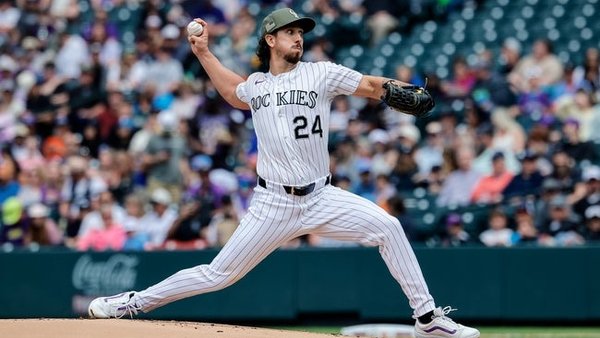
Webb’s 5.06 ERA and a knee-compromised return meet Lorenzen’s 7.21 ERA and 1.90 WHIP at a park with a 1.38 factor — yet the posted total sits at 10.5. The projected combined run total clears that number by 2.5 runs, and thin bullpens on both sides mean neither starter’s early exit solves the problem.
Logan Webb vs. Michael Lorenzen: San Francisco Giants at Colorado Rockies Betting Preview
The setup here is almost too clean to ignore: a 1.38 park factor at Coors Field, a starting pitcher on the IL making a questionable return, and a starter on the other side who owns a 7.21 ERA through nine starts this season. The market has priced the total at 10.5 — a number that acknowledges the altitude but, in this analyst’s view, underweights the compounding effect of two genuinely bad arms in baseball’s most run-friendly environment.
The Rockies have struggled offensively of late — managing just 1 run in their most recent game and scoring 3 or fewer in two of their last three contests — while the Giants have stumbled through a three-game sweep at the hands of Arizona, scoring just two runs in two of those contests. On paper, two cold lineups at 10.5 sounds reasonable. But cold offenses at Coors Field against pitchers posting sub-replacement-level WAR scores are a different animal entirely.
The numbers see 13.0 combined runs — Giants 6.6, Rockies 6.4 — against a posted total of 10.5. That’s a 2.5-run gap, and when the structural factors align this clearly, the number deserves serious attention.
Game Info & Betting Lines
- Date/Time: Friday, May 29, 2026 | 8:40 PM ET
- Venue: Coors Field | Park Factor: 1.38 (extreme hitter-friendly)
- TV: MLB.TV, NBC Sports BA, Rockies.TV
- Probable Starters: Logan Webb (Giants, 2-4, 5.06 ERA) vs. Michael Lorenzen (Rockies, 2-7, 7.21 ERA)
- Moneyline: Giants -166 / Rockies +140
- Run Line: Giants -1.5 (-106) / Rockies +1.5 (-113)
- Total: 10.5 — Over -115 / Under -105
Why This Number Is Off
The market’s logic in landing at 10.5 is defensible. Coors totals are notoriously sharp — oddsmakers have been adjusting for altitude and thin air for three decades. Both offenses are genuinely mediocre: the Giants carry a team OPS of .681 and the Rockies sit at .683. The Under at -105 doesn’t carry heavy juice, which signals the market isn’t terrified of the Over either. This isn’t an unsophisticated number.
But here’s the problem: the market prices Coors in the abstract. It doesn’t fully price Coors combined with two specific arms that are actively imploding. Michael Lorenzen has surrendered 10 home runs in 53.2 innings this season — a home-run rate that would be damaging anywhere, let alone at altitude where fly balls carry. Logan Webb, listed on the 15-Day IL with a knee injury, carries a 5.06 ERA and 1.40 WHIP in 48 innings. The IL designation matters: even if he’s activated and takes the ball, a compromised Webb who can’t drive off his back leg is essentially handing batters free contact.
The Over at -115 is not cheap, but it’s not prohibitively juiced. The 2.5-run gap between the projected combined total and the posted number makes the price playable.
What Separates the Pitching
There is no comforting starter in this matchup — just degrees of bad. But the gap between the two arms is meaningful, and so is what each creates in terms of game shape.
Logan Webb built his career on a sinker-heavy approach, and the 2025 data reflects that identity: his sinker sits at 46.2% usage at 94.7 mph, but it’s generating a troubling .404 xwOBA against and a whiff rate of just 7.4%. That’s a groundball pitch surrendering hard contact at an alarming clip. His slider (.413 xwOBA against) offers no refuge either. The one pitch still generating weak contact is his four-seamer at .273 xwOBA with a 25% whiff rate — but at 13.4% usage, it’s a secondary offering in a profile built around a pitch that Coors Field will punish relentlessly. When sinkers flatten out in Denver’s thinner air, they become batting practice.
Michael Lorenzen is simply one of the worst starters in baseball right now. A 1.90 WHIP means nearly two baserunners per inning before Coors Field multiplies the damage. The Rockies’ lineup — depleted though it is with Mickey Moniak on the IL — still features Hunter Goodman (.419 xwOBA, 5.7% barrel rate) and TJ Rumfield (.365 xwOBA), hitters who put the ball in the air with regularity. Meanwhile, Casey Schmitt (.424 xwOBA, 6.9% barrel rate) and Rafael Devers (.389 xwOBA, 27% hard-hit rate) give the Giants legitimate power threats who can exploit a starter allowing contact this freely.
Neither pitcher projects to last deep into the game, which creates the secondary problem: both bullpens are depleted. The Giants are missing Birdsong, Sanmartin, and Butto to the IL. The Rockies are without Herget and Vodnik. Thin relief corps at Coors, inheriting leads from struggling starters, is how totals exceed posted numbers by three or four runs.
The Pushback
The honest case against this Over is real and worth slowing down for. Start with Logan Webb’s IL status — his knee injury introduces genuine uncertainty about inning depth and stuff, but the direction of that uncertainty is not clean. A Webb pulled after two innings could mean the Giants’ relievers throw five innings of two-run ball, which actually suppresses the total. It’s not a given that an injured Webb makes the Over more likely; it could just as easily mean a short, volatile outing followed by competent long relief that keeps the game in the 7–8 run range.
The recent offensive context also gives pause. Both offenses have been quiet — the Giants scored just two runs in two of their last three games against Arizona, and Colorado managed just 1 run in their most recent contest. Recency bias is real, and cold lineups do sometimes stay cold for a game or two even when the structural environment favors offense. A 10.5 total isn’t asking for fireworks — it’s asking for a functional amount of baseball at altitude.
The Under side also benefits from Lorenzen’s groundball tendencies when his sinker is working. Not every start deteriorates into a disaster, and there’s a version of this game where both starters grind through five innings of ugly but low-scoring baseball and the total lands at 9.
These are legitimate counterarguments. I’m not dismissing them. But they require a chain of assumptions — Webb is healthy enough to go deep, both offenses stay cold against pitchers this hittable, the bullpens hold — that all have to break the same direction. The structural case for the Over only requires a few things to go normally.
Run Environment & Game Shape
The 1.38 park factor at Coors isn’t just a multiplier — it’s a context-setter that changes how every at-bat resolves. Fly balls that die on the warning track in San Francisco carry out in Denver. Sinkers that generate grounders at sea level flatten out and stay in the hitting zone longer. Lorenzen’s 10 home runs surrendered in 53.2 innings is a damaging rate under any park conditions; layer a 1.38 park factor on top of that, and the tail risk on any single pitch becomes severe. Webb’s sinker-dominant profile faces the same environmental penalty — a pitch already posting a .404 xwOBA against gets worse when the thin air robs it of its late downward break.
The game shape the market expects — a tight, low-scoring pitcher’s duel — requires both starters to perform near the top of their respective ranges while both offenses stay suppressed. That’s the Under scenario, and it’s not impossible. But it demands a lot of simultaneous good fortune for pitchers who have given us very little reason to trust them this season. More likely, at least one starter implodes early, the bullpens are stretched thin, and the back half of this game belongs to the offense. At Coors Field, that’s all it takes.
The play is the Over 10.5 at -115, 2 units, moderate confidence. The structural case is strong — bad arms, depleted bullpens, and the most run-friendly park in baseball. You don’t need a perfect storm here. You just need the game to be normal.