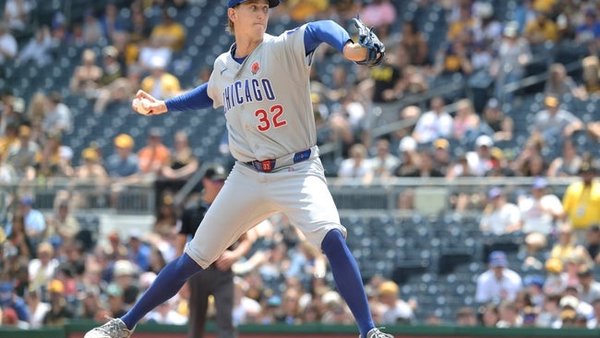
Ben Brown’s 2.01 ERA and 0.985 WHIP represent a suppression profile that stands apart from anything else this series has seen — but the 8.5 total is still treating tonight like a mirror image of last night’s 6-5 game. The Cubs are -138 favorites, and the projected combined run total sits at 8.9, a margin thin enough that one volatile Leahy inning could flip the picture entirely.
Ben Brown vs. Kyle Leahy: Chicago Cubs at St. Louis Cardinals Betting Preview
The betting tension here isn’t about which team wins — it’s about whether Brown’s elite suppression profile can keep this game from getting away from the total. The Cubs are favored at -138 on the moneyline, and the numbers point to a combined projected total of 8.9 runs — barely above the 8.5 posted total. That half-run gap is where the value lives, and it tilts toward the Under.
The Cardinals just snapped a four-game skid last night with a 6-5 win, but that came against Shota Imanaga and a depleted Cubs bullpen. Tonight they get Ben Brown, who has been operating on a different planet from every other starter in this series. Kyle Leahy takes the hill for St. Louis, and the gap between these two arms is the central argument for why this game stays under 8.5.
After yesterday’s loss on the Under, the temptation is to overcorrect and go elsewhere — but the data hasn’t changed. Brown is the same pitcher he was 24 hours ago, and the Cardinals’ offense remains the weaker of the two clubs. The market’s modest -115 juice on the Under signals this isn’t a sharp consensus play, which actually makes it more interesting.
Game Info & Betting Lines
- Date/Time: Saturday, May 30, 2026 | 7:15 PM ET
- Venue: Busch Stadium | Park Factor: 1.00 (perfectly neutral)
- TV: MLB.TV, FOX
- Probable Starters: Ben Brown (CHC) vs. Kyle Leahy (STL)
- Moneyline: Cubs -138 / Cardinals +118
- Run Line: Cubs -1.5 (+125) / Cardinals +1.5 (-150)
- Total: 8.5 (Over -105 / Under -115)
Why This Number Is Close — But Slightly Off
The market set 8.5 here with good reason. The Cardinals scored 6 last night, the Cubs have averaged 4.77 runs per game on the season, and both offenses carry a .238 batting average. The market is essentially saying this is a coin-flip game environment where either team can put up a 4-5 run performance without straining belief. That framing is fair on the surface.
But the market is balancing two offenses without fully accounting for who’s on the mound. Brown’s profile — 2.01 ERA, 0.985 WHIP, just 1 HR allowed in 44.2 IP — is an outlier in this division right now. Leahy’s peripheral numbers are significantly worse, which means the Cubs’ half of the run environment is suppressed in a way the Cardinals’ half is not. The asymmetry is real.
Where the market has a point: Leahy does induce soft contact at times, and both clubs are in cold offensive stretches — the Cubs went 2-8 in their last 10 before winning two straight against Pittsburgh. The Cardinals are 3-7 over that same span. Cold offenses support the Under, but they’re also unpredictable, capable of exploding without warning. The 8.5 line accounts for starter quality while building in variance. The numbers suggest it’s priced about a quarter-run too high once you factor in Brown’s specific dominance profile and the Cardinals’ league-worst walk production among these two clubs — 183 walks versus Chicago’s 261.
One roster note worth flagging: Nathan Church is on the 10-Day IL with a shoulder injury and is not available tonight. The Cardinals’ projected lineup already reflects Victor Scott II starting in center, but Church’s absence removes a .247/.672 OPS bat from St. Louis’s depth options and limits their lineup flexibility off the bench. It’s a marginal impact given Church’s modest production, but it’s another quiet drag on the Cardinals’ run environment that the line may not fully reflect.
What Separates the Pitching
The gap between Brown and Leahy is not subtle. Brown’s knuckle curve is his weapon — deployed 37.0% of the time at 87.2 mph with a 45.5% whiff rate and a .231 xwOBA against. That’s an elite put-away pitch by any measure. He pairs it with a 96.7 mph four-seam fastball at 36.6% usage and a heavy sinker at 96.8 mph. The fastball xwOBA against comes in at .328 — not dominant — but when hitters are geared up for the heater, the knuckle curve becomes nearly unhittable. He has allowed just 1 HR in 44.2 innings, which speaks to his ability to suppress hard contact even when hitters make contact.
Against a Cardinals lineup featuring Jordan Walker (.480 xwOBA, 8.0% barrel rate) as the primary threat, Brown will need to deploy his knuckle curve aggressively. Walker’s .522 xwOBA against left-handed pitching drops to .468 versus right-handers, which is still dangerous but more manageable. The concern is Iván Herrera (.378 xwOBA) and Alec Burleson (.425 xwOBA), who both make consistent contact and can strand damage.
Leahy presents the opposite profile. His four-seam fastball — used 30.3% of the time at 93.7 mph — carries a .451 xwOBA against and a 13.1% whiff rate. That is a below-average pitch being thrown to a Cubs lineup that features Ian Happ (.448 xwOBA, .477 against right-handers), Pete Crow-Armstrong (.396 xwOBA), and Michael Busch (.384 xwOBA). Leahy’s changeup does generate a 44.6% whiff rate, which is his only true swing-and-miss option, but with a 4.44 ERA, 1.579 WHIP, and 8 HR allowed in 50.2 IP, the damage when batters make contact on his primary offerings is real. Also worth noting: Nelson Velázquez, who torched Chicago for a three-run homer last night, carries a .274 xwOBA against right-handed pitching — a meaningful split that makes him a far less threatening bat in tonight’s matchup versus Brown. The innings these two pitchers create look nothing alike — Brown generates weak contact and empty at-bats; Leahy generates baserunners and crooked numbers.
The Pushback
Here’s the problem: the same argument about Leahy’s volatility that supports the Under also threatens to blow it open. His 1.579 WHIP and 8 HR allowed in 50.2 innings means a single bad inning — a two-run shot from Ian Happ, who posted a .477 xwOBA against right-handers, or a bases-clearing mistake to Michael Busch — could peel off 3-4 runs in a hurry. The Cubs scored 5 last night against a different arm in a different situation, but the offensive ceiling is real.
The other concern is bullpen exposure. The Cubs used six relievers last night in a back-and-forth 6-5 game. If Brown runs into trouble early — say, Walker goes yard on a first-pitch sinker — Chicago could be reaching into a taxed pen by the fifth inning. The Cardinals’ bullpen has been similarly stretched, going 3-7 over the last 10, so the late-inning mitigation is roughly even. But Leahy’s volatility is a genuine double-edged sword: he can crater an inning just as easily for Chicago’s side of the ledger as he can cruise through it, and that variance cuts against the Under in a real way.
Run Environment & Game Shape
Busch Stadium checks in at a perfectly neutral 1.00 park factor, meaning the venue adds nothing to either side of this equation. The run environment lives entirely in the pitching matchup and offensive context. Brown’s component profile — elite whiff rates, suppressed hard contact, just 14 walks in 44.2 innings — points to a low-scoring Cubs half of this game. The Cardinals’ side is more volatile, hinging on whether Leahy can keep the ball in the yard and strand the baserunners his WHIP guarantees he’ll create.
Taking all of it together — Brown’s elite suppression, Leahy’s elevated contact and home run rates, two cold offenses with .238 batting averages, a depleted Cardinals bench with Church on the IL, and a neutral park — the scoring range most likely falls between 6 and 9. The weight of the evidence, however, clusters at the lower end of that band. Brown alone is enough to cap the Cubs’ contribution near 3-4 runs on most nights, and the Cardinals’ lineup — without Church, still adjusting to Velázquez against a righty — doesn’t carry the depth to reliably push past 4-5 against a pitcher this sharp. The combined ceiling for a clean game is somewhere in the 7-8 range, which sits comfortably under the 8.5 number.
The Pick
The case for the Under here is built on a specific pitching mismatch, not a generic “both teams are cold” argument. Brown is legitimately one of the better suppression arms in the NL right now, and he’s drawing a Cardinals lineup that ranks last among these two clubs in runs scored (235), walks (183), and on-base percentage (.318). Leahy’s volatility is the primary risk — if he implodes, the Cubs can score in bunches — but even in that scenario, Brown’s side of the ledger holds the total down unless Chicago also has a big inning against St. Louis’s pen.
The edge engine’s component breakdown shows a -1.516 starter advantage for the away side — that’s Brown’s contribution — alongside an offense differential that also tilts Chicago’s way. The raw projected total of 8.9 is close enough to 8.5 that the Under isn’t a slam dunk, which is exactly why the market is offering it at -115 rather than -130. Moderate confidence, not a hammer bet. But the structural case is sound, and it’s the same case that existed yesterday before Imanaga had a bad outing. Tonight’s pitcher changes the equation.
Bet: Under 8.5 — 2 units — Moderate confidence. Brown’s suppression profile is the edge. The Cardinals’ lineup depth is compromised, the park is neutral, and the -115 price suggests the market isn’t fully convinced either way. That’s the spot to be on the Under.