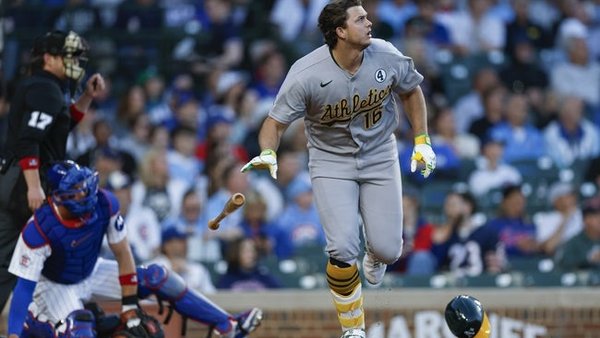
Gage Jump’s elite contact suppression — 0 home runs allowed in 12 innings, a .267 xwOBA on his four-seamer — faces off against Mike Burrows’ 5.66 ERA and 15 home runs surrendered in 68.1 frames. The total of 9 is set at a flat -110/-110, but Jump’s sharp early-season profile argues the book may have this a half-run too generous.
Gage Jump vs Mike Burrows: Athletics at Houston Astros Betting Preview
The market has priced this Sunday afternoon game at Daikin Park as a coin flip — -108/-108 on the moneyline, and a total of 9 with identical juice on both sides. That symmetry makes sense on the surface: two .470-range teams, nearly identical run differentials in the negative, a dome setting that softens weather variance. But the pitching gap between Gage Jump and Mike Burrows is not symmetric, and the total of 9 doesn’t fully account for what Jump has done in his limited time on the mound this season.
After Friday’s under hit comfortably at 5-1, Saturday’s 13-2 blowout was a different story — but that game was driven by Kade Morris making his MLB debut against a lineup that was ready for him. A debut implosion is not a repeatable data point. Today the pitching environment shifts dramatically. Jump is the story here, and the case for the Under rests squarely on his right arm keeping Houston in check inside a park that nudges run scoring down before a single pitch is thrown.
Yesterday’s loss on the Under at Houston was a reminder that a bad pitching day can unravel any total thesis quickly — but the matchup today is structurally different, and the edge is still worth pressing at the right size.
Game Info & Betting Lines
- Date/Time: Sunday, June 7, 2026 — 2:10 PM ET
- Venue: Daikin Park (Minute Maid Park) | Dome: Yes | Park Factor: 0.96 (pitcher-friendly)
- Probable Starters: Gage Jump (Athletics) vs. Mike Burrows (Houston Astros)
- Moneyline: Athletics -108 / Houston Astros -108
- Run Line: Houston Astros +1.5 (-182) / Athletics -1.5 (+150)
- Total: 9 (Over -110 / Under -110)
Why This Number Is Close
The market isn’t wrong to land at 9. Houston scores 4.65 runs per game on the season and Oakland averages 4.19 — add those together and you’re right in the neighborhood. The Astros have won four of their last five, their offense has shown it can erupt (see: Saturday), and Burrows, despite his struggles, gives Houston a competent enough start to keep the lineup in the game. The book has done its homework here.
But here’s the problem: the projected 4.5–4.5 split lands at 9.0 raw, meaning the Under wins only with vig working in its favor — and that’s exactly what -110 on the Under provides. You don’t need a dominant pitching performance; you need the game to play even a tick below its ceiling. The park factor of 0.96 at the dome subtly suppresses run scoring versus a neutral environment, both offenses carry elevated strikeout totals (Athletics 546 SO, Astros 541 SO), and Jump’s profile is significantly better than what the aggregate staff ERA of 4.61 suggests.
The legitimate case for the Over rests on Burrows’ volatility and the power in Oakland’s lineup. I understand it. But the market has already baked in Burrows’ shakiness by setting the number at 9 — if anything, Jump’s sharp early-season work argues for a number closer to 8.5.
What Separates the Pitching
Gage Jump has been legitimately sharp in his first 12 IP this season: 3.75 ERA, 0 HR allowed, 1.17 WHIP, 10 strikeouts against just 2 walks. His Statcast arsenal tells the real story. He’s living on a 96.2 mph four-seamer at 53.9% usage that holds hitters to a .267 xwOBA — a legitimate swing-and-miss pitch with a 16.7% whiff rate. His changeup, used only 8.1% of the time, generates a .118 xwOBA and a 33.3% put-away rate, meaning when he throws it, hitters are badly fooled. His sweeper at 44.4% put-away rate is elite as a strikeout weapon. Jump generates low-damage, low-walk innings — the kind of starts that keep totals honest.
Mike Burrows is operating in a different universe. His 5.66 ERA, 15 HR in 68.1 IP, and 1.54 WHIP make him one of the more exploitable starters in the American League. The Statcast damage is concentrated on his four-seamer: 28.9% usage, 94.9 mph, .416 xwOBA against, and a 10.2% whiff rate — a fastball hitters can square up. His changeup is genuinely solid at a .289 xwOBA and 32.8% whiff rate, and his slider generates 32.1% whiffs. When he can get to those secondary pitches, he’s usable. When he can’t locate and leans on the fastball, he gets hurt.
The gap between these two arms is real and significant. Jump creates weak contact and maintains pitch efficiency; Burrows creates hard contact and allows damage when his four-seamer gets elevated. For the total, what matters is that Jump’s outing shapes up as a quality 5-6 inning performance while Burrows, even at his worst, typically surrenders runs in clusters rather than a sustained bleed. The scoring, when it comes, may come fast — but the floor on Jump’s start keeps Houston’s side of the ledger restrained.
The Pushback
Yordan Alvarez is the obvious counterargument. He’s posting a 1.083 OPS with a .316 average, leading the AL with 22 home runs and 48 RBI, and he just demolished a grand slam off a debuting pitcher on Saturday. He is a legitimate middle-of-the-order threat who can change a game total by himself. Against Jump’s four-seamer — a pitch that grades well on xwOBA at .267 but sits at 96.2 mph with only 16.7% whiff — Alvarez could make contact that counts. I’m not dismissing him.
What I am noting, however, is that the rest of Houston’s projected lineup is considerably lighter than the names on their roster card might suggest. Carlos Correa is on the 60-Day IL with an ankle injury and is not available today — removing one of the better bats in their order and further thinning a lineup that already projects as average at best behind Alvarez. The Houston lineup today runs through Isaac Paredes (xwOBA .323), Nick Allen (.274), and a collection of platoon and depth pieces. That’s a group Jump can navigate.
On the Athletics side, the case for the Over leans on Burrows’ vulnerability and names like Nick Kurtz (.278/.924 OPS), Shea Langeliers (.283/.890 OPS, 16 HR), and Carlos Cortes (.318/.892 OPS). Langeliers in particular has a .442 xwOBA and 9.5% barrel rate in this matchup context — he’s a real threat. But Colby Thomas (xwOBA .428 vs. LHP, .213 vs. RHP) and Lawrence Butler (xwOBA .386 vs. RHP but .225 vs. LHP) are matchup-dependent bats facing a righty. The lineup has upside but not sustained depth.
The run line? I’m not going there. Houston +1.5 at -182 is a brutal price for a team with a negative run differential and a shaky starter. Athletics -1.5 at +150 is interesting juice but requires Jump to be both sharp and supported — two things that need to align simultaneously. The total is where the cleaner edge lives today, not the spread.
Run Environment & Game Shape
Minute Maid Park — Daikin Park in current branding — plays as a mild pitcher’s park at a 0.96 run factor. It’s not a dramatic suppressor, but in a game already projected close to the total, that four-point margin matters. The dome eliminates weather as a variable entirely, which cuts both ways: no wind-aided home runs, but also no cold air to deaden the ball. On balance, the controlled environment removes the upside tail that outdoor parks can introduce.
The game shape I expect here is a low-scoring first four innings while Jump is on the mound, followed by a moderate bump when the Athletics bullpen enters. Burrows’ cluster-damage profile means Oakland might score in a concentrated inning or two rather than steadily. The Astros, missing Correa and working with a thin supporting cast around Alvarez, are unlikely to manufacture runs consistently against a pitcher with Jump’s efficiency and contact-suppression numbers.
Friday’s 5-1 final and the prior Pittsburgh series showing a 5-1 Houston loss both point to a run environment where games in this building can absolutely stay well below 9. Saturday’s 13-2 outlier was a debut implosion — a one-game anomaly that the market has already digested. Strip that out, and the recent run environment in this series leans toward a tight finish rather than a blowout. The park factor and Jump’s pitch quality are pulling in the same direction: fewer runs, not more.
The Pick
Everything here converges on the same side. Jump is the better pitcher by a significant margin, Burrows’ fastball is a liability that Oakland’s top hitters can exploit in clusters but not sustain, Correa’s absence thins Houston’s order behind Alvarez, and the 0.96 park factor provides a modest but real suppression layer on top of all of it. The projected 4.5–4.5 split gives the Under exactly the margin it needs to cash at -110 without requiring either starter to be dominant — just competent.
I don’t need a blowout Under here. I need a game that plays to its environment: a controlled dome, two high-strikeout offenses, one elite starter, one exploitable starter whose damage tends to come in short bursts, and a Houston lineup operating without one of its better bats. That’s the recipe for a final somewhere in the 7-to-8-run range, and that’s enough.
Bet: Under 9 (-110) — 2 units, moderate confidence.