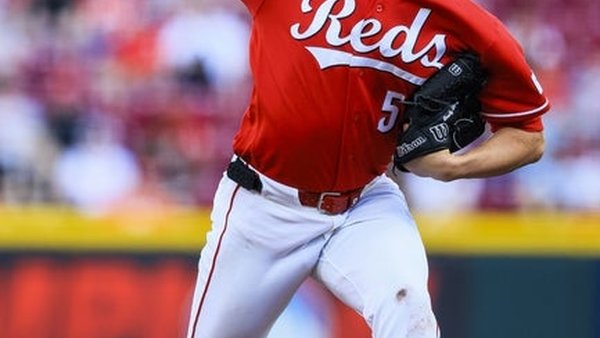
Brady Singer has surrendered 20 home runs in 89.2 innings — and he’s about to pitch at the most home-run-friendly park in baseball. The total sits at 12, the market is shading the under at -114, but the structural case built around Singer’s vulnerability, an unproven Hughes, and depleted bullpens on both sides says that number may not hold.
Brady Singer vs. Gabriel Hughes: Cincinnati Reds at Colorado Rockies Betting Preview
The market has done its job here — a total of 12 at Coors Field is already elevated, reflecting the park’s well-documented inflation effect. But there’s a difference between pricing in the park and fully pricing in a pitcher who has allowed 20 home runs in 89.2 innings now stepping into the most home-run-friendly environment in baseball. That’s the gap the market hasn’t fully closed.
On the other side, Colorado sends out Gabriel Hughes with exactly 9 innings of MLB work to his name this season. A 3.00 ERA over that sample tells us almost nothing. It’s a rounding error in a dataset that requires hundreds of innings to carry predictive weight. Projecting confidence into Hughes at Coors based on 9 IP is the kind of reasoning that gets bettors burned.
This is a moderate lean, not a hammer spot. But the structural ingredients — a historically inflated park, a demonstrably vulnerable road starter, a thin sample from the home arm, and depleted bullpens on both sides — point in a consistent direction.
Game Info & Betting Lines
- Date/Time: Friday, July 17, 2026 | 8:40 PM ET
- Venue: Coors Field | Park Factor: 1.38 (strong hitter-friendly)
- Probable Starters: Brady Singer (CIN) vs. Gabriel Hughes (COL)
- Moneyline: Cincinnati Reds -102 / Colorado Rockies -116
- Run Line: Colorado Rockies +1.5 (-172) / Cincinnati Reds -1.5 (+142)
- Total: 12 (Over -106 / Under -114)
Why This Number Is Close — But Slightly Off
The case for the under is real, and I won’t dismiss it. The market is juicing the under at -114 versus -106 on the over, which suggests sharp positioning toward the lower side. The total of 12 already bakes in the Coors premium — books aren’t naive about altitude. And both offenses have been running below their season baselines recently: Colorado scored 4, 2, and 1 run across their last three road games against San Francisco, while Cincinnati scored 4, 3, and 4 in their last three against Chicago. Neither offense is locked in — Colorado’s 4.76 R/G season baseline looks distant given that road trip — but neither went cold enough to make a blanket under case on recent form alone.
But here’s the problem with leaning under in this specific game: the under requires Singer to hold Colorado’s lineup in check at altitude, Hughes to maintain an ERA that’s based on nine innings of work, and two depleted bullpens to manage the back half cleanly. That’s a lot of things needing to go right simultaneously. The over only needs one or two of those cogs to break — which, given the personnel involved, feels far more probable.
The numbers project 12.7 combined runs against a posted total of 12. While 0.7 runs isn’t a screaming edge, the structural composition of this game — park, starters, bullpens — provides consistent support rather than a single variable doing all the work.
What Separates the Pitching
This matchup is really a question of which starter creates more damage, not which one is good. Neither inspires confidence, but the gap between them matters for how we frame the run environment.
Brady Singer is the more alarming arm heading into this one. His sinker sits at 92.7 mph and accounts for 30.1% of his pitches — and it’s getting hammered, posting an xwOBA of .406 against. His four-seamer (21.9% usage, 93.4 mph) carries an xwOBA of .359 with a whiff rate of just 13.2%. The only pitch generating genuine swing-and-miss is his slider (33.9% whiff, xwOBA .299), but it’s his third-most-used offering at 26.5%. At Coors, where ball carry is maximized, a pitcher who has surrendered 20 home runs in 89.2 innings is facing an exponentially amplified version of his own vulnerability. Hunter Goodman (.465 xwOBA, 7.5% barrel rate) and Mickey Moniak (.389 xwOBA, .900 OPS) represent legitimate power-on-contact threats in the middle of Colorado’s order against right-handed pitching — Moniak posts a .404 xwOBA versus RHP specifically.
Gabriel Hughes shows a 3.00 ERA and 1.00 WHIP, but the 9-inning sample makes those numbers statistically meaningless as projectors. He’s struck out 8 and walked 3 in that stretch — reasonable ratios — but we have no arsenal data granular enough to project how his pitch mix plays against the top of Cincinnati’s order. What we do know is that Elly De La Cruz (.473 xwOBA, 9.4% barrel rate) and JJ Bleday (.408 xwOBA, 16 HR) are legitimate threats against any starter, regardless of handedness. The Reds have shown they can produce via the long ball — back-to-back homers from Lowe and Suárez against the Cubs, Bleday going deep in consecutive games.
The pitching gap favors Colorado in theory, but the margin between “Singer is bad” and “Hughes is unproven” is narrow enough that the run environment should dominate the outcome regardless of who holds up longer.
The Pushback
The strongest argument against this over is simple: the market already knows it’s Coors. A total of 12 is not a neutral-park number — books have priced the altitude in, which means you’re not getting some naive line that forgot about the thin air. The -114 on the under reflects real sharp interest. And there’s a credible scenario where Singer leans on his slider heavily enough to keep Colorado’s lineup off-balance for five or six innings while Hughes — unproven as he is — simply doesn’t give Cincinnati enough to work with in limited exposure.
There’s also a pitching-depth argument that cuts both ways. The Edge Engine’s 12.7 combined-run projection accounts for bullpen quality, and both sides are beat up. But a game that goes to thin bullpens at Coors can break either direction — it’s not automatically a run-scoring bonanza just because neither team has depth behind their starter. A bullpen game can produce low-leverage, low-run innings just as easily as it produces crooked numbers.
I’m not dismissing the under case. The juice differential alone tells me this isn’t a one-sided market. But the ingredients here favor the over side structurally, and the risk-reward at -106 versus -114 makes the over the more efficient play even accounting for the sharp lean the other way.
Run Environment & Game Shape
Coors Field carries a park factor of 1.38 — the highest in baseball, and it’s not particularly close. Every ball hit in the air travels farther. Every well-struck mistake pitch becomes a home run that would be a long out in Pittsburgh or San Diego. That matters enormously when you’re evaluating a pitcher like Singer, whose sinker is generating an xwOBA of .406 against and whose four-seamer is barely missing bats at a 13.2% whiff rate. These aren’t pitches you want to throw in altitude when hitters are squaring the ball up.
Colorado’s rotation has been gutted by injuries. Chase Dollander, Jose Quintana, and Tomoyuki Sugano are all on the IL, leaving the Rockies with a thin rotation that pushes work to a bullpen that’s also missing Blas Castano, Welinton Herrera, Jaden Hill, and Seth Halvorsen. That’s four relievers unavailable behind a starter making effectively his second real MLB outing.
Cincinnati’s bullpen situation isn’t much cleaner. Graham Ashcraft and Tony Santillan are both unavailable, and — critically — Brandon Williamson and Nick Lodolo, two starting pitchers the Reds might otherwise use in multi-inning bulk roles, are both on the IL. Williamson is on the 60-day with a shoulder issue; Lodolo just landed on the 15-day with a finger blister that ended his last start prematurely. Losing two starting pitchers to IL stints hollows out Cincinnati’s depth options, meaning whoever follows Singer into this game is likely coming from the thin end of the bullpen. At Coors, that’s a meaningful structural vulnerability.
The game shape points toward a mid-game unraveling on at least one side. Singer gets chased in the fifth or sixth, Hughes hits his limit around the same time, and two threadbare bullpens handle the back half in a park that punishes every mistake. That’s the over scenario, and it doesn’t require anything dramatic — just normal pitcher fatigue playing out in an environment specifically designed to expose it.
The Pick
The case for the over here isn’t built on one variable — it’s the convergence of several structural facts. Singer has surrendered 20 home runs in 89.2 innings and now faces a lineup at 5,280 feet. Hughes brings a 9-inning sample that tells us nothing reliable about how he holds up against De La Cruz, Bleday, and Stewart in a live game environment. And behind both starters sit bullpens that are missing key arms on both sides. The under requires everything to go right — Singer tightening up at altitude, Hughes sustaining a surface ERA with no supporting data, and both depleted bullpens navigating five-plus innings without crooked numbers. The over only needs the park and the personnel to behave the way the underlying numbers suggest they should.
Bet: Over 12 (-106) | 2 Units | Moderate Confidence
Singer’s home-run rate and Hughes’ nine-inning sample converge at Coors Field — the one park in baseball that turns manageable mistakes into highlight-reel damage. At -106, you’re getting the better price on the side with the cleaner structural argument.