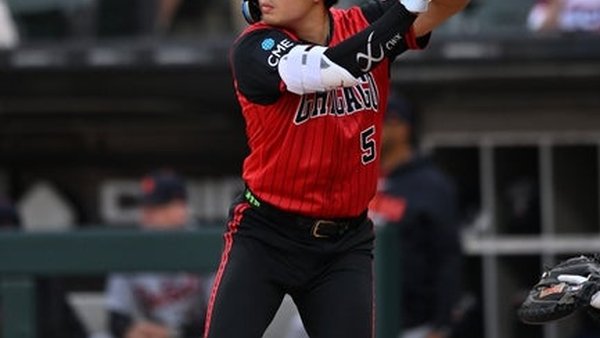
Spencer Miles carries a 2.85 ERA and a sinker-heavy arsenal that suppresses hard contact across the board — Anthony Kay has surrendered 12 home runs in 89.1 innings going the other way. The total sits at 8.5 with near-flat juice on the under at -106, which is the market treating a clear pitching gap like a coin flip.
Anthony Kay vs Spencer Miles: Chicago White Sox at Toronto Blue Jays Betting Preview
The betting case here isn’t about who wins the game — the numbers give Toronto a 61.4% win probability, and the -134 moneyline reflects that appropriately. The real question is whether this game stays under 8.5 total runs, and when you look at what Spencer Miles has done this season versus what Anthony Kay offers in response, the answer leans toward a quieter night at Rogers Centre than the market anticipates.
The total at 8.5 is priced with near-flat juice on the under at -106. That’s the market telling you it has no strong conviction either way. But the pitching matchup is not flat — there’s a meaningful gap between a 2.85 ERA arm and a 4.23 ERA arm, and when both offenses are operating below their own modest baselines, that gap matters more, not less.
Neither Toronto nor Chicago has been generating runs at a clip that justifies 8.5. The Blue Jays post a .691 OPS and have averaged just 4.08 runs per game this season. The White Sox are slightly better at .732 OPS and 4.78 runs per game, but they’re coming off a three-game stretch against Oakland where the offensive output swung wildly — 14 runs, then 1, then 9. That variance doesn’t signal a locked-in offense; it signals an unpredictable one. The under at -106 is the cleanest expression of the pitching-dominant thesis without forcing an overpriced alternative.
Game Info & Betting Lines
- Date/Time: Friday, July 17, 2026 | 7:15 PM ET
- Venue: Rogers Centre, Toronto (Park Factor: 1.00 — neutral dome, no weather variable)
- TV: Apple TV
- Probable Starters: Anthony Kay (CHW, 6-4, 4.23 ERA) vs Spencer Miles (TOR, 4-1, 2.85 ERA)
- Moneyline: Chicago White Sox +114 / Toronto Blue Jays -134
- Run Line: Toronto Blue Jays -1.5 (+152) / Chicago White Sox +1.5 (-184)
- Total: 8.5 (Over -114 / Under -106)
Why This Number Is Close But Tipping Under
The market is balancing two legitimate forces: Spencer Miles as a genuine run-suppressor on one side, and Anthony Kay’s ability to work through a below-average Toronto lineup on the other. The 8.5 total isn’t careless — it reflects a real scenario where both starters keep things manageable and the game lands somewhere in the 4-4 or 4-5 range. The oddsmakers aren’t asleep here.
But here’s the problem: the numbers project 9.0 combined runs, which is only 0.5 above the posted total. That’s thin. What tips the scale is the quality differential at the top of the pitching matchup. Miles’s 2.85 ERA and 1.10 WHIP over 60 innings represent genuine run-suppression — his profile isn’t a fluke of sequencing or strand rate. He’s allowed just 4 home runs in those 60 innings, which is an elite figure that limits the big-inning damage that inflates totals. Kay, by contrast, has surrendered 12 home runs in 89.1 innings — a rate that invites crooked numbers.
The under at -106 means you’re essentially getting even money on a bet where the pitching gap clearly favors the under. That’s the edge. A half-run projection gap combined with near-flat juice and Miles on the mound is enough lean to act on, even if the conviction level is moderate rather than high.
What Separates the Pitching
The gap between these two starters is real, and it shows up in the Statcast data before you even get to ERA. Spencer Miles leans heavily on a 96.0 mph sinker (38.6% usage) that generates a .317 xwOBA against and a 21.3% put-away rate — a contact-management weapon that keeps the ball on the ground and limits hard-contact events. He complements it with a curveball at 24.7% usage (.286 xwOBA, 24.0% put-away) and a slider at 16.4% usage that hitters are managing to a .231 xwOBA. His four-seamer — used 18.6% of the time — holds hitters to a .233 xwOBA with a 20.6% whiff rate. This is a pitcher who generates weak contact across his entire arsenal and doesn’t give hitters a pitch to gear up for.
The Chicago lineup he’s facing carries real threats — Munetaka Murakami posts a .515 xwOBA with a 10.3% barrel rate and 37.4% hard-hit rate — but Murakami also strikes out at a 32.5% clip with a 40.4% whiff rate, exactly the kind of swing-and-miss hitter Miles’s arsenal is built to exploit. Miguel Vargas (.434 xwOBA) is a more controlled contact bat, but his BvP sample against Miles is just one plate appearance — too small to weight.
Anthony Kay presents a different innings profile. His four-seam fastball generates a .380 xwOBA against — that’s a ball hitters are teeing up — and his cutter, used 18.1% of the time, surrenders a troubling .449 xwOBA. His sweeper (35.9% whiff rate, .309 xwOBA) and slider (34.1% whiff, .240 xwOBA) are legitimate weapons, but the changeup at .261 xwOBA is his only true soft-contact pitch at scale. Kay’s 12 home runs allowed in 89.1 innings creates consistent exposure to multi-run innings. Toronto’s Kazuma Okamoto — 22 home runs, .436 xwOBA, 7.3% barrel rate — is precisely the power threat who can punish that fastball-cutter combination.
The Pushback
The case against the under isn’t nothing. Kay’s HR exposure is real, but it cuts both ways — he’s allowed 12 home runs in 89.1 innings, which means he’s also gone stretches without allowing any. The damage is concentrated in specific at-bats rather than distributed evenly, which makes the blow-up inning unpredictable rather than guaranteed.
Miles’s 2.85 ERA over 60 innings is legitimately impressive, but 60 innings is a relatively modest sample for a starter. The Blue Jays have leaned on him as a genuine rotation piece, and the underlying numbers — the sinker-curveball-slider combination all generating xwOBAs under .320 — back up the ERA, but there’s less margin for error in trusting a young arm’s sustainability at this level.
On the Toronto side, Okamoto’s .436 xwOBA and 7.3% barrel rate make him a legitimate power threat against Kay’s fastball-cutter mix — he’s the kind of hitter whose quality of contact metrics suggest real damage potential in this specific matchup. Murakami’s .911 OPS and Vargas’s .848 OPS represent two legitimate power bats in the Chicago order as well. And the Rogers Centre dome removes weather as a variable entirely — no wind, no cold, no run-suppression from the elements.
I weigh all of that and still land on the under. The dome argument actually supports it — no weather chaos means the game plays to its projected shape rather than getting inflated by conditions. And two power bats in Chicago’s lineup facing a pitcher who suppresses hard contact across his entire arsenal is less threatening than it sounds on paper.
Run Environment & Game Shape
Rogers Centre plays at a 1.00 park factor — perfectly neutral. No elevation, no short porches distorting the run environment in either direction. What you get is a game that plays to its matchup rather than its setting.
The run environment here is defined by the pitching matchup, not the ballpark or the offenses. Miles limits hard contact by design — his sinker-heavy approach keeps the ball on the ground and away from the barrel. Kay is more vulnerable, but Toronto’s lineup (.691 OPS, 4.08 runs per game) doesn’t have the sustained firepower to string together crooked numbers consistently. The market expects a game that lands somewhere in the 8-10 run range, with most scenarios clustering around the 8.5-9.5 window — a total of 9.0 combined runs fits squarely in that band, right at the edge of where the under cashes.
The key is what the distribution of outcomes looks like. A Miles-led Toronto lineup shutting down Chicago’s inconsistent offense while Kay navigates a low-OPS Blue Jays order gets you to the 7-8 run range comfortably. The scenario where this goes over requires Kay to allow multiple extra-base hits while Toronto’s middle of the order strings together at-bats — possible, but not the most likely path. With both offenses operating below average, the floor for this game is lower than the ceiling, and that asymmetry points under.
The pick: Under 8.5 at -106, 2 units, moderate confidence. The pitching gap is real, the juice is essentially even money, and the run environment supports a game that lands just at or below the number. That’s enough to act on.