Cade Cavalli’s 3.12 ERA and 36.0% knuckle-curve whiff rate is a direct mismatch against an Angels lineup carrying a .682 team OPS and 1,382 strikeouts on the season — yet the total of 8.0 is anchored to Washington’s season-long run output rather than what this specific starter does to this specific offense. The number hasn’t fully separated the Cavalli half of the ledger from Kikuchi’s documented execution problems.
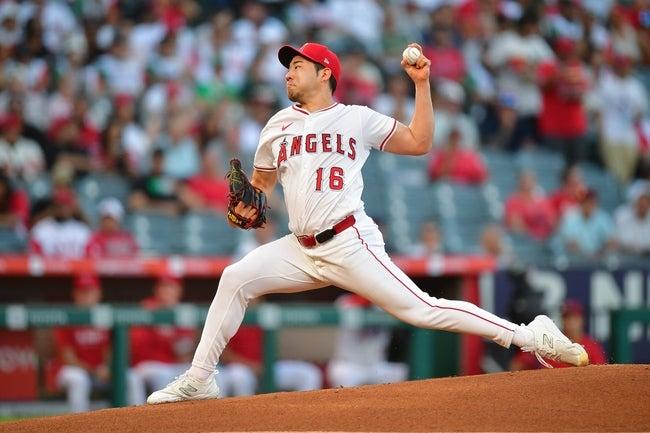
Yusei Kikuchi vs Cade Cavalli: Los Angeles Angels at Washington Nationals Betting Preview
The total of 8.0 is a market construct that leans heavily on Washington’s offensive baseline. The Nationals average 5.11 runs per game across the full season — a strong number that includes plenty of bad pitching matchups. This is not one of those. Cade Cavalli is one of the more legitimate frontline starters in the NL right now, and the Angels bring one of the weakest offensive profiles in baseball into Nationals Park, a slight run-suppressing environment at a 0.98 park factor.
The Nationals moneyline sits at -156, and there’s a real pitching gap here — but that price exceeds the hard juice ceiling of -131, which takes the ML off the table as a bet type. What remains is the under at -103, a clean price that captures the same pitching-driven thesis without the vig penalty.
The honest complication: the numbers project a combined 9.0 runs (Nationals 4.7, Angels 4.2), which technically sits above the posted total of 8.0. That tension is real, and I’ll address it directly. But the under case here is built on Cavalli’s ability to suppress the Angels specifically — not on both offenses going cold simultaneously.
Game Info & Betting Lines
- Date/Time: Friday, September 11, 2026 | 6:45 PM ET
- Venue: Nationals Park | Park Factor: 0.98 (slight pitcher-friendly lean)
- Probable Starters: Yusei Kikuchi (LAA) vs. Cade Cavalli (WSH)
- Moneyline: Los Angeles Angels +129 / Washington Nationals -156
- Run Line: Washington Nationals -1.5 (+136) / Los Angeles Angels +1.5 (-164)
- Total: 8.0 (Over -117 / Under -103)
Why This Number Is Off
The market set 8.0 around Washington’s season-run production and a Kikuchi ERA north of 4.96. That’s a defensible construction — Kikuchi has been genuinely leaky, and the Nationals lineup has real pop with 198 home runs on the season. The market is essentially saying: Washington scores somewhere in the 4-5 range, the Angels add 3-4, and you get a game near the total. That logic isn’t irrational.
But here’s the problem: the 8.0 total doesn’t sufficiently weight what Cavalli does to an Angels offense that carries a .682 team OPS — one of the weakest marks in MLB — and has struck out 1,382 times this season. The Angels’ offensive floor is genuinely low. When the run environment is already suppressed by park factor and you layer in a starter projecting to keep the Angels near 4 runs or below, the total looks a half-run to a full run inflated.
The under at -103 is the cleanest price on the board. The over costs -117 in juice. That asymmetry alone shifts the value equation — you’re paying nearly 15 cents less to back the under than to back the over, and the pitching matchup supports the lower side.
What Separates the Pitching
The gap between these two starters is significant, and it runs in one direction. Cade Cavalli is 12-5 with a 3.12 ERA, 1.18 WHIP, and 10.49 K/9 over 158.2 innings — a workload that removes any small-sample noise from the conversation. His arsenal is built around a 96.8 mph four-seam fastball (32.8% usage, 18.7% whiff) complemented by a knuckle-curve that is genuinely elite: 36.0% whiff rate and a .244 xwOBA against at 26.8% usage. His sweeper sits at 32.1% whiff with a .237 xwOBA — arguably an even better put-away offering. Against a strikeout-heavy Angels lineup where Neto carries a 30.4% K rate and Siri a 32.5% K rate, those offerings project to generate volume swings and empty at-bats.
Yusei Kikuchi is a different story. His 4.96 ERA and 1.47 WHIP across 49.0 innings reflect genuine execution problems, not bad luck. His four-seam sits at 95.6 mph — solid velocity — but the pitch generates only a 14.9% whiff rate, and his cutter carries a .581 xwOBA against, making it a liability he’s still deploying 7.2% of the time. His best offering is the splitter at 27.9% whiff, but it’s third in usage. Against a Nationals lineup where James Wood posts a .550 xwOBA overall and .582 against right-handed pitchers, and CJ Abrams has hit 30 homers with a .392 xwOBA, Kikuchi is walking into real danger. The Nationals’ top-of-order is right-hand and switch-hit dominant — Wood, Crews, Chaparro, and Abrams all profile as right-handed or switch hitters who punish left-handed pitching, with vsRHP xwOBA figures that create a direct mismatch against Kikuchi’s arsenal and validate his vulnerability at the top of this order.
The inning-shape difference is stark. Cavalli creates quick outs and swings-and-misses; Kikuchi creates traffic. One pitcher suppresses the run environment, the other inflates it — and they’re not on the same team, which is why the under’s ceiling is determined largely by Cavalli’s half of the ledger.
The Pushback
The single biggest risk to this under play is the number the projection itself produces: 9.0 projected runs (Nationals 4.7, Angels 4.2). That’s a full run above the posted total of 8.0, and it’s not noise — it reflects Kikuchi’s track record against a functional Nationals offense and a bullpen that has real depletion issues behind him. The Angels have six pitchers currently on the IL, and if Kikuchi doesn’t eat innings, the pen has to. That’s a credible path to the over.
I’m not dismissing that. What I’m arguing is that the 9.0 projection is carrying Kikuchi’s expected damage in the Nationals’ half of the ledger, and that Cavalli’s side — projected at 4.2 Angels runs — already prices in the suppression. The under isn’t a bet that both offenses go quiet. It’s a bet that Cavalli does his job and holds the Angels to 3-4 runs, and that the Nationals’ half of the total doesn’t need to be historically suppressed for the game to land under 8.0. If Cavalli gives you six innings of 2-run ball and Kikuchi allows 4-5, you’re still sitting at 6-7 runs — well inside the number.
The juice asymmetry matters here too. At -103, I’m not laying heavy to make this work. The break-even is right around 51%, and the pitching case clears that bar cleanly even accounting for the bullpen risk.
Run Environment & Game Shape
Nationals Park carries a 0.98 park factor — modest, not decisive, but it leans in the right direction for an under play. The effect is real over a season’s worth of data even if it won’t single-handedly suppress a game. What it does is remove any park-based argument for the over. You’re not betting an under at Coors or Camden Yards. This is a neutral-to-slightly-pitcher-friendly venue.
The Washington bullpen situation is worth flagging as a genuine complication. The Nationals have six pitchers on the injured list, including multiple relievers. If Kikuchi is chased early — and his 1.47 WHIP suggests that’s a real possibility — Washington is going to a thin pen earlier than it would like. A depleted bullpen in a game where the starter is leaky is a legitimate path to runs late, and that’s a check in the over column I’m not ignoring.
What keeps me on the under is the shape of the game from the other side of the diamond. Cavalli is a legitimate 10-strikeout-per-nine pitcher against an Angels offense that is built to generate those strikeouts. The Angels have fanned 1,382 times this season against a wide range of pitching quality. When they face Cavalli’s knuckle-curve at 36.0% whiff and his sweeper at 32.1%, those numbers don’t get better — they get worse. The Angels’ half of this game projects to go quiet, and at -103, that’s enough to build on.
Pick: Under 8.0 (-103) | 2 units | Moderate confidence. The projected combined total sits at 9.0, and I’m not pretending that tension doesn’t exist — but Cavalli’s ability to suppress the Angels’ weak offense is the structural edge here, the juice asymmetry is real at -103 versus -117 on the over, and the park isn’t working against us. This is a pitcher-driven under backed by a specific matchup advantage, not a bet that both lineups go cold. Two units, moderate confidence, consistent with the handicap.