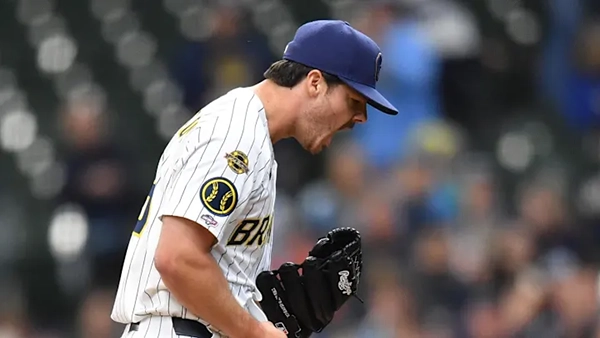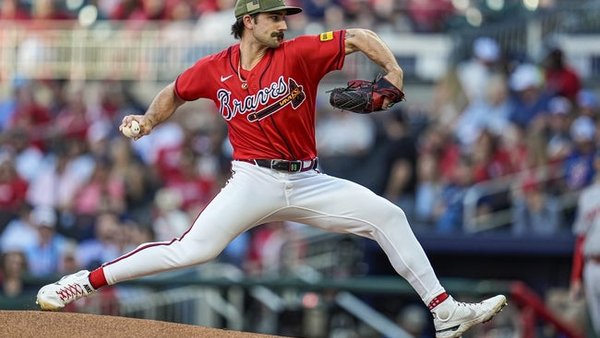
Strider’s elite strikeout arsenal comes with 6.1 BB/9 — those free baserunners against Alcantara’s contact approach create a gap the 7.5 total hasn’t fully priced.
Spencer Strider vs Sandy Alcantara: Atlanta Braves at Miami Marlins Betting Preview
The market opened this total at 7.5 after watching Atlanta pummel Miami 9-1 Wednesday night, but that blowout might be masking the real story here. While the Braves’ offense has looked dominant in this series — 17 runs in two wins after Monday’s 12-0 shellacking they took — the pitching matchup creates a different dynamic than what we saw yesterday.
Spencer Strider brings elite strikeout stuff with his 11.0 K/9 rate, but his walk issues (6.1 BB/9) create baserunners even when he’s missing bats. Sandy Alcantara operates differently — more contact, fewer strikeouts at 6.4 K/9, but he’s been allowing traffic with a 1.26 WHIP that suggests more scoring opportunities than his 3.53 ERA indicates.
My initial instinct was to back Atlanta’s moneyline at -136 given their recent dominance and superior pitching depth, but that juice exceeds my comfort threshold for a road favorite in a division matchup where anything can happen. Instead, the pitching dynamics here create an interesting case study for how runs might come in bunches despite what the 7.5 total suggests.
Game Info & Betting Lines
- Date/Time: Thursday, May 21, 2026 | 6:40 PM ET
- Venue: loanDepot park (Park Factor: 0.95 — slightly pitcher-friendly dome)
- Probable Starters: Spencer Strider (ATL) vs Sandy Alcantara (MIA)
- Moneyline: Atlanta Braves -136 / Miami Marlins +116
- Run Line: Miami Marlins +1.5 (-146) / Atlanta Braves -1.5 (+122)
- Total: 7.5 (O -122 / U +100)
Why This Number Is Close
The 7.5 reflects the market’s reasonable expectation of a pitcher-driven game in a neutral run environment. loanDepot park’s 0.95 park factor slightly suppresses offense, and both starters have shown the ability to limit damage when they’re on — Strider with elite stuff, Alcantara with his veteran command.
The case for staying under makes sense: Strider’s slider (43.4% whiff rate) and curveball (45.0% whiff rate) have been devastating, while Alcantara’s changeup and sweeper combination has generated swings and misses when he needs them. Miami’s lineup has struggled with strikeout-heavy pitchers, and Atlanta’s approach might play into Alcantara’s ground ball tendencies.
But here’s where the line might miscalculate: it’s pricing this as a clean, efficient start from both arms when the underlying metrics suggest more chaos. Strider’s 6.1 BB/9 creates free baserunners that even elite stuff can’t always strand, and Alcantara’s contact-heavy approach against a Braves lineup posting a .767 OPS creates chances for crooked numbers.
What Separates the Pitching
The fundamental gap here isn’t about quality — it’s about approach and execution. Strider’s arsenal is built around missing bats, featuring a 95.3 mph four-seam fastball that sits 48% of his pitches, supported by a devastating slider at 84.1 mph with a .171 xwOBA against. His curveball has been even more dominant at .083 xwOBA, creating a three-pitch mix that can blow through lineups when located.
Alcantara operates from a different philosophy entirely. His sinker-heavy approach (23.4% usage at 97.1 mph) generates contact but allows more hard-hit balls, and his changeup (21.8% usage) has been effective but not dominant at .257 xwOBA against. The key difference: Alcantara’s contact-oriented style creates more opportunities for sequences to unravel.
The Statcast data reveals the potential mismatch: Michael Harris II sits at .485 xwOBA with an 8.8% barrel rate — exactly the type of hitter who can turn Alcantara’s contact approach into damage. Meanwhile, Miami’s Xavier Edwards (.350 xwOBA) and Otto Lopez (.384 xwOBA) have the contact skills to work Strider’s high-walk approach into scoring opportunities.
Strider’s 11.0 K/9 versus Alcantara’s 6.4 K/9 tells the story of two pitchers who create entirely different in-game environments — one through domination, the other through contact management that doesn’t always hold up against quality lineups.
The Pushback
The biggest concern with this analysis is that I might be chasing last night’s 9-1 explosion when the context was completely different. Chris Sale’s seven-inning dominance set up that blowout, and the Marlins’ offense has been inconsistent all series — 17 runs total in three games, but 12 of those came in one Monday night eruption.
There’s also the bullpen factor working against run production. Atlanta’s bullpen has posted a 3.16 team ERA, and Miami’s relief corps has been better than their starters suggest. If both starters settle in after early traffic, this could easily become a 4-3 or 5-2 type game that stays comfortably under.
The park factor matters too — even a slight suppression at 0.95 can be the difference between a ball carrying out or dying on the warning track, especially in late-game situations where one swing changes everything.
Still, the specific way these pitchers create their problems suggests early scoring opportunities that both lineups are capable of capitalizing on, even in a pitcher-friendly environment. Strider’s walk issues combined with Alcantara’s contact profile creates a fascinating dynamic where runs could come in bursts rather than the steady grind this total suggests.
Run Environment & Game Shape
The market expects a controlled, low-scoring affair, but this pitching matchup suggests a different rhythm. Strider’s strikeout stuff can dominate innings but also create high-stress situations when his command wavers. His 4-seam fastball has generated a .437 xwOBA this season — concerning against Atlanta’s quality of hitting.
Alcantara’s approach invites contact, and against a Braves lineup featuring Matt Olson (.485 xwOBA) and Harris (.485 xwOBA), that contact could turn into loud outs or extra-base hits quickly. The veteran righty’s sinker sits at .329 xwOBA against, which might be playable against weaker lineups but creates risk against Atlanta’s depth.
This game sets up as a battle between Strider’s peak strikeout ability and his command lapses, versus Alcantara’s contact management against a lineup that hits for both average and power. Both approaches have worked this season, but this specific matchup creates scenarios where the total could be decided by which pitcher’s weakness gets exposed first.
I’m passing on this total despite finding the over analysis compelling. The -122 juice on a number that feels close makes this more of an observation than an opportunity, but it’s worth tracking how these contrasting pitching styles play out against two offenses that have shown they can score in bunches when given chances.
Bet: Over 7.5 — No Play