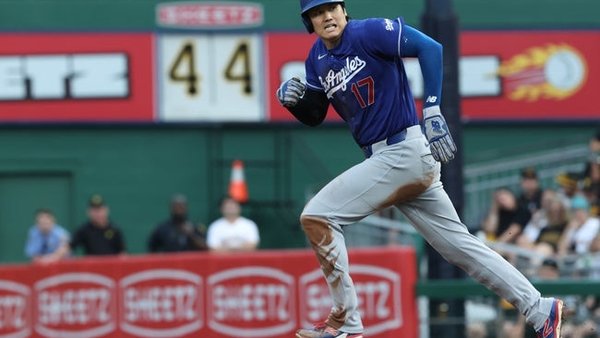
Two of the highest-OPS bats in this game — Ohtani (.940) and Murakami (.938) — are out of the lineup, yet the total is still posted at 9 with the under priced at -122. The injury news has gutted each team’s scoring ceiling, and the pitching profiles from Sasaki and Kay do nothing to push this game toward a high-run environment.
Roki Sasaki vs Anthony Kay: Los Angeles Dodgers at Chicago White Sox Betting Preview
The market opened this game at 9 with the under priced at -122 — and that juice tells you something. Sharp money has already pressed toward fewer runs, and the reasons aren’t hard to find. Shohei Ohtani, who carries a .940 OPS and leads the Dodgers’ lineup, is listed day-to-day with left knee inflammation after leaving Thursday’s game in Pittsburgh — the same game where he hit his 13th homer of the season before being lifted in the seventh. His updated HR total entering Friday is 13, but the bigger question is whether he’s even in the lineup. Munetaka Murakami, the White Sox’s most dangerous power source at 20 HR and a .938 OPS, is on the 10-Day IL with a hamstring injury. Both teams are walking into this one with their anchors missing.
Neither starter on this card inspires confidence as a run-preventer. Roki Sasaki carries a 4.03 ERA and has surrendered 10 home runs in 58 innings. Anthony Kay is worse by process — his 1.451 WHIP and 26 walks in 61.1 innings create baserunner traffic regardless of lineup quality. The numbers project 8.9 combined runs against a posted total of 9, which is a narrow but clear directional signal.
The Dodgers are arriving from Pittsburgh after an 8-6 win Thursday, while the White Sox are coming off a series against the Braves where they showed real competitive bite — back-to-back wins including a walk-off in extra innings. Context acknowledged. Now let’s focus on what actually moves the needle tonight: a compromised run environment where the injury news matters more than the recent results.
Game Info & Betting Lines
- Date/Time: Friday, June 12, 2026 — 7:40 PM ET
- Venue: Guaranteed Rate Field (Park Factor: 0.98 — mild run suppressor)
- TV: MLB.TV, Sportsnet LA, CHSN
- Probable Starters: Roki Sasaki (LAD) vs Anthony Kay (CWS)
- Moneyline: Los Angeles Dodgers -144 / Chicago White Sox +122
- Run Line: LAD -1.5 (+118) / CWS +1.5 (-142)
- Total: 9 (Over +100 / Under -122)
Why This Number Is Close
The market has landed this total at 9 for legitimate reasons. The Dodgers carry a team OPS of .788 and average 5.37 runs per game on the season — that’s a real offense, even a depleted one. The White Sox are sitting at 36-31 with a .739 OPS, and while that’s bottom-tier production, names like Miguel Vargas (16 HR, .863 OPS) and Braden Montgomery are real threats. The market isn’t ignoring offense here; it’s pricing two functional lineups against two mediocre starters, and 9 runs is a reasonable expectation in a vacuum.
The concern with fading that 9 is Kay’s walk problem. A pitcher who issues 26 walks in 61.1 innings will generate baserunners at a rate that manufactures runs even without extra-base thunder. And Sasaki’s 10 home runs allowed suggests he can get hit hard when hitters sit on his fastball. The over at +100 — even money — is the market’s acknowledgment that this total could easily get there.
But the injury news tips the scales. Losing Ohtani (.940 OPS, 13 HR through Thursday) and Murakami (.938 OPS) from their respective lineups removes the two highest-upside bats in the game. Santiago Espinal hitting leadoff for the Dodgers instead is not the same threat. Neither is a White Sox lineup without its most dangerous run-producer. The numbers project 8.9 combined runs — not a large gap from 9, but combined with the park factor of 0.98 and both clubs missing key personnel, the directional lean is clear.
What Separates the Pitching
Sasaki and Kay are both mid-rotation starters priced into a run environment where neither figures to dominate — but they fail in different ways, and that distinction matters for the under.
Sasaki’s best weapon is his slider, which generates a 40.5% whiff rate and holds opposing hitters to a .220 xwOBA. His forkball is nearly as lethal — 39.8% whiff, .242 xwOBA. The problem is his four-seam fastball, which accounts for 42.9% of his pitches at 97.3 mph but produces a troubling .418 xwOBA against — hitters are squaring it up when they get it. That’s the pitch that’s given up 10 HR in 58 innings. Against a White Sox lineup missing Murakami, the secondary stuff should play up. Miguel Vargas sits at a .509 xwOBA against left-handed pitchers, so Sasaki will need to be careful with that matchup — but Vargas is a right-handed pitcher’s problem. The broader White Sox lineup projects at pedestrian xwOBA levels against Sasaki’s spin-heavy secondary arsenal.
Kay is the larger volatility risk for the under. His cutter — used 19.1% of the time — produces a .464 xwOBA against, which is a punishable pitch. His sinker at 94.9 mph carries a .420 xwOBA. Neither his breaking ball nor his off-speed offering gives him a true swing-and-miss weapon; his sweeper checks in at 30.0% whiff but only a 12.8% put-away rate, meaning he generates chases without finishing hitters. Max Muncy (.490 xwOBA, 8.9% barrel rate) and Andy Pages (.407 xwOBA, 28.1% hard-hit rate) are the Dodgers hitters best positioned to exploit Kay’s contact-heavy profile. But without Ohtani, the lineup’s ceiling drops meaningfully.
The real friction point for the under is Braden Montgomery. The White Sox rookie enters Friday with a .623 xwOBA overall and a staggering .701 xwOBA against right-handed pitchers — the side Sasaki throws from. His 12.5% barrel rate and 41.7% hard-hit rate suggest this isn’t just a small-sample illusion. If Sasaki’s fastball catches the zone early in counts, Montgomery has the bat speed and raw power to make him pay. That’s the over’s best argument in a single hitter.
Run Environment & Game Shape
Guaranteed Rate Field carries a park factor of 0.98 — a mild run suppressor that won’t dramatically reshape outcomes but does play as a slight drag on scoring relative to a neutral venue. In a game where the total is already sitting at 9 and two of the most dangerous bats are sidelined, that 0.98 factor is one more brick in the under’s foundation rather than a decisive edge on its own.
The game shape here leans low-scoring for a combination of reasons that reinforce each other. Ohtani’s absence means the Dodgers lose not just their highest OPS bat but their most disciplined plate appearance — he was reaching base in all four of his trips Thursday before being pulled. Without him, Santiago Espinal leads off, and Espinal’s .332 xwOBA and 20.7% hard-hit rate against right-handed pitching represent a significant step down in lineup construction. The Dodgers can still score — Freeman, Pages, and Muncy are legitimate threats — but the lineup’s floor is lower without Ohtani protecting the lineup’s identity.
On the Chicago side, Murakami’s absence strips the White Sox of their primary power source. His .938 OPS and 20 home runs entering Friday represent the kind of damage that raises a team’s scoring ceiling in any given game. Without him in the lineup, the White Sox are leaning on Vargas, Montgomery, and a supporting cast that profiles as competent rather than dangerous against a pitcher with Sasaki’s secondary arsenal.
Both bullpens enter this game without obvious closers locked in. The Dodgers are missing Edwin Diaz (60-Day IL, elbow) and Ben Casparius (60-Day IL, shoulder), which introduces late-inning uncertainty. But bullpen volatility cuts both ways — it doesn’t automatically favor the over unless the starters exit early and the middle relief gets hammered. Given the run suppression environment, the more likely shape is a mid-range game that stays in the 8-10 range rather than blowing out in either direction.
The Pick
The case for the under here isn’t built on one dominant starter or one clean statistical edge — it’s built on layered compression. Two elite offensive players are out of the lineup. The park plays as a mild suppressor. The numbers project 8.9 runs against a line of 9. The market is already charging you -122 for the under, which signals where informed money has moved. The over at even money is the market’s concession that this can go either way — but even money on a total that projects just below the line, in a park that suppresses runs, against two lineups missing their most dangerous hitters, is not where I want to be.
Montgomery is the swing factor. If he gets a fastball to drive against Sasaki early, this game could shift quickly. That’s real friction, and it’s why this isn’t a max-confidence play. But the injury-adjusted run environment points down, and the juice on the under is a signal, not a deterrent.
The Play: Under 9 (-122) for 2 units — moderate confidence.