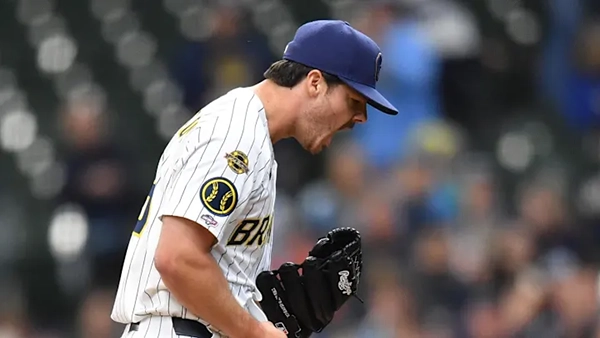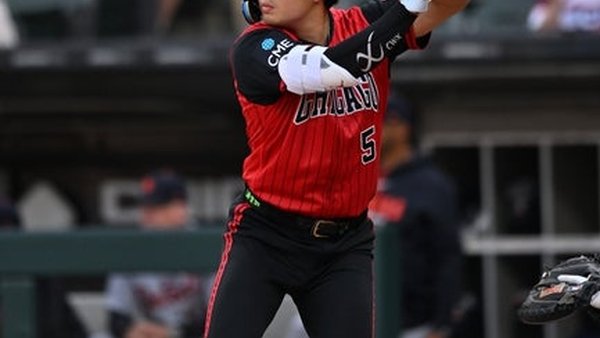
Bryan Hudson has not allowed a home run in 32 innings — a direct problem for a Dodgers offense that generates runs almost exclusively through the long ball, ranking among the league’s most HR-dependent lineups. The total is sitting at 9.5 with the Under priced at even money, a number that still reflects Friday and Saturday’s blowouts rather than Sunday’s fundamentally different pitching construction.
Emmet Sheehan vs Bryan Hudson: Los Angeles Dodgers at Chicago White Sox Betting Preview
The narrative coming into Sunday is shaped by two lopsided results: Friday’s 8-2 White Sox win and Saturday’s 7-1 Dodgers victory behind Yamamoto’s near no-hitter. The market, reacting to back-to-back high-variance outings, is holding the total at 9.5. The problem is that neither of those games reflects Sunday’s pitching matchup. Bryan Hudson is a fundamentally different arm than the starters who took the ball Friday and Saturday, and the absence of Munetaka Murakami removes Chicago’s most dangerous power threat from the equation.
The numbers project 8.8 combined runs — a 0.7-run gap below the posted total. More importantly, the Under is priced at +100, meaning there’s direct positive expected value if that projection holds. This isn’t a -122 juice spot where you’re working uphill. You’re getting even money on a number that looks inflated by recent game noise.
The core argument is straightforward: Hudson has allowed zero home runs in 32 innings pitched, and he’s facing a Dodgers offense that ranks among the most HR-dependent in the league (97 team HR, .441 SLG). If the ball stays in the park — and Hudson’s track record this season says it will — the Dodgers’ run-scoring ceiling compresses significantly.
Game Info & Betting Lines
- Date/Time: Sunday, June 14, 2026 | 2:10 PM ET
- Venue: Guaranteed Rate Field | Park Factor: 0.98 (slightly pitcher-friendly)
- Probable Starters: Emmet Sheehan (LAD) vs Bryan Hudson (CWS)
- Moneyline: Los Angeles Dodgers -196 / Chicago White Sox +164
- Run Line: Los Angeles Dodgers -1.5 (-120) / Chicago White Sox +1.5 (+100)
- Total: 9.5 (Over -122 / Under +100)
Why This Number Is Off
The market’s case for 9.5 is defensible on the surface. The Dodgers are averaging 5.38 runs per game on the season and carry a lineup with Ohtani (.979 OPS), Muncy (.912 OPS), and Pages (.832 OPS) capable of erupting on any given afternoon. The White Sox still own 93 team home runs despite Murakami’s absence, with Vargas (.865 OPS, 16 HR) and Colson Montgomery (16 HR) presenting legitimate power threats against Sheehan’s 4.70 ERA. Bookmakers know the series context too — two high-scoring games inflates public perception of run potential in this matchup.
But here’s the problem: the 9.5 line appears to be market memory from Friday and Saturday bleeding into Sunday’s pricing. Hudson is the key variable the total isn’t properly weighting. His zero-HR-allowed mark through 32 innings directly attacks the Dodgers’ primary run-creation mechanism. Meanwhile, Murakami’s 10-day IL absence (hamstring) strips Chicago’s top OPS producer (.938) from the lineup entirely. The market has set a number reflecting what these offenses can do — the numbers reflect what they’re likely to do against these specific arms, in this specific park, with this specific roster construction.
A 0.7-run gap at plus money isn’t a whisker-thin edge. It’s a clear lean with built-in return.
What Separates the Pitching
These two starters are built differently — and the data tells opposite stories about where the real risk sits.
Bryan Hudson is the headline. His 2.25 ERA across 32 innings is exceptional, and the zero home runs allowed is the single most important stat in this matchup. His arsenal is built around a sweeper (37.5% usage, 81.7 mph) that posts a 22.6% whiff rate and a .285 xwOBA against — genuine weak-contact suppression — paired with a sinker (28.3% usage, 93.7 mph) that he uses to work down in the zone. The sinker’s .367 xwOBA against is a flag, and his cutter is genuinely hittable (.417 xwOBA). But the combination of pitching to contact, suppressing hard contact, and — crucially — keeping the ball in the park creates a ceiling on any single inning blowing up. Against a Dodgers lineup where Ohtani sits at a .513 xwOBA and Muncy at .481, Hudson needs to be precise. His 14 walks in 32 innings (WHIP 1.281) suggest he sometimes isn’t. The concern is that one wild inning with Ohtani or Muncy at the plate changes the entire game shape.
Emmet Sheehan is the more volatile arm. His 4.70 ERA reflects 11 home runs allowed in 59.1 innings — a 1.67 HR/9 rate that is genuinely alarming given Chicago still has legitimate power in the lineup despite Murakami’s absence. His best weapon is a slider (31.6% usage, 86.7 mph, .256 xwOBA, 38.3% whiff rate) — a true put-away pitch. His four-seamer sits 94.3 mph with a 25% whiff rate and is his primary offering at 43.2% usage, but it carries a .393 xwOBA against, which means hitters are squaring it up when they connect. Vargas’s .500 vsLHP xwOBA and Braden Montgomery’s .494 overall xwOBA with a 9.4% barrel rate represent the biggest mismatches Sheehan faces. His 64 strikeouts in 59.1 innings (9.71 K/9) and only 16 walks show he’s not a walk machine — he attacks the zone. That control keeps him from imploding entirely, but the home-run vulnerability is real.
The gap between them: Hudson suppresses hard contact and eliminates the home run; Sheehan generates strikeouts but surrenders damaging contact when hitters make connection. In a park with a 0.98 factor, the suppression side of that equation wins.
The Pushback
The honest concerns here are real. Hudson’s 32-inning sample is small — pitchers who’ve allowed zero home runs over a short stretch can be living on timing as much as true suppression. His WHIP of 1.281 and 14 walks in those 32 innings mean he’s not breezing through lineups. One crooked inning where he falls behind Ohtani or Muncy could unravel the entire structure of this bet. Ohtani hit a 409-foot leadoff shot Saturday and his overall .513 xwOBA reflects genuine elite contact quality. Muncy homered twice in that same game. The hot-hand risk is real entering Sunday.
On the Sheehan side, the White Sox lineup without Murakami still has teeth. Braden Montgomery’s .494 xwOBA and 9.4% barrel rate against right-handed pitching is a legitimate mismatch, and Vargas’s .500 vsLHP xwOBA is a threat Sheehan will have to navigate early. If Sheehan gets hit hard in the first two innings, the under is in trouble before it ever had a chance.
I’m also not ignoring that the moneyline edge here points toward the White Sox as a home-price value — but at +164 with a run differential of just +10 on the season, I don’t trust that number enough to chase it. The run line at +100 for Chicago +1.5 is tempting on paper, but the numbers project a dead-even 4.4-4.4 run split, which means laying the run line is essentially a coin flip with no juice offset. The total at +100 is the cleanest entry point for the edge this game is offering.
Statcast Matchup Breakdown
The Dodgers’ top-of-order profile vs. a left-handed pitcher is the critical variable. Ohtani’s vsLHP xwOBA drops to .442 from his overall .513 — significant, given Hudson is left-handed. Freeman sits at .380 vsLHP. Betts actually grades better against lefties (.396 vsLHP vs. .315 vsRHP), but his overall .338 xwOBA indicates a down season. The Dodgers’ most dangerous hitters are meaningfully neutralized by the handedness matchup.
For the White Sox against Sheehan, the threat is concentrated in the middle of the order. Vargas at .500 vsLHP and Braden Montgomery at .494 overall with a 9.4% barrel rate are the hitters who can punish Sheehan’s .393 xwOBA four-seamer when they sit on it. Colson Montgomery has a 30.7% strikeout rate, which gives Sheehan a margin for error deeper in the lineup. The key innings are 2-4 — if Sheehan escapes that stretch without surrendering a crooked number, Chicago’s offense likely doesn’t have enough to blow past 4-5 runs.
Run Environment & Game Shape
Guaranteed Rate Field’s 0.98 park factor is effectively neutral — it removes the Coors Field-style inflation risk and keeps the environment honest. In a pitcher-driven game, that slight lean toward neutrality reinforces the Under. When both starters are capable of limiting hard contact in a park that doesn’t juice exit velocities, the 8.8 projection isn’t a stretch — it’s a reasonable central estimate with the wind at its back.
The game shape here points to a low-scoring, competitive contest. Hudson’s contact-suppression profile and Sheehan’s strikeout-heavy approach both project toward fewer baserunners than the recent series context would suggest. The 9.5 total is a market artifact of Friday’s 10-run game and Saturday’s 8-run output — neither of which had pitching remotely resembling what Sunday puts on the mound. When you strip the noise, 8.8 projected runs against a 9.5 posted number at even money is the play.
Bet: Under 9.5 (+100) — 2 units, moderate confidence.