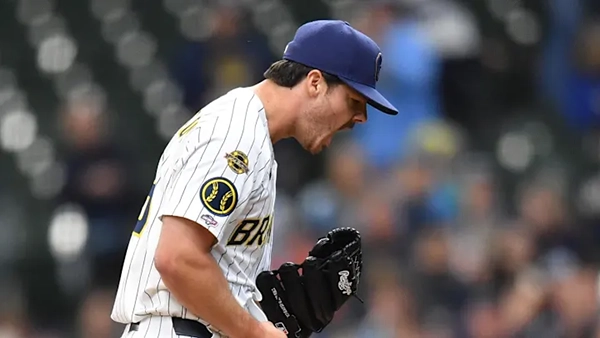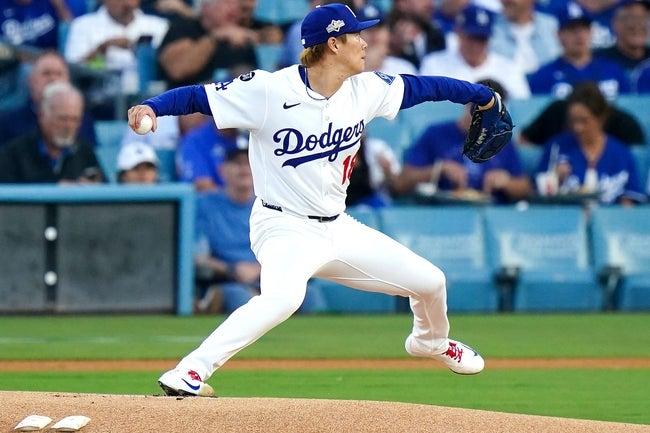
Houser’s 6.19 ERA creates an obvious pitching mismatch — the question is whether the -290 moneyline has moved too far to offer value.
Adrian Houser vs Yoshinobu Yamamoto: San Francisco Giants at Los Angeles Dodgers Betting Preview
The market is treating this like a competitive game because the Giants just torched the Dodgers 9-3 last night, but that’s exactly the kind of noise that creates value. Adrian Houser enters with a catastrophic 6.19 ERA and -0.9 WAR — he’s actively hurting his team every time he takes the mound. Across from him sits Yoshinobu Yamamoto, whose 3.09 ERA and 8.24 K/9 represents everything Houser isn’t: elite command, strikeout ability, and actual positive value.
The Dodgers moneyline at -290 is steep, but this isn’t about a close game where price matters. This is about fundamental team quality differences that yesterday’s explosion doesn’t change.
Game Info & Betting Lines
- Date/Time: Tuesday, May 12, 2026 | 10:10 PM ET
- Venue: Dodger Stadium (Park Factor: 0.98 — slight pitcher’s park)
- Probable Starters: Adrian Houser (0-4, 6.19 ERA) vs Yoshinobu Yamamoto (3-2, 3.09 ERA)
- Moneyline: San Francisco Giants +235 / Los Angeles Dodgers -290
- Run Line: Los Angeles Dodgers -1.5 (-137) / San Francisco Giants +1.5 (+114)
- Total: 8.5 (Over -122 / Under +100)
Why This Number Is Wide But Justified
The market is pricing the Dodgers as heavy favorites because the talent gap is genuine — not because they’re overreacting to one bad game. San Francisco’s 17-24 record with a -42 run differential shows they’re legitimately poor, not unlucky. The Giants average 3.39 runs per game (139 runs in 41 games) compared to the Dodgers’ 5.02, and their .655 OPS trails Los Angeles by 122 points.
But here’s why the line feels steep: yesterday’s 9-3 result proves this Giants offense can explode even against quality opponents. Rafael Devers homered early and drew a crucial bases-loaded walk, while the lineup showed life that’s been missing for weeks. That creates the impression this might be closer than the -290 suggests.
The market is balancing Houser’s disasters against the possibility that momentum carries over from Monday night. That’s where I think they’re getting it slightly wrong — pitching trumps one-game offensive outbursts in baseball, especially when the gap is this wide.
What Separates the Pitching
Yamamoto’s arsenal creates the kind of problems Houser’s doesn’t even attempt to solve. Yamamoto’s 97.8 mph four-seam fastball sits 42.3% of his pitches and holds hitters to a .239 xwOBA — elite velocity with elite results. His 23.1% sweeper usage at 84.5 mph generates a massive 40.0% whiff rate and .176 xwOBA against, giving him a legitimate put-away pitch that Houser simply doesn’t possess.
Meanwhile, Houser’s 93.6 mph four-seam sits 50.3% of his pitches but allows a brutal .315 xwOBA — hitters are teeing off on his primary offering. His 29.3% slider usage at 85.0 mph produces a decent 37.0% whiff rate, but the .387 xwOBA against shows it’s getting hit hard when hitters connect. The 6.19 ERA isn’t bad luck — it’s the natural result of an arsenal that can’t miss bats consistently or prevent hard contact.
The strikeout differential tells the complete story: Yamamoto’s 8.24 K/9 against a Giants team that strikes out 7.8 times per game (320 strikeouts in 41 games) versus Houser’s 4.76 K/9 against a Dodgers offense that’s proven it can work counts and capitalize on mistakes. Yamamoto creates the long innings that preserve bullpens; Houser creates the short outings that expose them.
Giants Hitters vs Yamamoto: Can the Momentum Continue?
The crucial question becomes whether Giants hitters can build on Monday’s offensive explosion when facing Yamamoto’s arsenal. The Statcast data reveals concerning mismatches for San Francisco’s top order against this Dodgers starter.
Rafael Devers (Giants DH) presents an intriguing case study against Yamamoto. Despite his heroics last night, Devers carries a .364 xwOBA this season but strikes out at a 29.6% rate with a high 28.6% whiff rate. Against Yamamoto’s four-seam fastball that generates 25.7% whiffs at 97.8 mph, Devers’ aggressive approach could backfire. His historical struggles are evident in their 14 previous plate appearances, where he’s hitting just .286 with 5 strikeouts.
The top of the Giants order shows similar vulnerabilities. Jung Hoo Lee’s 11.7% whiff rate suggests he makes contact, but his .340 xwOBA and 22.3% hard-hit rate indicate that contact isn’t particularly damaging. Against Yamamoto’s sweeper that generates 40% whiffs, Lee’s contact-heavy approach may not translate to quality at-bats.
Luis Arraez offers the best matchup for San Francisco with his minuscule 7.1% whiff rate and excellent contact skills, but his .295 xwOBA and complete lack of power (0.0% barrel rate) mean he’s more likely to provide singles than rally-starting hits.
The Pushback: Can Giants Ride Yesterday’s Wave?
The concern is that Giants offense we saw last night — 9 runs against a Dodgers team that had been playing solid baseball. Devers looked locked in, Luis Arraez found holes, and even the bottom of the order contributed. When a struggling team suddenly scores 9 runs, it can signal a breakthrough rather than a fluke.
But what works against this potential Giants surge is Yamamoto’s specific profile. His 25.7% whiff rate on the four-seam and 50.0% whiff rate on the curveball create strikeouts that take rallies off the table. The Giants’ recent offensive explosion came against Dodgers pitching that couldn’t put hitters away — Yamamoto specializes in exactly that. His 3.09 ERA backed by a 1.01 WHIP shows he’s not giving free passes or hanging pitches in hitters’ counts.
The legitimate question is whether this Giants lineup has found something sustainable or if Monday was simply variance finally breaking their way. The underlying metrics suggest the latter — this is still a .244/.292/.364 offense that ranks near the bottom of baseball in most categories.
Run Environment & Game Shape
Dodger Stadium’s 0.98 park factor creates a slight pitcher’s advantage, but not enough to suppress runs when Houser’s on the mound. The market expects a total around 8.5 runs, which reflects confidence that at least one starter will struggle. That environment actually favors the Dodgers — if both teams score, their superior offense should prevail; if pitching dominates, Yamamoto’s edge becomes decisive.
The likely scoring range of 6-4 or 7-3 type game means the Dodgers don’t need a blowout to justify this price. They just need Yamamoto to give them 6-7 quality innings while their lineup capitalizes on Houser’s inevitable mistakes. In a game projected for 8-9 runs, the team with the better pitcher usually has multiple paths to victory.
Joe Jensen’s Pick
JENSEN’S PICK: Los Angeles Dodgers Moneyline — 0 Units (Lean/Parlay Leg Only)
I like this side but not at -290 for a standalone bet. The pitching edge is genuine and significant, but the price doesn’t offer enough value given baseball’s inherent variance. Yamamoto should dominate, but paying nearly 3-to-1 on any baseball game requires more certainty than even elite pitching provides.
This works better as a parlay leg where you’re already getting enhanced odds, or as a small lean if you’re playing multiple games. The underlying logic is sound — just not at this price point.